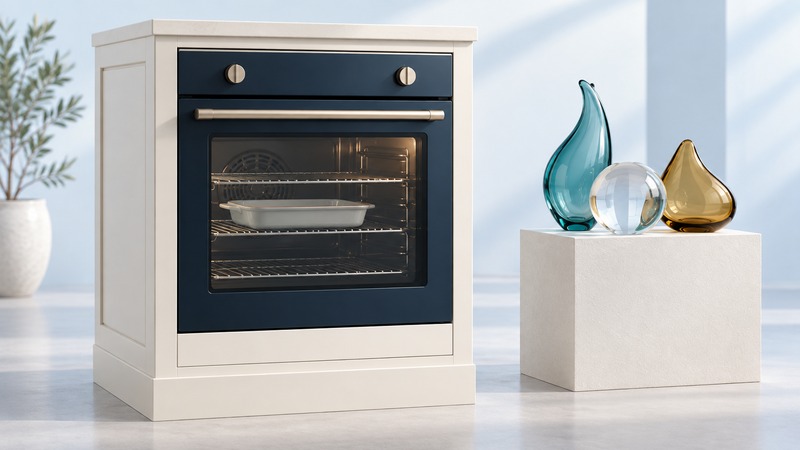
GE Trivection combines microwave assistance, a convection fan and conventional heating elements in a full-size oven. For an owner, the key is the exact model and operating mode: those determine recipe conversion, cookware, rack placement and the correct sequence. Begin with the manual, then build a record of the meals and settings you use.
Identify the oven and keep its documents
Record the complete model number from the appliance label using the location guidance in its documentation. A double-oven installation also requires identifying which cavity has Trivection. Save the owner manual and installation instructions separately because they answer different questions.
The GE JT930SKSS owner center provides a manual and a service route for that particular Trivection model. Use it as a starting example, then match your own model through GE's literature lookup. A document for another oven family may use similar language with different controls or cookware rules.
Keep the model, manual revision and service history together. This makes a support call more useful and helps a future owner understand the appliance.
Understand what the combined system does
The GE manual linked from the owner center, pages 14–16, describes food-category-dependent combinations of the three heating methods. Its speed-cooking conversion takes a traditional recipe temperature and cooking time and derives a shorter cycle. Follow its entry instructions; manually shortening a time before entering it can change the intended input.
The same manual requires preheating for its speed-cooking sequence and a start confirmation after food is inserted. Cookware guidance has a dedicated speed-cooking section, including shape, foil and covering details. Match both the cookware and mode to that section rather than applying a blanket rule from countertop microwaves.
This technology is best understood through a supported recipe and its result. A speed claim alone does not predict the time for every food, portion or starting condition.
Build a reliable owner recipe record
Choose one familiar recipe that the manual supports. Write down its original instructions before starting. Record the oven mode, food category, pan, rack position and entered values, then the displayed conversion and actual result. Keep preheat and food-cooking time separate in your note so the meal schedule is understandable.
| Field | Reason |
|---|---|
| Recipe source and portion | Distinguishes a changed meal from a changed oven result. |
| Mode and food category | Identifies the operating program used. |
| Pan and rack position | Makes a later comparison more meaningful. |
| Original inputs and displayed time | Reveals accidental double conversion or entry differences. |
| Doneness checks and final result | Connects elapsed time with the actual food. |
Use the food's applicable temperature guidance. USDA's meat and poultry temperature guidance supplies the required finish checks for those foods. A shortened cycle still needs an appropriate doneness check.
Describe the problem before requesting service
Record the exact displayed message, the selected mode, when the symptom occurs and whether it is repeatable. Describe observations such as an unexpected shutdown or a cooking discrepancy without guessing the failed component. Include recent power interruptions or service work when relevant.
Consult the model's troubleshooting section for allowed owner checks. Keep internal electrical and microwave-system work with qualified service personnel. If the door or its operation is damaged, stop use and arrange service. The official owner center is the place to check the current service route and parts questions.
Ask for a written estimate identifying the proposed repair, parts availability and warranty on the work. Online anecdotes about other models cannot establish the condition of your oven.
Compare replacement as a complete project
Measure the existing opening and obtain the proposed replacement's installation drawing. Compare support requirements, electrical supply, clearances, trim coverage, delivery and removal. A nominal 30-inch label does not prove that two ovens share a cutout.
List the cooking modes you actually use, then compare a repair with replacement options that meet those needs. Include installation changes and the cost of learning new controls. Keep the Trivection recipe records as historical notes; a different oven needs its own supported settings. The microwave-format guide can help distinguish countertop, built-in and combination choices.