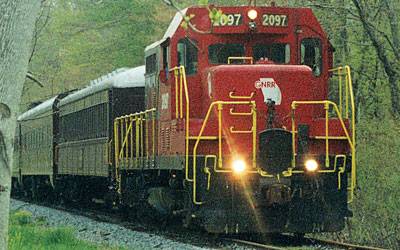
A scenic railway lets the landscape unfold at the measured pace of the track. Rivers remain beside the window for miles, mountain grades reveal how railroads crossed difficult terrain, and historic equipment turns transportation into part of the destination. The experience may be a 45-minute steam trip through farmland, a full day in Appalachian wilderness, an elegant dining excursion or a scheduled passenger train traversing scenery inaccessible from the highway.
The East Coast is especially rewarding because its railway geography is compact and varied. Pennsylvania preserves narrow-gauge industrial history, mainline steam, anthracite routes and woodland branches. Maryland offers both a major mountain climb and a volunteer-run country line. Virginia combines the Shenandoah Valley and Piedmont with renovated passenger cars. West Virginia's logging grades, river gorges and remote mountain routes form one of America's finest clusters of scenic railways.
This guide emphasizes those four states, then ranges north, south and west to place them among other outstanding American train rides. Excursion names, locomotives, consists and operating days change frequently; use the linked operator sites to confirm the train offered on your date.
Choosing the kind of train ride you want
| Experience | What defines it | Good starting points |
|---|---|---|
| Steam and railroad history | Historic or replica locomotives, preserved stations, shops and interpretation | Strasburg, East Broad Top, Steamtown, Western Maryland and Cass |
| Mountain scenery | Grades, curves, gorges, long forest views and dramatic changes in elevation | Cass, Potomac Eagle, Western Maryland, Tygart Flyer and Virginia Scenic Railway |
| Relaxed family outing | Shorter duration, straightforward boarding and attractions near the depot | Strasburg, Lehigh Gorge, Walkersville Southern and Northern Central |
| Dining or premium cars | Reserved tables, meal service, lounge seating or dome views | Virginia Scenic Railway, Colebrookdale, New Hope and Potomac Eagle |
| Immersive all-day journey | Remote mileage, destination layover or a route that is the day's main event | Greenbrier Express, Cumbres & Toltec, Durango & Silverton and Alaska Railroad |
| Working passenger railway | A scheduled intercity trip valued for scenery rather than a heritage excursion | Amtrak's Cardinal, Adirondack, California Zephyr and Coast Starlight |
Pennsylvania: the East's deepest scenic-railway bench
Pennsylvania's industrial history created a remarkable variety of surviving railways. The state offers polished commercial excursions, nonprofit preservation lines and a National Park Service railroad site, often within a few hours of Philadelphia, Baltimore, Washington or New York.
Strasburg Rail Road
Strasburg Rail Road is an ideal introduction to steam. Trains make a 45-minute round trip from Strasburg through Lancaster County's Amish farmland to Paradise and back. The route is short, but the railway's historic locomotives, maintained passenger cars, station atmosphere and neighboring Railroad Museum of Pennsylvania make it easy to build a full rail-themed day. Open-air cars are appealing in mild weather; first-class and dining experiences suit visitors who value comfort over unobstructed sound and air.
East Broad Top Railroad
The East Broad Top Railroad at Rockhill Furnace is more than a train ride. It is an exceptionally intact narrow-gauge railroad complex associated with the coal and iron industries of central Pennsylvania. Excursions use part of the historic line, while guided experiences may explore the roundhouse, machine shops and belt-driven equipment. It is the strongest choice for visitors interested in how an entire railroad worked, not merely how a locomotive looked.
Lehigh Gorge Scenic Railway
Departing from Jim Thorpe, the Lehigh Gorge Scenic Railway follows the Lehigh River into a steep, forested gorge beside the former route of the Lehigh Valley Railroad. The standard ride is accessible as a family outing and especially popular during fall foliage. Jim Thorpe's walkable historic district, museums and nearby trails make the town a natural weekend base. Demand can be intense on October weekends, when parking and local traffic require as much planning as the train ticket.
Colebrookdale Railroad
The Colebrookdale Railroad leaves Boyertown for the wooded Secret Valley, where rock cuts, streams and bridges feel surprisingly secluded for southeastern Pennsylvania. Restored cars and meal-oriented excursions give it a more elegant character than a bare-bones sightseeing train. It is a good choice for couples, multigenerational groups and visitors who want scenery paired with table service or a special occasion.
Northern Central Railway of York
From New Freedom near the Maryland line, the Northern Central Railway travels through the Codorus Creek valley and Heritage Rail Trail County Park on a former Pennsylvania Railroad route. Excursions may use a replica 1860s steam locomotive or vintage diesel power and interpret the line's Civil War connections, including Abraham Lincoln's journey to deliver the Gettysburg Address. Different trips reach Glen Rock, Hanover Junction or the Howard Tunnel, so route length matters when booking.
New Hope Railroad
The New Hope Railroad operates from the 1891 station in the Delaware River town of New Hope through the Bucks County countryside. Vintage coaches, first-class cars, open-air seating, dining and seasonal programs broaden its appeal. The landscape is pastoral rather than mountainous; much of the pleasure comes from combining the railway with New Hope's shops, restaurants, canal path and river setting.
Oil Creek & Titusville Railroad
The Oil Creek & Titusville Railroad follows the valley where America's petroleum industry began. The forested route through Oil Creek State Park combines scenery with industrial history, and the train's open car is particularly appealing in good weather. This is a less polished but more place-specific experience: the point is to understand the landscape of early oil production while enjoying the creek valley.
Steamtown National Historic Site
Steamtown National Historic Site in Scranton combines a roundhouse, locomotive collection, repair-shop interpretation and seasonal train operations. In 2026, its program ranges from short narrated rides in the historic yard to selected excursions through the Lackawanna Valley and Poconos. The museum is the constant attraction; locomotive availability, destination trips and schedules can change with maintenance, weather and crews.
Other Pennsylvania possibilities
The Everett Railroad at Hollidaysburg offers steam-powered excursions through Morrison's Cove on selected dates. The Stourbridge Line runs through northeastern Pennsylvania's Lackawaxen River country from Honesdale. Both reward travelers willing to build a trip around a limited schedule rather than expect daily departures.
Maryland: a mountain main line and a country branch
Western Maryland Scenic Railroad
The Western Maryland Scenic Railroad is Maryland's defining scenic train. It climbs from Cumberland through the Cumberland Narrows and around sweeping mountain curves toward Frostburg on former Western Maryland Railway track. Excursions may use diesel power or Chesapeake & Ohio No. 1309, a large articulated steam locomotive built by Baldwin in 1949. Steam dates are prized, but the route—not only the locomotive—is the central attraction.
Cumberland's historic station sits beside the C&O Canal and Great Allegheny Passage, making a rail-and-trail weekend easy to arrange. Some itineraries include time in Frostburg; others emphasize onboard dining or seasonal themes. Check the precise trip because duration, destination, locomotive and food service vary.
Walkersville Southern Railroad
The volunteer-run Walkersville Southern Railroad follows a former Pennsylvania Railroad branch through the farms and small streams north of Frederick. Its roughly 75-minute country excursions are gentler and more intimate than the Cumberland mountain trip. Open cars, cabooses, dinner events and occasional steam operation make it especially suitable for families and repeat visits.
Maryland's two principal tourist railways complement each other neatly: Western Maryland is a destination-scale Appalachian journey, while Walkersville is an approachable half-day outing near the Baltimore–Washington region.
Virginia: Shenandoah Valley views and ride-and-dine travel
Virginia Scenic Railway
The Virginia Scenic Railway is Virginia's only regularly scheduled tourist train and has expanded beyond its original Staunton operation. Excursions from Staunton run east or west through the Shenandoah Valley and Blue Ridge foothills, passing farms, rock cuts, tunnels and river scenery. Renovated passenger cars support ride-and-dine service, and the Silver Palace dome car provides elevated panoramic views on selected trips.
The railway also advertises departures from Louisa in Virginia's Piedmont, including brunch and adult-oriented tasting events. Route, departure city, meal and car class should be checked carefully: a dome seat creates a different experience from a table in a dining car, and an eastbound Piedmont trip differs from a mountain-oriented journey west of Staunton.
Special mainline excursions and museum rides
Virginia occasionally hosts special excursions with celebrated locomotives such as Norfolk & Western No. 611, but these are events rather than dependable year-round attractions. The Virginia Museum of Transportation in Roanoke is an excellent companion destination for understanding the state's steam history, even when no mainline excursion is scheduled.
For a very small-scale family ride, Staunton's nonprofit Gypsy Express circles Gypsy Hill Park seasonally. It is a miniature park railway rather than a scenic mainline, useful for young children who may not be ready for a three-hour excursion.
West Virginia: the essential Appalachian train-trip state
West Virginia's mountains preserved routes built for timber, coal and isolated communities. Today those alignments provide a concentration of steep grades, river valleys, wilderness and historic equipment unmatched elsewhere in the East. The state's tourist-train directory is a useful starting point because several excursions share operators or equipment.
Cass Scenic Railroad
Cass Scenic Railroad preserves the experience of a mountain logging railway. Geared steam locomotives climb switchbacks from the company town of Cass toward Whittaker Station or Bald Knob. The locomotives' sound and mechanical character are inseparable from the landscape: they were designed to haul on sharp curves and steep, rough track where conventional engines struggled.
The longer Bald Knob trip is the immersive choice, reaching one of West Virginia's highest summits and taking much of a day. The shorter Whittaker trip better suits families or travelers combining the train with Cass's historic company houses and exhibits. Open-sided cars make weather preparation important even when the valley is warm.
Greenbrier Express
The Greenbrier Express links Cass and Durbin along the Greenbrier River over a restored segment of former Chesapeake & Ohio track. It emphasizes river and forest scenery rather than Cass's steep logging grades. The longer journey and remote corridor appeal to travelers who want to settle into the rhythm of a full excursion instead of chasing a single overlook.
New Tygart Flyer
Departing Elkins, the New Tygart Flyer follows the Shavers Fork of the Cheat River through the Monongahela National Forest to a stop near the High Falls of the Cheat. The combination of enclosed passenger cars, wilderness mileage and a waterfall layover makes it one of the region's most broadly appealing trips.
Potomac Eagle Scenic Railroad
The Potomac Eagle Scenic Railroad leaves Romney and follows the South Branch of the Potomac River into a narrow, roadless gorge known as the Trough. The area supports American bald eagles, and onboard spotters often help passengers locate them. Standard, premium and dining choices make this a flexible family or special-occasion ride; the long-format excursions demand more time but reveal more of the river valley.
Autumn Colors Express
The Autumn Colors Express is a special-event mainline excursion through the New River Gorge region, traditionally scheduled around peak fall color. Unlike a railway with frequent departures, it is a limited annual event with strong demand. Travelers should treat the date, boarding process and lodging as components of one advance reservation.
More outstanding railways along the East Coast
New England
The Conway Scenic Railroad in New Hampshire offers several levels of commitment. Its Mountaineer is the signature journey through Crawford Notch on the former Maine Central Mountain Division, with mountain walls, trestles and long valley views. The Mount Washington Cog Railway is a very different experience: a steep climb to the summit of Mount Washington, where weather can transform within minutes.
Connecticut's Essex Steam Train & Riverboat pairs a heritage train through the Connecticut River Valley with a seasonal river cruise. Massachusetts offers the Cape Cod Central Railroad, where marshes, cranberry country and dining service replace mountain drama. Maine's narrow-gauge museums provide shorter rides with a strong preservation focus.
New York
The Adirondack Railroad operates from Utica into the Adirondacks, with longer trips offering remote forest and lake country beyond what a short heritage branch can provide. The Catskill Mountain Railroad runs seasonal excursions from Kingston, while the Arcade & Attica Railroad presents a classic steam-era outing in western New York.
The southern Appalachians
North Carolina's Great Smoky Mountains Railroad operates from Bryson City through river valleys and mountain country, with Nantahala Gorge and Tuckasegee River routes providing different scenery. The Tennessee Valley Railroad Museum in Chattanooga combines short historic rides, longer excursions and active restoration.
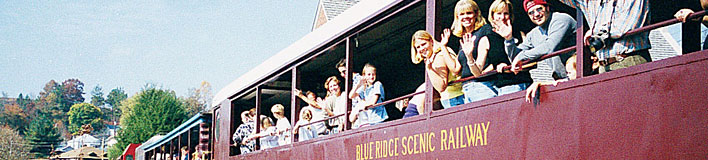
The original subject of this page, the Blue Ridge Scenic Railway, remains a worthwhile Georgia–Tennessee trip. It follows the Toccoa River from downtown Blue Ridge to the neighboring towns of McCaysville, Georgia, and Copperhill, Tennessee, where passengers receive a layover before returning. The river route, open-air cars and walkable destination make it a relaxed outing rather than a rugged mountain climb.
Landmark scenic railways of the West and Alaska
The West's great scenic railways differ from eastern lines in scale, elevation and openness. Colorado and New Mexico's jointly owned Cumbres & Toltec Scenic Railroad crosses the state line repeatedly on a 64-mile narrow-gauge route over 10,015-foot Cumbres Pass. It is a full-day living-history journey of steam, high desert, forests, trestles and mountain grades.
The Durango & Silverton Narrow Gauge Railroad follows the Animas River into Colorado's San Juan Mountains, at times clinging to the canyon above the water. Arizona's Grand Canyon Railway reaches the South Rim from Williams, making the destination as important as the ride. The Verde Canyon Railroad explores a red-rock river canyon from Clarkdale.
In California, the Skunk Train enters redwood country from Fort Bragg and Willits, although route options can be affected by tunnel and infrastructure conditions. Travelers should verify whether a chosen departure is a conventional train, shorter out-and-back trip or railbike experience.
Alaska provides two nationally distinctive journeys. The Alaska Railroad is a working passenger railway whose Coastal Classic, Denali Star and other trains connect major destinations through immense landscapes. The narrow-gauge White Pass & Yukon Route climbs from Skagway toward White Pass on a Gold Rush railway cut into steep mountain terrain. Some itineraries cross an international boundary; documentation requirements depend on the exact trip.
Scenic travel on Amtrak
A heritage railway returns to its starting point; a scheduled passenger train can become the transportation for an entire vacation. Amtrak's Cardinal is particularly relevant to the Mid-Atlantic focus of this guide. Between New York and Chicago it passes Virginia's horse country, the Blue Ridge, the Shenandoah Valley and West Virginia's New River Gorge. Because it operates only three days per week, itinerary planning requires care.
Other celebrated routes include the Adirondack along the Hudson River and Lake Champlain, the California Zephyr across the Rockies and Sierra Nevada, the Coast Starlight between the Pacific Northwest and Southern California, and the Empire Builder across northern plains and Glacier country. These are transportation services subject to freight traffic, delays and ordinary station logistics—not narrated tourist attractions—but they provide scale and continuity that a short excursion cannot.
When to ride
| Season | Advantages | Tradeoffs |
|---|---|---|
| Spring | Waterfalls and rivers often run strongly; foliage begins opening views into valleys | Variable weather, mud and limited early-season schedules |
| Summer | Broadest schedules, long daylight and reliable access to high-elevation routes | Heat in open cars, family crowds and afternoon storms |
| Autumn | Peak foliage in Appalachia, New England and the Northeast | Highest demand, traffic, lodging prices and sellouts |
| Winter | Clear woodland views, snow scenery and holiday trains | Many scenic routes close; themed trains may emphasize entertainment over landscape |
Peak color is impossible to guarantee far in advance. Elevation, latitude, rainfall, temperature and storms shift the timing each year. A good fall strategy is to choose a route with strong landforms, water or railroad history so the trip remains rewarding even when leaves are early, late or muted.
How to plan a satisfying railway trip
- Book the route, not only the brand. One railway may offer a 45-minute local, a three-hour meal train and an all-day destination trip.
- Confirm the locomotive. Steam is maintenance-intensive and substitutions happen. If steam is essential, read the operator's guarantee and cancellation terms.
- Study the car class. Open cars offer sound, air and photography; coaches offer shelter; domes improve elevated views; dining cars may restrict movement but add comfort.
- Ask about seat assignment. Some trains assign seats, some board by class and some allow passengers to move. The best side can reverse when an out-and-back train changes direction.
- Check accessibility directly. Historic cars often have steep steps, narrow aisles or limited lifts. Accessible spaces may require advance coordination.
- Allow time at the depot. Parking, ticket collection and boarding can begin well before departure, especially during foliage season.
- Prepare for a different climate. A summit, gorge or open car may be much cooler and windier than the boarding town.
- Understand the layover. Determine whether food is available, how far attractions are from the station and whether passengers may leave the train.
- Expect living machinery. Smoke, cinders, noise, vibration and occasional delays are part of traditional steam operation.
A strong first itinerary for the Mid-Atlantic
For travelers beginning near Washington or Baltimore, a useful progression is Walkersville Southern for an easy country introduction, Northern Central for Civil War-era interpretation, Western Maryland Scenic for a substantial mountain grade, and Potomac Eagle for river-gorge scenery. Add Cass for geared steam and Virginia Scenic Railway for a more polished Shenandoah ride-and-dine experience.
From Philadelphia, begin with Strasburg and the Railroad Museum of Pennsylvania, then contrast New Hope's refined Bucks County experience with East Broad Top's industrial preservation and Lehigh Gorge's forest-and-river scenery. From Pittsburgh, East Broad Top, Everett Railroad, Oil Creek & Titusville and the West Virginia mountain lines form a rewarding longer circuit.
The best scenic railway is ultimately the one whose pace and landscape fit the traveler. A child may remember a whistle and a caboose more vividly than an all-day mountain panorama. A rail historian may prefer an intact workshop to a luxurious dome. A photographer may choose an open car, while another traveler values a meal and conversation beside a broad window. Across the East Coast—and particularly in Pennsylvania, Maryland, Virginia and West Virginia—there is enough variety to make the first train ride the beginning of a much longer journey.