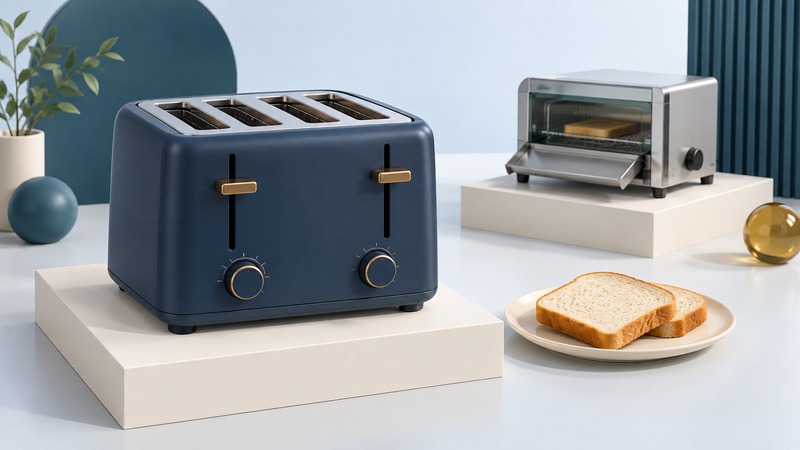
Choose a toaster by the bread you serve and the busiest period it must handle. At home, that may mean two thick slices or several breakfasts together. In food service, it also means documented commercial suitability, electrical fit and a realistic rate of acceptable toast. Appearance alone cannot answer those questions.
Start with the bread and the setting
Measure the length, height and thickness of your usual slices, bagel halves or muffins. Check the useful slot opening and lifting travel, not just a wide-slot label. Establish which foods the manual permits, including restrictions on coatings or fillings.
For commercial work, request the exact specification sheet, intended-use statement and relevant certification information. As a concrete example, Hatco's TPT-208 page identifies a commercial four-slot model and its certification links. That evidence belongs to that product; it does not transfer to a similar-looking household toaster.
Confirm voltage, plug configuration, placement space and cleaning access before purchase. The Hatco TPT manual is explicitly for commercial use and requires the correct electrical supply. A commercial product can also be inappropriate for household use.
Compare batch and continuous service
| Format | Useful pattern | Test before deciding |
|---|---|---|
| Two-slot pop-up | Small batches served as they finish. | Your largest bread and repeat browning. |
| Four-slot pop-up | Several portions or separately controlled pairs. | Whether controls and slot layout support the intended batch. |
| Conveyor | An ongoing flow of toast during service. | Actual product clearance, output quality, loading and collection space. |
Hatco's commercial range includes pop-up and conveyor formats. Compare them through the service pattern rather than assuming a bigger appliance always reduces waiting. Staff loading time, different breads and where toast is collected can become the limiting steps.
Estimate capacity, then test it
Measure your actual workload over the busiest short interval. In a trial, record acceptable slices delivered, rejected slices and waiting time. Include warm-up, bread changes and cleaning interruptions when they affect service. Manufacturer throughput figures should be read with their test conditions.
Make the browning comparison fair
Use bread from the same loaf with consistent thickness and starting condition. Follow the manual's initial-use instructions, choose a moderate setting, then compare repeated batches. Record whether a setting works for both the first batch and later ones. Change one setting at a time.
Check the bagel program's intended orientation and heating behavior. If you use different breads, keep separate notes for them instead of chasing one universal setting. The useful endpoint is the toast your household or customers want, produced with a manageable routine.
Keep the slots and crumb system serviceable
Follow the toaster manual for cleaning and jam removal. For the cited Hatco TPT, unplug and allow cooling first, keep crumb trays installed during operation, and never insert a knife or fork into the chamber. It also restricts buttered or coated products because residue can ignite. Apply your own model's food restrictions and service procedure.
A persistent jam or repeated uneven output after approved cleaning deserves a recorded service question. Note the bread, slot, setting and whether the fault repeats. Stop using a damaged appliance and seek the manufacturer's repair advice rather than bending internal parts.