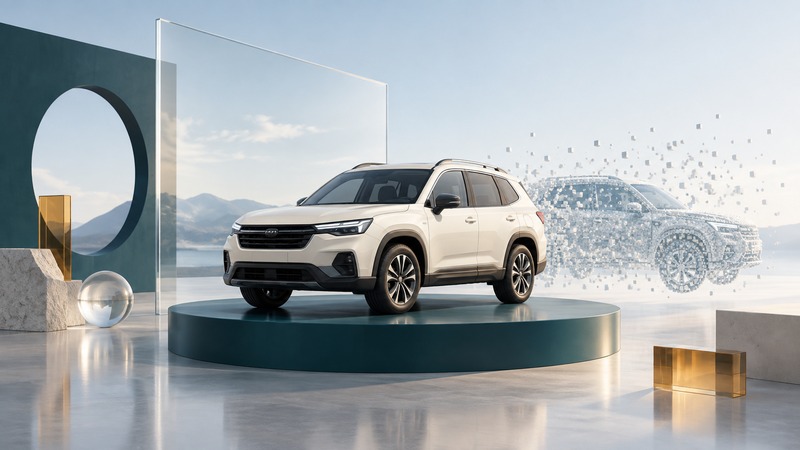
The Subaru B9 Tribeca launch campaign used a dramatic image: other SUVs turning to dust as the new vehicle appeared. Studying that idea helps separate three things a product launch must connect: a memorable metaphor, an identifiable product, and evidence for the differences a buyer is invited to consider.
The product and the creative in 2005
Subaru’s parent company announced the B9 Tribeca’s unveiling in January 2005. A July 2005 contemporary campaign report in MediaPost described television creative in which other SUVs became dust, accompanied by Kansas’s “Dust in the Wind.” The visual and musical connection framed the launch as a break with what had come before.
That is a reading of a positioning device. A disappearing competitor is an expressive image; establishing a product advantage requires an identified attribute and a supported comparison. The campaign can therefore be examined both as creative work and as an invitation to inspect the new vehicle’s actual proposition.
Read the launch in layers
On a small screen, scroll the table sideways to read all columns.
| Layer | What to examine | Question to carry forward |
|---|---|---|
| Product identity | The vehicle, brand, model name, and recognizable design cues. | Can a viewer identify what is being introduced? |
| Creative contrast | The old-to-new relationship expressed by the dust imagery. | What difference does the scene lead the viewer to expect? |
| Product proposition | The attributes selected for the intended customer. | Which specific buying question does each attribute answer? |
| Evidence | Dated specifications, demonstrations, or properly scoped comparisons. | What supports the exact claim for the relevant model? |
| Response | The route to further information or a product experience. | Can interest lead to an informed next step? |
Give each medium an appropriate job
A March 2005 Subaru announcement about its website described online material for the B9 Tribeca and interactive work connected with auto-show displays. This documents another part of the launch environment: people could move from an attention-getting introduction toward more detailed exploration.
For a comparable launch, write down the one proposition that should survive across media. Video may dramatize the contrast; a still image needs a recognizable product and a concise explanation; a product page needs the information that answers the resulting questions. An in-person demonstration should let someone investigate the attributes the campaign emphasizes.
Review these executions together. Repeating an image everywhere may preserve appearance while losing meaning when sound or motion disappears. Preserve the relationship between product and promise, then adapt the execution to the viewing conditions. Check that each route reaches the correct model information, especially when similar names or multiple versions are available.
Use a metaphor as a prompt for questions
Fictional review: A new desk lamp is shown beside older lamps fading into darkness. Test viewers infer that it uses less electricity, although the team intended to emphasize adjustability. The reviewers identify the implied comparison, revise the scene around the adjustable arm, and place the relevant product details on the destination page. They then check whether viewers describe the intended benefit.
The exercise shows why creative interpretation should happen before launch. Record the words viewers use for the supposed improvement. Compare them with the claims the product team can support, then revise the execution or supply the appropriate evidence. A compelling metaphor earns attention; a clear product proposition helps someone decide what to investigate.
For a complementary vehicle campaign, see the Jeep Commander study of music and product recognition. The brand campaign planning guide provides a broader method for keeping promises consistent across executions.