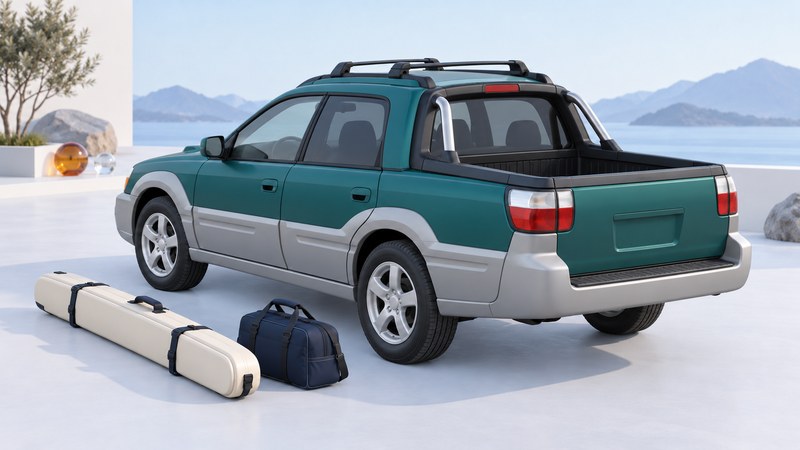
The Baja Turbo combines a small open bed with a four-seat cabin and a passage through the rear bulkhead. That flexibility is useful only if the vehicle can carry your people and your actual load in the same permitted arrangement. Try the packaging first, then investigate the service history of the particular car.
Start with the 2004 US Baja Turbo
Subaru's 2004 US Baja brochure describes the Turbo's 2.5-liter turbocharged engine, rated at 210 hp, with a five-speed manual or optional four-speed automatic. It also describes the Switchback cargo opening. Those are period specifications; record the model year, engine, gearbox and modifications of the vehicle you are considering.
Keep seating and cargo configurations together in your notes. Opening the Switchback involves moving the rear seat cushion and folding the rear seatback, as shown in the 2004 Baja owner's manual, pages 2-28 through 2-31. Its long-load arrangement therefore does not retain ordinary rear-passenger seating. The manual also calls for securing long objects against forward movement.
On a narrow screen, scroll the table sideways. Keyboard users can focus the table region and use the arrow keys.
| Configuration or claim | What to establish | Useful evidence |
|---|---|---|
| Four occupants, rear seats in use | Does the load fit the bed without using the Switchback? | Actual cargo trial; matching manual and vehicle load labels. |
| Long load through Switchback | Which passenger places remain usable in the required seat arrangement? | Parked demonstration following the manual; measure the actual opening and object. |
| Tailgate or accessory arrangement | Is this configuration permitted for the object and journey? | Correct operating instructions, accessory identification and securement plan. |
| Weight as well as length | Is the combined load within the vehicle and equipment limits? | Vehicle labels, manual, actual weights and qualified advice if uncertain. |
Bring the awkward object, not just its length
A long item can be narrow enough for the bed yet too tall or irregular for the pass-through. With the vehicle parked, try the actual object or a faithful size template. Record the limiting opening, contact points and whether seats, doors and tailgate can occupy the intended positions. Measure usable space without pressing cargo into trim or mechanisms.
Decide how the load will be restrained and protected from weather. Do not interpret a cargo-length advertisement as a payload rating or a securement instruction. Follow the vehicle manual and applicable equipment limits; have an uncertain arrangement assessed before carrying it. Return the rear seating to its properly latched passenger configuration before using those seats.
Inspect the bed, Switchback opening, seals and interior for visible damage or dampness. Ask a qualified inspector to investigate findings rather than deciding that every stain has the same cause. A clean demonstration is a fit check, not proof of watertightness in all conditions.
Make the turbo and gearbox history specific
Organize invoices by date and odometer reading. Identify the oil and filter services, scheduled engine work, cooling-system work and gearbox service that the records actually establish. Compare gaps with the correct maintenance schedule for the car's year and use; do not borrow an interval from a different Subaru model.
Ask about replacement engine or turbocharger work, calibration changes, intake and exhaust parts, and the shop responsible. Obtain part and installation details where available. A seller's statement that a turbo was replaced is incomplete without the reason, work performed and subsequent history.
Have a Subaru-familiar independent inspector assess the engine, drivetrain, underside and visible cargo-area condition. Request written findings and a separate allowance for further diagnosis. Ask the intended service shop whether it can support this exact vehicle and source any identified parts; familiarity with a newer Subaru alone does not answer that question.
Example: the load fits, the passengers do not
Fictional weekend plan: four adults and a long equipment case must travel together. The case fits only with the Switchback open and rear seat folded. That trial has disproved this particular four-person arrangement even if the advertised cargo length sounded adequate. Change the load plan or choose a different vehicle; do not count the folded rear seat as available passenger space.
If a different case fits the bed with the cabin in passenger use, repeat the weight and securement checks for that arrangement. Keep this practical result separate from whether the seller supplies a convincing service file. Both need to work.
Record the arrangement you actually tested
Download the Baja cargo and service record. Bring it to an independent inspection. Use the NHTSA recall lookup and ask Subaru about older and completed campaigns, since an online result is not a complete lifetime repair history.
Explore Autos: vehicle guides, technology and design · Cars: buying, maintenance and ownership