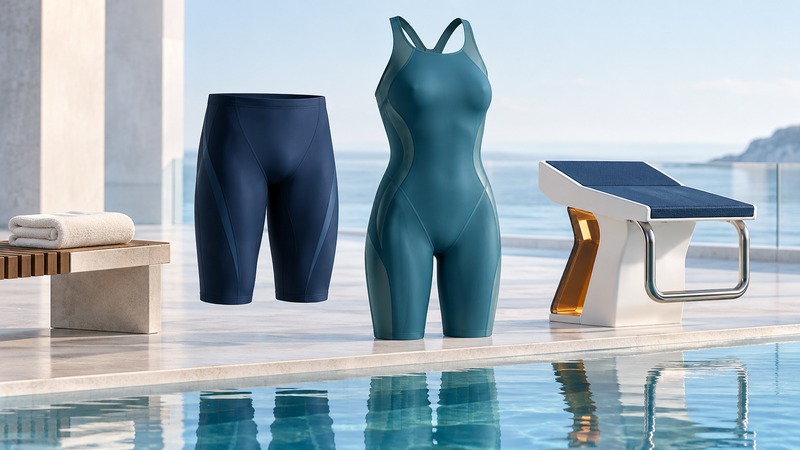
Choose a Fastskin racing suit in this order: confirm that the exact model is allowed at the intended meet, check the model-specific sizing instructions, then decide whether its fit and care demands suit the swimmer. Price and race-day marketing come after those checks.
Check the swimmer, meet and exact suit
Write down the swimmer's age on the relevant competition date, the event, meet name and governing organization. Obtain the meet information and identify which rules apply. School, club, national and international events can have different requirements.
Look up the exact brand and model in the World Aquatics approved-swimwear database when that approval is required. Match the model or approval identification and garment type, not just the family name Fastskin. The World Aquatics swimming rules page provides the route to current regulations.
For U.S. age-group competition, the USA Swimming rules hub supplies the current rulebook, technical-suit information and a separate 12-and-under approved-suit resource. Check the current restrictions and any applicable exceptions there. International approval alone does not establish eligibility under an age-group rule.
If the product label, database entry and seller description do not clearly match, send the exact identification to the meet referee or organizer before purchase or use. Keep a permitted backup suit. A historical Fastskin model or a remembered approval from a previous season needs the same check.
Measure for this model
Use Speedo's sizing guidance and the chart linked to the selected suit. Racing garments can use a dedicated sizing system. Record measurements in the chart's units and use the stated measuring positions; a training-suit size is only background information.
Depending on the suit, the required measurements may include waist, hips, chest or bust, and a body loop. A body loop runs from a shoulder down the front, through the crotch and back to that shoulder. Use it only where the relevant chart requests it.
Read the retailer's try-on and return conditions first. Put the suit on carefully using the maker's instructions, allowing time to distribute the fabric evenly. Compression should still permit the intended movement and normal breathing. Stop if there is pain, numbness or restricted movement, and reassess the size or model.
| Check | Record | Resolve uncertainty with |
|---|---|---|
| Eligibility | Model, approval identifier, age and meet | Current rules and meet referee |
| Measurements | Values, units and chart version | The exact product sizing guide |
| Fit | Movement, pressure points and strap position | A knowledgeable fitter or manufacturer |
| Purchase terms | Permitted try-on, returns and warranty | The retailer and regional manufacturer terms |
Protect the garment during use and cleaning
Speedo Australia's Fastskin guide advises careful handling away from sharp objects, using finger pads, rinsing promptly in clean cold water, avoiding machine washing and laying the suit flat and reshaping it after use. Follow the care instructions supplied with your exact garment and the warranty terms for your region.
Remove jewelry that could catch the fabric before dressing. Work gradually instead of yanking thin panels or straps. Store the suit clean and fully dry, protected from rough objects. Use it for the occasions recommended by the manufacturer, and keep ordinary training wear for routine sessions when appropriate.
Inspect seams, leg grippers, panels and straps before a meet. If damage affects fit or function, arrange a replacement or a permitted alternative before race day. A suit that has become easy to pull on may simply fit differently after use; examine the garment rather than treating that change as proof of performance.
Decide what the suit contributes
A racing suit is one part of competition preparation. Suit construction and compression are design features; an individual time improvement is a result that also depends on training, pacing, starts, turns, rest and conditions. Treat a manufacturer's test claim within its stated comparison and method.
Set a total budget for the suit and any replacement need, then agree with the swimmer and coach when it will be used. Keep the model record and care instructions so a later replacement can be evaluated with the same evidence.