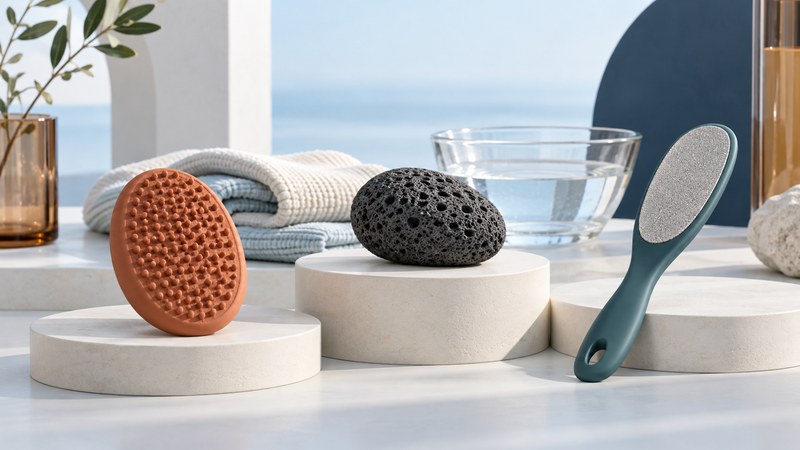
A foot scrubber is an abrasive tool, so its material, surface and instructions matter. Begin with the reason the skin is rough and whether home exfoliation is appropriate. Then choose a tool you can control, clean and dry, with directions for the exact product.
Check the skin before choosing a tool
The AAD explains that corns and calluses form with repeated pressure or friction. Its guidance includes gentle pumice use for appropriate cases and warns that removing too much skin can cause bleeding and infection. Addressing shoe fit and the source of rubbing belongs in the decision too.
Seek professional advice for painful or uncertain lesions, damaged skin, or recurring trouble. If you have diabetes, CDC advises leaving corn and callus removal to professional care. Reduced sensation or poor circulation also warrants an individual care plan. A product sold for “rough heels” cannot establish suitability for every foot.
Compare the tool you will actually hold
Scroll horizontally to read the table. Keyboard: focus the table region and use the arrow keys.
| Tool | Useful distinction | Check before use |
|---|---|---|
| Terra-cotta scrubber | Fired clay with a formed abrasive surface | Exact wet-use directions, texture and cleaning method. |
| Pumice stone | Porous abrasive stone; products vary | Condition, comfortable grip and permitted care. |
| Foot file | Abrasive surface mounted on a handle | Wet/dry permission and whether the surface is replaceable. |
These are product categories, not a ranking of gentleness. Pressure, surface condition and the intended use affect the result. Avoid a chipped, cracked or otherwise damaged tool. A blade-style callus remover is a different instrument and is outside this ordinary cosmetic-care comparison.
Read the directions before buying. If the package is vague about the material or cleaning, ask the supplier. A clearly identified tool with available instructions is easier to maintain than an anonymous multipiece kit.
The Gilden Tree terra-cotta example
Gilden Tree describes its two-sided scrubber as hand-formed terra-cotta, sun-dried and kiln-fired, made by women artisans in Pakistan. Its directions call for liquid soap and gentle use on wet feet, followed by the other surface for smoothing. These are manufacturer instructions for that product; use only where your foot-care needs permit.
The company’s founding account dates its introduction to the United States to 1990, after Ann and Kumy Thariani encountered the traditional tool in Pakistan. That gives the product a specific material and sourcing history. Claims about health effects, environmental benefits or worker outcomes require their own supporting evidence; the origin story alone does not establish them.
Build cleaning and drying into the routine
For its terra-cotta tool, Gilden Tree’s care page recommends rinsing after use, placing it flat with the scrubbing surface downward to drain and allowing it to dry thoroughly. It suggests a brush to remove accumulated material. Follow the instructions for your exact tool; a care method suitable for solid fired clay may damage a glued abrasive surface or another material.
Give the tool a place to dry outside a puddle or closed damp container. Keep personal tools identifiable and separate. If buildup remains, the tool is damaged or its cleaning requirements are unclear, set it aside until the issue is resolved.
Home cleaning, material compatibility and validated disinfection are different questions. For professional or shared-service use, follow the applicable facility rules and a validated process. This guide does not supply a chemical soaking recipe or treat sunshine as a verified disinfection cycle.
Keep the goal modest
When ordinary exfoliation is suitable, follow the tool’s instructions gently and stop with discomfort or skin damage. For nail trimming and salon questions, use Pedicure Basics. For a comfortable washing routine with familiar products, see Home Spa.
Explore Bath guides
Browse personal care, bathroom equipment and fragrance histories.