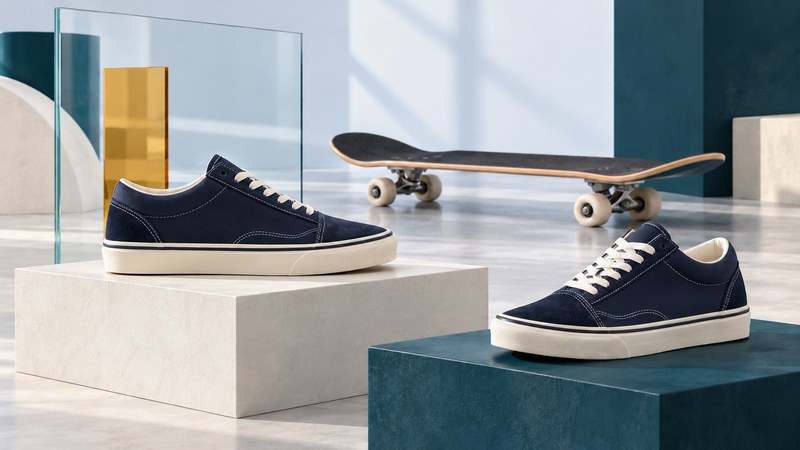
Tony Hawk’s name can identify a footwear brand, a signature product or an athlete’s association with a company. Begin with the exact shoe and its maker. The historical Kohl’s Tony Hawk footwear line included fashion skate shoes, and its license specifically excluded the professional skate-shoe category.
Place the Kohl’s line in its time
The February 1, 2007 licensing announcement reproduced by SGB described a footwear range including fashion skate shoes and sandals. Kohl’s would handle design, with Hawk participating in review. The stated exclusion for professional skate shoes is essential to interpreting that announcement: the license described a retail fashion range, not a universal performance endorsement for every shoe carrying the name.
A separate piece of brand history appears in Cherokee’s 2014 annual filing, which documents acquisition of Hawk and Tony Hawk apparel-related assets and a Kohl’s retail license. Its 2018 filing describes changes to apparel exclusivity and the January 31, 2018 expiration of that agreement. These apparel records have their own scope; they should not be used to invent the terms or end date of a separate footwear contract.
Identify the pair before comparing it
Photograph the tongue or interior label, outsole, side profile and box label if available. Record the full brand wording, model or style number, size system and any manufacturer information. For an online listing, ask for photographs of the actual pair and clarify whether the seller’s title reproduces the label or supplies an informal description.
| Question | Useful evidence | What it helps establish |
|---|---|---|
| Which line is it? | Label, style code and dated maker or retailer record | The named product and its historical context. |
| What is it intended for? | Exact-model description and specifications | Whether the maker describes casual wear or a particular activity. |
| How is it built? | Material information and close views of sole attachment, lining and wear areas | Properties you can compare across actual shoes. |
| What condition is it in? | Current photographs of both shoes, sole edges and interior | Visible wear or damage; further inspection may still be needed. |
An image match is a research lead. Strong identification combines several details that agree, especially a style number and a reliable dated record. Keep a seller’s attribution separate from what the label or manufacturer confirms.
Evaluate use and fit separately from branding
Choose the job first: casual everyday wear, a collection display or skateboarding. For an activity purchase, look for the manufacturer’s description of the exact model and inspect how the sole, upper and fastening suit your needs. A broad category such as “skate style” leaves construction and performance unresolved.
Try the shoes with the socks you expect to wear, on the retailer’s permitted surface. Check toe space, heel movement, pressure across the forefoot and whether the fastening holds comfortably. Compare both feet. Use a different shape or size when needed instead of expecting the name on the shoe to resolve a poor fit.
For an older pair, inspect sole separation, cracking, worn tread, lining and fastenings before deciding how to use it. A clean photograph or an unused appearance is only part of a condition assessment. Ask a knowledgeable footwear repairer about doubtful structural damage.
Work through an ambiguous listing
Save the source URL and date alongside your photographs. That small record is useful when comparing another listing or replacing a worn pair. Evaluate a present-day purchase using its present-day maker and retailer terms; the 2007 exclusivity announcement supplies historical context.