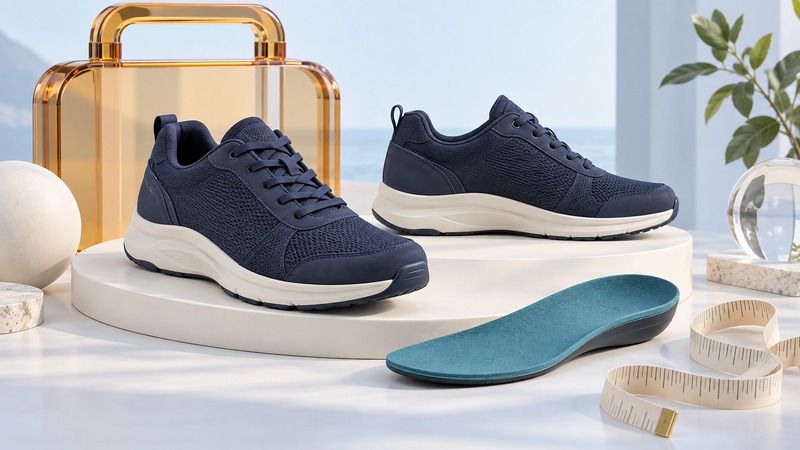
Earth has sold different kinds of footwear across its history. Begin with the exact model in front of you: its shape, fit, materials and intended use. Historical references to a Kalso negative heel should not be carried across an entire present-day collection.
Identify which Earth shoe you mean
The historical Kalso design places the heel lower relative to the forefoot. In a December 2018 announcement issued by Earth Shoes, the company described a capsule collection reviving the negative-heel concept, with updated materials, for January 2019. That is dated evidence about a particular launch.
The current Earth catalog includes different heel types and heights. This variety is a reason to inspect each product's specifications. A named brand, an arch-support label, an outsole heel height and a heel-to-forefoot difference describe different things.
When considering an older or secondhand pair, record the model name and photograph the label, outsole and profile. Check wear, lining condition and sole attachment. A seller's use of vintage, Kalso or comfort wording is a starting point for identification, not a full specification.
Test fit on both feet
Try the pair with the socks and any prescribed insert you expect to use. Fasten it normally, stand, and walk on the retailer's permitted indoor surface. Check both feet rather than judging only the more comfortable side.
Guy's and St Thomas' NHS footwear guidance emphasizes toe-box depth, width, secure fastening and approximately 1 cm ahead of the longest toe for the shoes discussed in its advice. Use these as fit checks, with individual clinical advice taking priority when you have a foot condition or prescribed footwear.
| Area | Useful result | Reason to try another fit |
|---|---|---|
| Toes | Room in length, width and depth while standing | Toes touching, compressed at the sides or pressed from above |
| Heel and fastening | Foot stays securely positioned during a short walk | Repeated slipping or tightening that creates pressure |
| Instep and footbed | Comfortable contact without a painful ridge | A concentrated pressure point or persistent rubbing |
| Movement | A comfortable, natural-feeling short indoor walk | You alter your gait to avoid discomfort |
A larger size can add length without solving a shape mismatch. Compare a different width or last—the form around which the shoe is made—when the problem is across the forefoot or over the instep. Follow the return policy while testing; an outdoor trial may change return eligibility.
Turn comfort claims into questions
Cushioning describes one aspect of the underfoot feel. Arch support describes a contour or structure. Neither phrase tells you how the shoe fits your foot or establishes a treatment outcome. Ask which component is being described and whether it is removable or adjustable.
A claim about posture, pain relief or calorie burning needs evidence for the exact design, users and outcome. A company's description of a feature supplies different evidence from an independent clinical study. If the promised health effect is the main reason for buying, discuss the choice with a clinician who understands your needs.
For material preferences, inspect the upper, lining, sock or footbed cover, sole and decorative trim. A non-leather upper alone leaves other components unresolved. Ask the manufacturer about the particular colorway if the listing is incomplete.
Use a travel trial before the trip
After keeping a suitable pair, build up ordinary wear before a trip and observe rubbing, slipping and discomfort. Choose footwear for the actual itinerary: an urban walk, a formal dinner and a rough excursion can require different properties. Ask an excursion operator for activity-specific requirements.
Keep care instructions and model details with your packing notes. When a well-used pair needs replacement, recheck the new model even if the name is familiar. Materials, widths and construction can change over time.