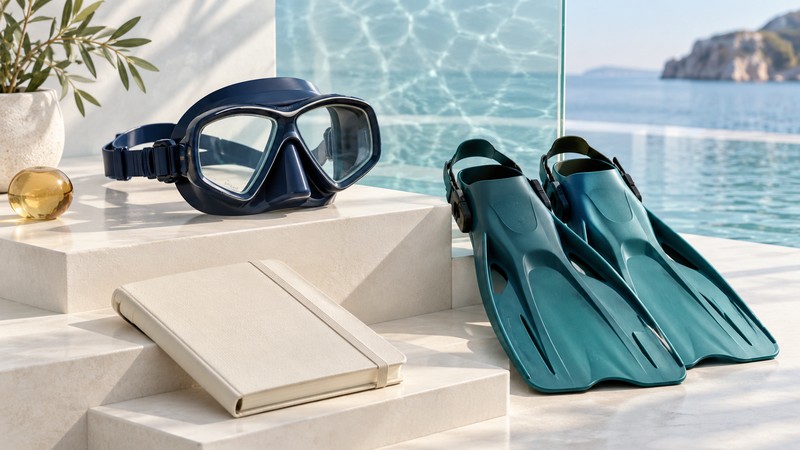
Start scuba by choosing the experience you want: a supervised introduction to see how it feels, or a course that leads to an entry-level certification. Then compare the actual teaching, water sessions and total cost. This guide helps you choose training; underwater skills belong in supervised instruction.
Choose your starting point
A PADI Discover Scuba Diving experience introduces equipment and basic skills under professional supervision. It does not confer a diver certification. An Open Water Diver course is a longer learning pathway with assessed knowledge and water skills. You can begin that course directly if you meet its requirements; a discovery experience is optional.
Ask for the exact program name and certifying agency before paying. Similar phrases such as “learn to dive” can describe different packages. Write down the qualification you expect to receive, what it permits and any age-related restrictions. PADI is used here as a documented example; compare another agency against its own current standards.
Understand the training stages
PADI’s certification FAQ describes three phases: knowledge development, confined-water practice and open-water dives. Confined water means a pool or an environment with pool-like conditions. For its Open Water Diver course, PADI describes four open-water dives. Completing an online module is one part of the course.
Scroll sideways on small screens. Keyboard users can focus the table and use the arrow keys.
| Stage | What it contributes | Question for the school |
|---|---|---|
| Knowledge development | Principles, equipment and dive planning. | Which materials are included, in what language, and when must I finish them? |
| Confined-water practice | Supervised learning and demonstration of skills. | Where will practice happen, and how is extra practice arranged? |
| Open-water training | Applying and assessing skills in the diving environment. | Where are the dives, what are conditions usually like, and what happens if weather interrupts? |
Choose dates that leave room for learning and changes in conditions. Ask how the instructor determines readiness to progress. A promise of rapid completion is less useful than a clear account of assessment, additional sessions and rescheduling.
Check prerequisites early
For PADI Open Water training, the FAQ specifies a continuous 200-metre/yard swim, or 300 metres/yards with mask, fins and snorkel, plus ten minutes floating or treading water. Discuss swimming confidence, age eligibility and any adaptive arrangements with the school before booking. Requirements and supervision limits should be confirmed for the exact program.
Complete the current medical questionnaire supplied by your training provider honestly and early. Divers Alert Network explains the screening process: answers may indicate that a medical evaluation is needed. Follow the form’s instructions and obtain the required evaluation before water training. A course booking or a previous holiday dive cannot establish medical fitness.
Ask the school which personal equipment it expects you to bring and which sizes it can supply. Arrange a fitting before buying a full kit. Identify the instructor or teaching team, the planned student group, the training location and whom to contact if you need more time.
Compare complete course costs
The PADI Open Water course booking page distinguishes eLearning from arranging the water-training stages through a dive center. Request a written, itemized quote from each school. Compare the same endpoint: all required training completed and the certification processed.
- Learning materials and access to online study.
- Confined-water and open-water instruction.
- Equipment rental, exposure protection and any required personal purchases.
- Site entry, boat trips, transport and certification fees.
- Charges and terms for additional practice, missed sessions or referrals.
If you study and practice near home but plan to finish elsewhere, get both centers to agree to the referral arrangements before making travel commitments. Confirm the paperwork, completion window, accepted prior training and remaining fees.
Make a booking you understand
Download the scuba course comparison checklist (plain text). Record two candidate schools, their written inclusions and the unresolved questions. Keep medical answers in the provider’s private process, separate from a shared shopping worksheet.
A useful booking decision has three parts: you meet the prerequisites, the school can support your learning, and the complete package fits your time and budget. Ask about the next suitable supervised experience after certification, especially if your first holiday destination differs from the water where you trained. Keep your training record and discuss any gap in practice before returning to diving.