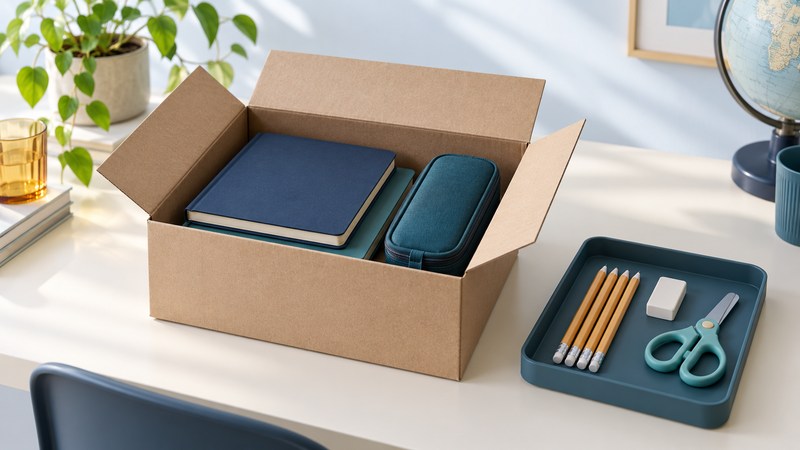
A useful school-supply plan begins with a specific classroom or recipient list. Match what is needed, reuse what still works and fill the remaining gaps in the right quantities. For a donation drive, the recipient's ability to use and store the supplies matters as much as the number collected.
Choose the route below that fits your task. Use the printable supply inventory and donation planner to record specifications, usable stock, quantities still needed and delivery arrangements.
For families: turn the list into an inventory
- Get the current list. Use the school or teacher's official channel and match the grade, course and school year. Ask which items are needed immediately and which can wait.
- Inspect what you have. Test pens and markers, count usable pencils and check folders, bags and pencil cases. Separate incomplete or damaged items from usable stock.
- Keep specifications attached to quantities. Notebook ruling, binder size, calculator model or headphone connection can determine whether an item works for the class.
- Ask about substitutions. Clarify an expensive or unclear request before buying. A different size or format may create extra work for the child or teacher.
- Buy the remaining gap. Mark each purchase against the inventory and keep receipts until you have confirmed that the item is suitable.
If the list is unaffordable, contact the school privately about supply assistance, shared materials or the immediate priorities. That conversation can be more useful than buying a cheap substitute for a required item. For course books and digital access, use the separate textbook comparison process.
Compare quantities you can actually use
Write one unit beside every quantity: pencils, notebooks, sheets or packs. Then convert pack prices to that unit. Check that all options meet the same specification before comparing price.
For consumables, note a sensible replenishment point instead of buying a year's supply without knowing use. For durable items, check fit and function: a backpack should carry the actual materials comfortably, and a pencil case should open easily for its user. Keep individual accessibility needs part of the specification.
| Field | Example entry | Why it helps |
|---|---|---|
| Specification | Teacher-approved ruled notebook | Prevents comparing incompatible products |
| Required / usable / remaining | 6 / 2 / 4 notebooks | Keeps reused stock in the decision |
| Offer and total | 4-pack; $4.80 before tax | Shows the cash needed, not just unit price |
| Needed by / received | School-supplied date / check when complete | Separates planned from finished purchases |
For a supply drive: ask the recipient first
Choose one receiving school or organization and agree on a contact person. Request a prioritized list with quantities, specifications, accepted condition and items to avoid. Ask about storage space, delivery dates and how supplies will be distributed. Get the school's approval for the collection process before promoting it.
A teacher-requested project is one way to make the need concrete. DonorsChoose explains its process: teachers request resources, the organization checks the project, and it purchases and ships requested items when funding is complete. For a drive you organize yourself, get that same clarity directly from the recipient.
- Publish a bounded request: specify accepted items and the collection end date.
- Track commitments: record promised donations separately from goods actually received.
- Check each delivery: count usable items and set aside items that need the recipient's decision.
- Coordinate surplus: ask before redirecting it to another organization.
- Budget the whole activity: include packing, transport and the time needed to sort and deliver.
For overseas donations, consult an established receiving organization before collecting goods. Local purchasing may better match curriculum, language and distribution needs. Shipping, import and acceptance requirements must be checked for the actual destination; a past shipment is not a standing delivery arrangement.
Close the loop with a usable handover
Label boxes by item and quantity, include a simple inventory and confirm the receiving time. Ask the contact to acknowledge the items received and identify any remaining gaps. Keep donor communications focused on the agreed need and actual result.
A short final report can say “We delivered 40 requested notebooks and 12 pencil packs on the agreed date.” Avoid publishing children's names or images as proof of impact without the school's appropriate permissions. Record what the recipient would change next time so the next drive starts from experience.
If a school group is considering a purchase-linked collection instead, use the milk-cap fundraising checks to verify the offer and compare the return with the work involved.