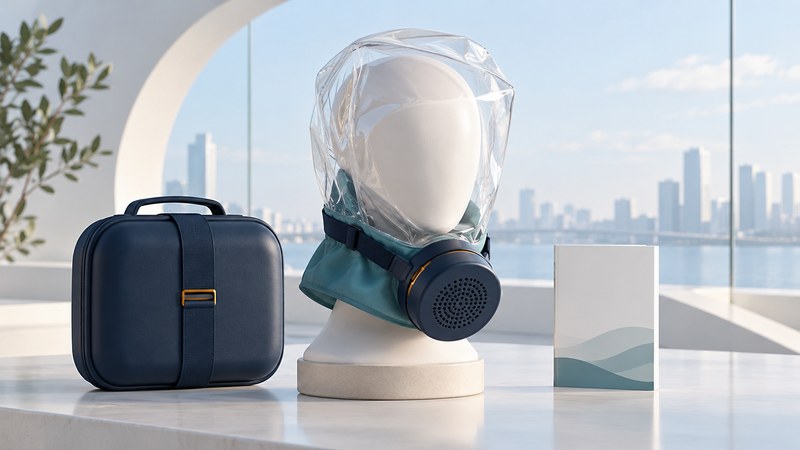
Evaluate an escape hood by its exact model, approved configuration, intended hazards, and condition. SCape is a product family; a familiar name or historical performance claim cannot establish what a particular unit can do.
Equipment selection for a hazardous workplace belongs within a qualified hazard assessment and escape plan. An escape respirator supports leaving a defined hazardous atmosphere. It is not permission to enter one, fight a fire, or attempt an improvised rescue.
Start with the model and its documentation
ILC Dover's current escape-respirator page, reviewed in October 2026, describes SCape CBRN30 and CO/CBRN30 as CAP 2, 30-minute escape respirators. The CO designation matters: carbon-monoxide protection should be established from the exact variant's documentation.
The manufacturer's CBRN30 listing identifies product 6000-10435-03 and cites NIOSH approval TC-14G-0277. Treat this as a starting point for checking the full approval record and the physical unit, including all components and limitations. A statement about a current model does not validate an older SCape or Baby SCape unit.
The manufacturer's CO/CBRN30 technical sheet lists a five-year shelf life for the described system. Read the actual unit's dates, instructions, and storage history; do not calculate remaining life from a web page's publication date.
Check the approval record and full label
NIOSH explains that its Certified Equipment List is the official listing of approved respirators and is updated when status changes. Search using the approval number and manufacturer. Match the protection type and complete approved assembly to the unit and its documentation.
- Record manufacturer, model, product number, serial or lot number, and approval number.
- Read the complete approval label, including cautions and component combinations.
- Obtain the user instructions for that revision and language.
- Resolve mismatches, obsolete records, or missing documentation with the manufacturer and safety professional before relying on the device.
NIOSH's CBRN respirator guidance stresses environment-specific use and exact approved configurations. Approval for one type of protection cannot be inferred from the presence of a blower, hood, or particular cartridge color.
Understand duration and atmosphere together
A stated escape duration refers to the applicable approval and test conditions. It should not become a promise of that much usable time in every concentration, environment, or emergency. Leave promptly under the established plan and follow the exact instructions and limitations.
Air-purifying equipment filters surrounding air; it does not provide its own oxygen supply. Oxygen-deficient atmospheres require suitable air-supplying protection and professional planning. Respiratory filtration against radioactive particles also differs from shielding against external penetrating radiation. A general “CBRN” description must be read with its specific protection scope.
The NIOSH CBRN Respiratory Protection Handbook is a detailed reference for selection, use, and maintenance. A household deciding how to respond to an incident should follow local emergency instructions, including evacuation or sheltering directions, rather than choosing a device from an alarming sales claim.
Make readiness a documented task
On a narrow screen, scroll the table sideways. Keyboard users can focus the table region and use the arrow keys.
| Area | What to establish |
|---|---|
| Hazard and escape route | The assessed atmosphere, suitable protection, accessible equipment, and usable route. |
| Condition and dates | Packaging, expiration, storage history, inspection schedule, and replacement triggers. |
| People | Who may use the device, individual limitations, assistance, and training arrangements. |
| Practice | How instruction and exercises will use manufacturer-approved training equipment. |
Opening a sealed emergency unit can affect readiness or activate components. Use the manufacturer's training method instead of opening service stock for a casual demonstration. Record who resolves a failed inspection and how replacement protection will be provided.
Download the escape-hood documentation checklist. For the broader distinction between filter performance, approval, and fit, see filtration masks and respirators.