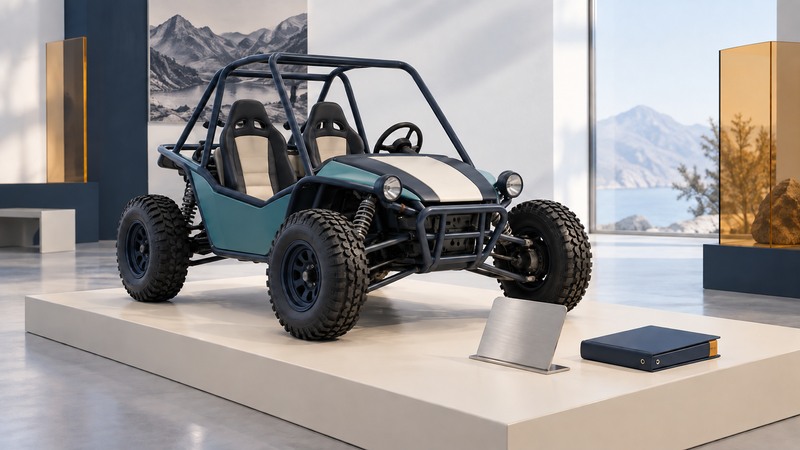
Treat a used Ridge Runner RTV as an individual legacy vehicle whose identity, condition and support need to be established together. Collect its records before planning a test drive or ordering parts. A useful buying decision should tell you what the machine is, who can service it and which essential questions remain unresolved.
Identify the Ridge Runner and the actual vehicle
The Ridge Runner associated with Nampa, Idaho, was a two-seat off-road buggy. In her July 2005 Boise Weekly report, preserved on the writer's site, Katy Dang interviewed company president Dan Denney and described a test drive. That firsthand account establishes historical context; the vehicle's applicable manufacturer documents are needed for operating limits.
Record the frame or vehicle identification, manufacturer plate, model designation, claimed year and engine identification separately. Photograph the complete vehicle and each marking. Compare them with ownership documents, invoices and any supplied manual. Registration year, an engine number and a seller's model description answer different questions.
Documentation scope: a complete, authenticated model-specific Ridge Runner operating manual and current factory parts support were not established for this guide. Ask the seller to supply the matching records and have a qualified specialist assess them. Manuals for another manufacturer's similarly named RTV apply only to that manufacturer's equipment.
Resolve the ownership and service record
Ask for a timeline of owners, storage, repairs and modifications. Include replacement engines, altered suspension, wheels or tires, chassis repairs, seat or restraint changes and accessory wiring. Obtain itemized invoices and photographs from before major work when available.
Swipe this table sideways, or focus it and use the arrow keys.
| Question | Evidence to collect | When it remains unresolved |
|---|---|---|
| What vehicle is this? | Matching physical identifiers and ownership records | Pause the purchase until identity and ownership can be reconciled |
| Which instructions apply? | Manual edition and model range; explanation of installed changes | Request a specialist review before operation |
| Can essential systems be serviced? | Written inspection scope, parts identification and supplier confirmation | Obtain an actual repair path and estimate |
| What limits govern use? | Applicable load, occupant, tire and operating instructions | Leave the limit unconfirmed; do not borrow another model’s rating |
Separate an engine service document from the complete vehicle manual. Engine identification may help a technician find engine parts, while brakes, steering, suspension and occupant protection require their own applicable evidence. Ask a proposed repair shop whether it can inspect this particular configuration and obtain its essential parts.
Commission an inspection suited to the machine
Give the specialist the records and an explicit list of unknowns. Request assessment of the frame, welds and repairs; steering and suspension; brakes, wheels and tires; fuel, cooling and electrical systems; seats, restraints and their mountings. Have modifications identified and their effect on serviceability explained. A visual roll structure alone establishes no verified protection rating.
Ask the inspector to decide whether the condition and available instructions support a controlled functional evaluation. Do not use a demonstration climb, rollover claim or high-speed run as a substitute for that assessment. Have defects, required work and unresolved documentation written into the report.
CPSC's off-highway vehicle safety guidance identifies overturning, collisions and occupant ejection as hazards. It recommends qualified hands-on training and protective equipment including a helmet. Apply the correct vehicle's operating instructions and seek suitable instruction before use; this buyer checklist supplies no driving procedure.
Connect the purchase to a workable use plan
Ask the relevant land manager which vehicle class, width and seasonal restrictions apply to your proposed routes. For example, the Forest Service explains how its Motor Vehicle Use Maps designate routes by vehicle type and season. Use the current map and closure information for the actual forest, and confirm how the identified vehicle fits the designation.
Plan transport from measured dimensions and a verified loaded weight, using the transport vehicle, trailer and loading equipment's ratings and instructions. Obtain suitable transport assistance when the necessary information is missing. A statement that a buggy fits a pickup bed leaves weight, loading and securement questions unresolved.
Compare purchase price, inspection, transport, immediate repairs and parts lead times. Proceed only with a clear account of what is established and the conditions to resolve before use. The Polaris ownership guide covers a separate manufacturer’s vehicle families if you are comparing ownership requirements.
Download the Ridge Runner identity and support record to record evidence, estimates and next actions.
Researched and updated September 20, 2026. Use the linked sources for applicable documents and current service, access or event information.
Explore all motorsports guides.