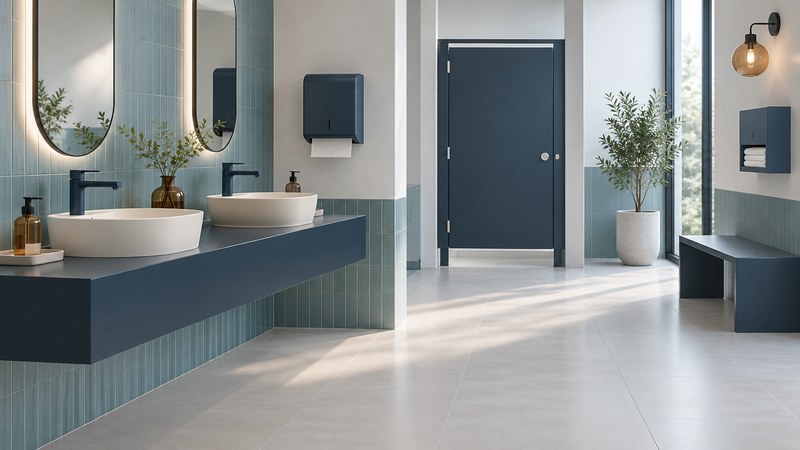
A good public restroom lets a person find it, enter, use the fixtures, wash and dry their hands, and leave with dignity. Evaluate that sequence before the décor. For operators, the useful result is a list of observable problems with an owner and a follow-up check.
Walk through the visit
Scroll horizontally to read the table. Keyboard: focus the table region and use the arrow keys.
| Stage | What to observe | Useful report |
|---|---|---|
| Find and enter | Clear directions, open route, understandable door | Exact entrance or obstruction. |
| Use a fixture | Working toilet, paper supply, privacy and lock | Fixture location and specific fault. |
| Wash and dry | Running water, soap and usable drying provision | Which supply is empty or control fails. |
| Move and leave | Clear floor, lighting, bins and exit | Spill, obstruction or maintenance need. |
This is a practical observation framework, not a score that averages away a serious fault. A broken lock or blocked route stays actionable even when the room is attractive. Visitors should report hazards to staff and choose another available facility when needed.
Look for a functioning hygiene routine
Check whether supplies are usable now: a dispenser on the wall helps only when it works and contains the right product. CDC’s handwashing guidance recommends soap and clean running water, scrubbing for at least 20 seconds, rinsing and drying. Room design and stocking should let people complete that sequence.
Record observable conditions such as pooled water, visible soil, overflowing bins and empty dispensers. Smell or shine alone cannot establish microbial safety. Operators need a cleaning plan appropriate to their facility, staff training and the directions for their chosen products and equipment.
Set review frequency around use and recurring problems. Keep replenishment, cleaning and repair as distinct actions: filling a soap dispenser cannot resolve a leaking tap. See Hands-Free Taps and Mixing Valves for the separate responsibilities of controls and water management.
Consider the person using the room
In the United States, the Access Board’s toilet-room guide explains requirements involving routes, door maneuvering space, fixture clearances, grab bars and reachable accessories. Which provisions apply depends on the facility and work involved. Use qualified assessment and the applicable jurisdiction’s requirements for a compliance decision.
During routine checks, notice movable obstructions: a bin beneath a sink, a cart in a route or supplies placed where the user cannot reach them. Keep required space usable after the room opens, and obtain appropriate review before changing fixtures or accessory positions.
Also consider privacy, lighting, understandable controls and the needs of people assisting someone else. Ask about family or assistance facilities when those are needed. Visitor feedback can reveal a difficulty that a maintenance checklist has missed.
Turn observations into completed work
Use the restroom review record (plain text). Write the location, date and time, observed issue, immediate response, person responsible and recheck result. Keep reports factual and avoid recording or photographing other users.
For operators, review repeated entries. Recurring shortages might call for different replenishment timing; recurring faults may require equipment service. Record the change and whether it worked.
What the 2005 award illustrates
The Cintas Best Restroom Hall of Fame lists Fort Smith Regional Airport as the 2005 winner and describes cleanliness, comfortable seating, décor and automated fixtures. It is a dated example of attention to the visitor experience. Any present-day assessment still depends on the room as it operates during the visit.
For household equipment selection, compare heated and bidet seats; domestic comfort features and public-facility access requirements call for different checks.
Explore Bath guides
Browse personal care, bathroom equipment and fragrance histories.