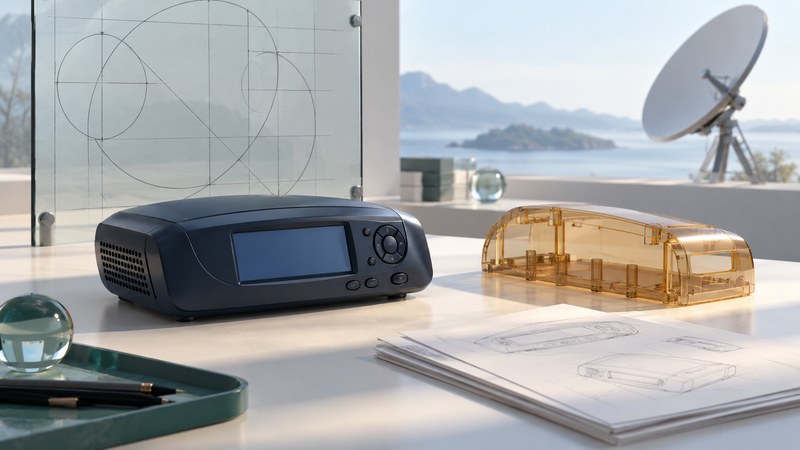
XAct’s ReGo was a 2005 Sirius satellite-radio project promoted around receiving broadcasts, storing listening and playing personal music files. The surviving record supports a history of its announcement and development. It leaves the final retail configuration and shipment status unresolved. Reading those stages separately makes the project more understandable than a single list of supposed specifications.
Follow the dated evidence
On a narrow screen, swipe the table sideways or focus it and use the arrow keys.
| Date and document | Evidence | Supported conclusion |
|---|---|---|
| January 7, 2005 reporting | Ed Oswald’s BetaNews report records an interview with XAct spokesperson Jesse Stowell. | XAct discussed a spring release and optional CompactFlash-based MP3 playback. Those were prospective plans. |
| January 2005 portability dispute | The same report describes Sirius disputing the wearable characterization. | Portability claims were already contested; they need a stated listening mode and setup. |
| June 8, 2005 document | ReGo XTR-5 manual, DRAFT rev.21. | A dated development document survives. Its draft status limits its use as final operating evidence. |
| Unfinished kit information | Draft page 6 retains placeholder accessory model numbers. | The document cannot identify a complete set of final retail kits. |
Treat each row as evidence of a particular stage. A promised season is a plan; a later draft shows continuing documentation. Neither alone demonstrates the contents of a retail box or delivery to a customer.
Separate three proposed listening functions
The January promotion combined several appealing ideas. For historical interpretation, separate the questions each would have needed to answer:
- Live satellite reception: what antenna, power source and surroundings were required while listening?
- Recorded listening: what material could be stored, how was it captured, and under what conditions could it be played later?
- Personal MP3 playback: how would user-supplied files reach the device, and which media and file formats would a finished unit accept?
The contemporary spokesperson interview connects CompactFlash to the proposed MP3 feature and reports uncertainty about whether a card would be included. That dated claim belongs to the announcement stage. It supplies no independent test of the eventual hardware.
A device can be easy to move between locations while still requiring a particular antenna and power arrangement for live reception. Stored listening raises a different question: whether previously captured sound can be heard away from that reception setup. A historical description should name the mode being discussed.
What the draft contributes
The surviving XAct document gives the project a model identity, XTR-5, and a dated revision. Its unfinished accessory fields are useful evidence of the document’s state. They also mean that a reader should seek a completed, model-matched source before treating a kit name or procedure as usable guidance.
Keep the announcement artwork separate from photographs of an observed unit. A rendering explains what a company presented, while a photograph with provenance can document a physical object. Neither image alone establishes which functions worked or how widely a product was sold.
Keep the release question open
The sources established here do not resolve whether ReGo reached retail customers in a finalized form. They also do not establish a cancellation. A final manual, documented shipment, dated customer purchase with identifiable hardware, or attributable examination of a production unit would materially improve that account.
When adding a newly found source, record who created it, when, which model or revision it describes, and whether its statements are plans or observations. Retain conflicting claims with their dates until stronger evidence resolves them. Multiple pages repeating the same announcement still trace back to one claim.
Readers looking for documented receiver operation can compare Delphi MyFi live and stored listening and SkyFi 2 replay and accessory kits. Those guides provide a practical contrast while preserving ReGo’s distinct place as a development-history subject.