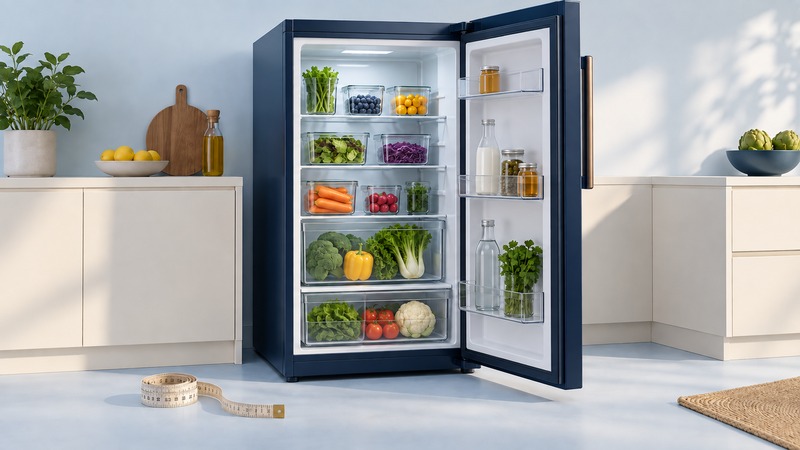
The useful refrigerator is one that fits through the house, opens fully in its final position and holds the food you actually buy. Start with measurements, then compare storage and operating cost. A finish or door style comes later.
Measure three kinds of space
Use a tape measure and the exact model’s installation manual. Whirlpool’s measurement guide covers cabinet dimensions, door opening and delivery access. Keep each manufacturer’s required ventilation clearances with the model number; clearance requirements vary.
Focus the table and use the arrow keys to scroll sideways.
| Area | Record | Why it matters |
|---|---|---|
| Cabinet opening | Width, height and depth; smallest measurement where surfaces vary | Trim, flooring and overhead cabinets can reduce clearance |
| Doors and drawers | Depth with doors open, nearby wall and handle clearance | A door may open but still block removal of a crisper |
| Delivery route | Doorways, corners, stairs and landings | A narrow turn can prevent delivery even when the kitchen opening fits |
| Connections | Outlet and water connection locations | Confirm access and installation requirements with the installer |
Ask the seller to confirm whether published depth includes handles and whether delivery dimensions assume doors removed. Obtain a written delivery and removal plan before paying. Use the printable refrigerator comparison sheet to keep two models on the same basis.
Test your real containers
Bring dimensions of your largest baking tray, leftover container and beverage bottle. Check shelf adjustment, drawer reach and freezer access. A larger cubic-foot figure can still leave an awkward shelf arrangement for your groceries.
Imagine unloading a normal shopping trip. Where do tall bottles go? Can yesterday’s casserole sit level? Does the ice maker occupy space you need for frozen meals? A demonstration model helps answer these questions. Verify which shelves and bins are included in the exact configuration you order.
Calculate with your own electricity rate
The FTC explains the yellow EnergyGuide label: its annual cost is an estimate using standard assumptions. For your comparison, multiply the listed kWh per year × your electricity price per kWh. The ENERGY STAR refrigerator directory provides another way to identify certified models; compare candidates of suitable size and configuration.
Focus the table and use the arrow keys to scroll sideways.
| Candidate | Annual use | At $0.20/kWh |
|---|---|---|
| A | 450 kWh | 450 × $0.20 = $90/year |
| B | 600 kWh | 600 × $0.20 = $120/year |
A saves an estimated $30 per year in this example. If A costs $180 more, the simple payback is $180 ÷ $30 = six years. That calculation omits changing rates, repairs and financing. Include delivery, haul-away, installation and replacement filters in a separate ownership-cost comparison.
Check the installation before loading
Inspect the cabinet and door seals, confirm leveling and door movement, and follow the manual’s startup instructions. Use an appliance thermometer to verify 40°F or below in the refrigerator and 0°F in the freezer. Allow air to circulate around stored food. Keep eggs in their carton on an interior shelf. FDA’s cold-storage advice explains these checks.
Save the model and serial number, manual, receipt and warranty information together. If temperature remains above the target after the specified startup period, contact the installer or manufacturer before relying on the appliance for perishable food.