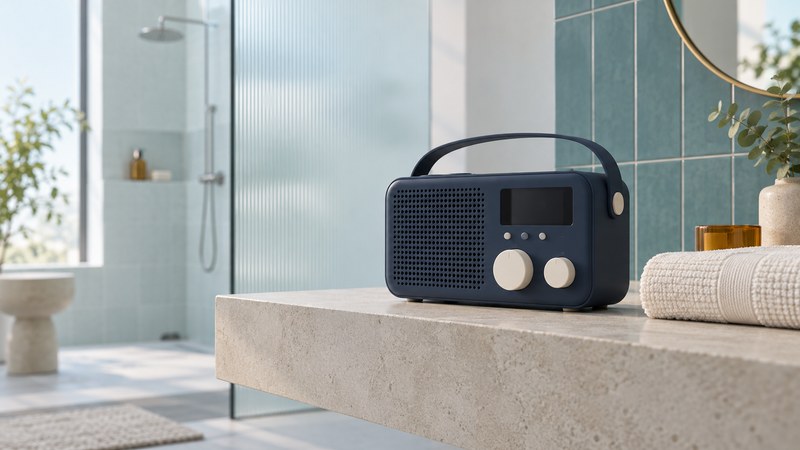
A useful shower radio lets you select a station, hear speech clearly and change the volume with simple controls. Begin with the exact model’s instructions for water exposure, power and placement. Then check reception in the bathroom: a good tuner elsewhere in the house may need a different position here.
Decide where the audio comes from
An AM/FM receiver tunes broadcasts using its own radio hardware. A Bluetooth speaker plays audio supplied by another device, so include that phone or player and its connection in the test. A combined product may offer both paths. Decide whether you want one familiar morning station, streamed programs, or both; this keeps decorative features from dominating the choice.
The microphone-shaped American Idol AM/FM radio announced in 2006 was a novelty approach to bathroom listening. Its shape and period water-resistance claim provide little guidance for assessing a surviving unit’s seals or exposure limits. A verified IP rating for that historical model is not established here. Apply the same evidence checks you would to any unfamiliar radio.
Read the water and power instructions together
Look for an exact model number, a manufacturer’s stated rating where available, and its operating restrictions. A rating describes specified test conditions; the manual tells you how the product is intended to be used. Treat soap, hot spray, immersion and steam as separate questions to resolve from the documentation. The word “water-resistant” alone leaves those conditions unspecified.
The Sangean H201 FCC product page identifies an IPX7 AM/FM/weather model. Its manufacturer manual download (ZIP containing language PDFs) makes a consequential distinction: use batteries in the shower room and do not use the AC adapter there. That is a model-specific instruction, even though an adapter connection exists. Read the manual for your own unit before choosing a power source.
Inspect the battery cover, seals and port closures while the unit is dry, following its instructions. Damage or a missing closure is a reason to resolve the condition before wet-area use. Keep a mains-powered charger, adapter and ordinary extension lead out of the shower setup; use equipment and a placement expressly allowed by its manufacturer.
Compare what you will use every morning
On a narrow screen, swipe the table sideways or focus it and use the arrow keys.
| Check | Evidence to obtain | Practical decision |
|---|---|---|
| Power and exposure | Exact manual, allowed power source and placement instructions | Choose a setup that fits those restrictions without improvising a cable route. |
| Controls | Photographs or a dry demonstration of power, volume and presets | Favor controls you can identify easily and operate without navigating a phone. |
| Station reception | Test your station in the intended permitted position | Listen for stable speech and music, then compare a second allowed position if needed. |
| Mounting and access | Manufacturer-approved support or mounting method; space to open the battery compartment when dry | Avoid a position that needs a precarious reach or blocks ordinary use of the shower. |
| Condition and upkeep | Intact covers and the documented cleaning/battery procedure | Account for missing parts before valuing a used unit. |
A large volume control helps only if the direction and grip are usable. A preset helps only if you can select it without cycling through unwanted modes. Try those actions dry before relying on them as part of a morning routine.
Run a short location test
- Prepare outside the wet area. Install the specified batteries, close the covers as instructed, and save the desired station if presets are available.
- Place the radio in an allowed position. Use its documented support or mounting method. Check that it stays stable and the controls are accessible.
- Tune and listen. Compare normal speech and music at a comfortable level. Record the station, position and any dropouts or noise.
- Change one thing if reception is poor. Try another permitted location or the antenna adjustment described in that model’s manual. For example, the H201 manual distinguishes its FM wire antenna from adjusting the radio’s orientation for AM.
- Judge the real routine. If ordinary bathroom noise obscures speech, consider a different allowed position or listening before or after showering rather than simply turning the volume higher.