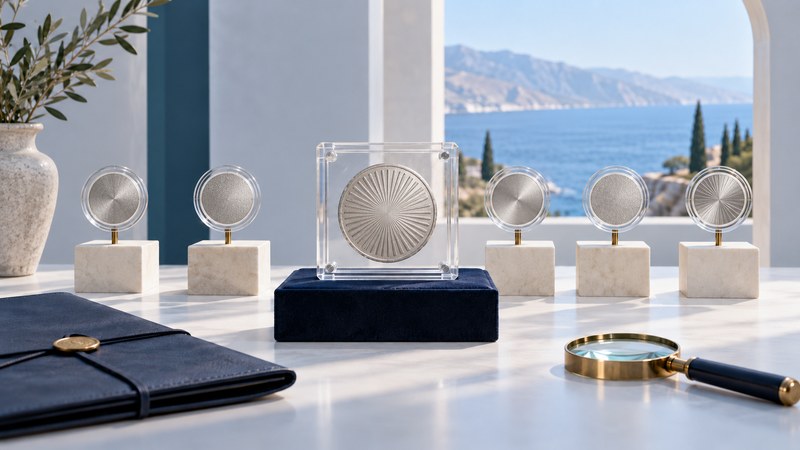
The 1913 Liberty Head nickel is famous because five documented specimens connect an unusual issue to a traceable chain of collectors, dealers, and museums. Its story is a useful lesson in authentication: an extraordinary coin requires evidence about the individual object as well as an explanation of the design.
What is established, and what remains uncertain
The Liberty Head design was replaced by the Buffalo nickel in 1913. The American Numismatic Association's museum account identifies five known 1913 Liberty Head nickels and describes their manufacture as a mystery. Former Mint employee Samuel W. Brown advertised for examples in 1919 and displayed five at the ANA's 1920 convention. His role in their later public history is documented; the exact circumstances of production remain uncertain.
The five specimens are commonly identified as Norweb, Eliasberg, Olsen, Walton, and McDermott. Those names help researchers follow individual coins through changing ownership. They are more useful than a generic “rare 1913 nickel” description when locating museum records or auction documentation.
The Smithsonian's discussion of the V-nickel likewise separates the known coins from competing explanations of their origin. A responsible account preserves that distinction instead of turning a plausible story into a proved event.
Why the Walton rediscovery matters
According to the ANA, George Walton acquired his specimen in 1942. Following his death in 1962, it was misidentified as a counterfeit and remained with his family. They brought it to the 2003 ANA convention in Baltimore, where it was authenticated and reunited with the other four.
The case shows the value of retaining an object and its documentation when an attribution is uncertain. It also shows why authentication can involve comparison with known specimens and specialist examination. The historical outcome gives no shortcut for deciding whether a different coin is genuine.
Build an evidence file before pursuing a rarity claim
- Record the object. Photograph both faces, the edge where visible, and the entire holder. Retain original image files and note who supplied them.
- Transcribe exactly. Copy the date, inscriptions, grade label, certification number, and any variety attribution without improving unclear characters.
- Record provenance. List owners, receipts, auction lot references, and correspondence, distinguishing documents you have seen from stories you have been told.
- Check an official record. Use the grading service's own website, reached independently, and compare all available fields and images.
- Seek physical examination. Ask a qualified numismatic specialist or grading service what examination is appropriate before a high-value purchase or submission.
Leave a potentially important coin uncleaned and in its existing holder while obtaining advice. Opening a holder can discard useful evidence or alter the terms under which a service will examine it. Photographs help a specialist decide what to inspect; they have limits as authentication evidence.
Use certification checks as one part of the examination
PCGS explains its certification lookup as a way to compare the number, country, date or mint mark, denomination, grade, and available imagery. Compare the result with the actual coin and holder, including any obvious differences in design or surface marks.
Service guarantees have conditions. For example, the PCGS guarantee excludes counterfeit holders. A valid number copied onto another label therefore cannot carry the whole authentication argument. Read the current service terms and ask the service directly about an inconsistency.
If the description, photographs, and record disagree, pause the transaction and request an explanation. Preserve the listing and correspondence in your private records. A seller's willingness to provide clear evidence and a written return policy is useful information about the transaction.
Understand a sale result in context
A historical auction result belongs to a particular specimen, date, grade, sale venue, currency, and fee convention. Record whether a quoted figure includes the buyer's premium. A later sale can have different terms or an updated attribution, so comparisons need the original lot records.
For this exceptional issue, a price from one of the five documented specimens cannot be applied to a lookalike or an ordinary Liberty Head nickel. The productive first question is “What is this object, and what evidence supports that identity?” For routine collection building and record keeping, start with Coin Collecting for Beginners.