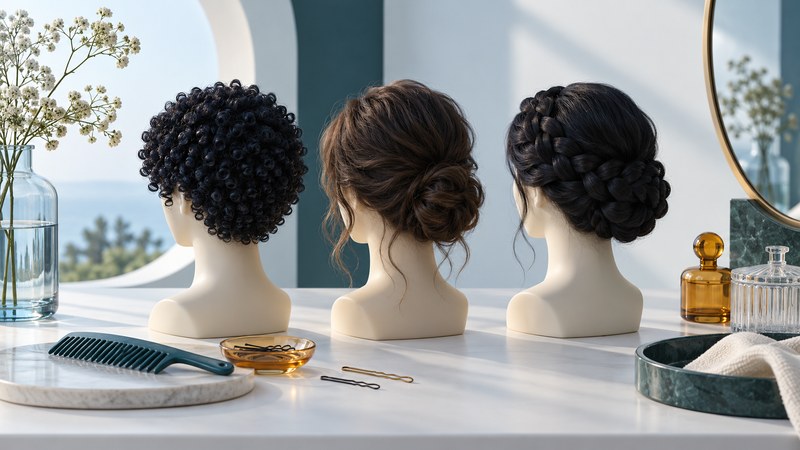
Choose a hairstyle you like, then test how it behaves on your own hair. Length, texture, density, accessories and the time available matter more than copying every detail of a reference photo. A successful trial gives you a style you can wear comfortably and a realistic getting-ready schedule.
Start with the hair you have
Describe three things you want: perhaps curls left visible, hair off your face and an accessory that stays secure. Add any limits, such as a sensitive scalp, a head covering, a preference to avoid heat, or a short preparation window. Bring these to a stylist or use them to narrow your DIY choices.
Short hair
Work with the shape, parting and texture already present. Trial a small clip or other detail if you want one. You can make an occasion feel special through a finish you enjoy without adding length.
Loose curls or coils
Use reference photos with a texture close to yours. Test the finished shape after your usual preparation routine, and check how any accessories sit without pulling.
Half-up or partly pinned
Useful to explore when you want some hair away from the face while keeping length visible. Check the weight and position of the secured section and whether it catches on clothing.
A bun, braids or gathered style
Test the design from the front, sides and back. Decide how much hair to leave around your face and whether the placement works with a collar, headrest or head covering.
These are starting points for a trial, not instructions that every hair type should follow. Ask a stylist experienced with your texture to explain any preparation they need from you.
Run a trial that answers useful questions
- Use the real accessories. Include clips, pins, a head covering or any hairpiece you intend to use. Wear a top with a similar neckline to your outfit.
- Time the whole process. Include preparation, drying where needed, styling and tidying. Record what you can do yourself and where you need help.
- Move normally. Sit, walk, turn your head and try a little dancing. Notice a pin that presses, a section that loosens or hair that catches.
- Photograph the result. Take front, side and back views in ordinary light. Save the useful reference and the steps or products you actually used.
- Choose one adjustment. Change the parting, placement or accessory and repeat the relevant check. A simpler version is a useful fallback.
Treat comfort as a requirement
A hairstyle should feel comfortable while you wear it. The American Academy of Dermatology's guidance on traction alopecia explains that repeated pulling can cause hair loss and that pain signals excessive tightness. Loosen or change a painful style promptly; discuss scalp symptoms or hair loss with a dermatologist.
For heat styling, follow the tool's instructions and your hair professional's guidance. The AAD's styling advice emphasizes reducing damaging heat and handling. Avoid repeatedly reworking the same section simply to chase a reference image.
Make the appointment specific
Send the stylist a current photo of your hair and one or two references, explaining the features you like. Confirm the service, trial arrangements, full price, arrival time and expected finish. Ask how to arrive: freshly washed, dry, detangled or otherwise prepared according to their instructions. Share any relevant allergies, scalp concerns and previous chemical services.
If your plan also includes a new cut, color or chemical treatment, use the hair consultation and upkeep guide to separate that decision from event-day styling.
Prepare a small, familiar touch-up plan
Pack only items you practised using and that the venue permits. Ask the stylist to show you how to secure a loose section and remove the style afterward. Keep the reference photo on your phone. Before leaving, check that the style works with your outfit, feels comfortable and gives you the movement you need for the evening.