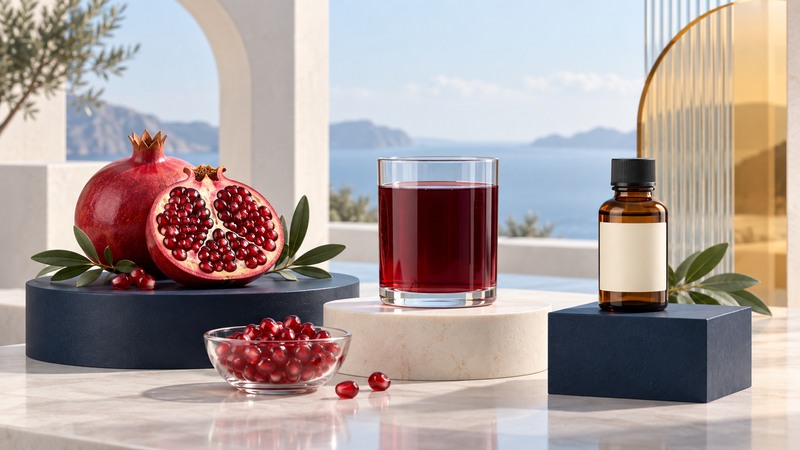
POMx is a pomegranate extract studied in specific formulations. To interpret a claim about it, identify the preparation, the amount, the comparison group and the outcome. A glass of juice, a capsule of extract and a laboratory antioxidant measurement supply different kinds of information.
Identify the preparation before comparing benefits
The POMx name appeared in research on extracts of the Wonderful pomegranate variety. For example, a randomized dose-comparison study published online in 2012 tested 1 g and 3 g daily POMx regimens in men with rising PSA after prostate-cancer treatment. Those details identify a research preparation and population; they are not a suggested personal dose.
For a product you are considering now, record the manufacturer, full ingredient list, extract amount per serving, any stated standardization and the number of servings. For juice, record the percentage juice, any other juices, portion, calories and sugars. A milligram figure for extract and a milliliter figure for juice cannot establish equivalence on their own.
On narrow screens, scroll the table sideways. Keyboard: focus the table and use the arrow keys.
| Product or result | What the information describes | What to establish next |
|---|---|---|
| Pomegranate juice | A drink with water, sugars and plant compounds | Exact juice blend and consumed volume |
| Concentrated extract | A preparation with specified ingredients and dose | Whether it matches the studied formulation |
| Polyphenol content | Amount measured by a particular method | Assay, units and comparable sample basis |
| Antioxidant test result | Activity under the test conditions | Whether a relevant human outcome was studied |
An advertised “equivalent to several glasses” statement needs its basis spelled out. It might compare one measured compound, total solids or a particular laboratory assay. Those are different comparisons. Ask for the measurement before using the phrase to make a health decision.
Read the overall evidence in its proper scope
NCCIH's pomegranate summary, updated in April 2025, describes possible blood-pressure effects that need further confirmation, small glucose changes and no clear lipid benefit. It also says the limited evidence leaves other health uses unresolved. Many studies have examined juice, which further limits assumptions about a capsule or a different extract.
An outcome such as a measured blood-pressure change must be interpreted with the participants, control drink, duration and uncertainty. A result in people receiving a specified amount for several weeks does not automatically apply to an occasional juice drink or a differently formulated supplement.
A prostate-cancer example shows why controls matter
The POMx dose-comparison trial observed increases in PSA doubling time in both dose groups, with no significant difference between them. Both groups received extract, so this design could not separate an extract effect from what would have happened without it. The researchers called for placebo-controlled work.
A 2015 placebo-controlled trial subsequently found no significant improvement in PSA doubling time from extract compared with placebo. A before-and-after change within one group can coexist with no meaningful difference between treatment groups. That distinction is central to interpreting a headline.
PSA doubling time is a biomarker-based outcome. It is separate from outcomes such as survival, symptoms or avoiding progression. Neither of these studies supports using pomegranate in place of prostate-cancer care. Take a product question to the treating team with the actual label and study, especially when treatment decisions are involved.
Turn a broad claim into a checkable question
Suppose a fictional advertisement says an extract “supports the heart through powerful antioxidants.” First ask what human benefit is proposed. Lower blood pressure, fewer cardiovascular events and a changed laboratory marker are distinct outcomes. Then ask whether the cited study tested this exact extract against an appropriate comparison.
Record five things: product and dose; participant group; comparator; primary outcome; and duration. Read whether the result was between groups, how uncertain it was and whether it was a primary or exploratory finding. If the advertisement only supplies a test-tube assay, the human question remains unanswered.
Choose food and discuss supplements separately
Juice can be chosen for flavor and culinary use while its label helps you plan a portion. For an extract intended for a health purpose, discuss the actual product with a clinician or pharmacist. NCCIH advises people taking medicines to discuss herbal products with their health professional and notes digestive symptoms, reported allergic reactions and limited safety knowledge for some forms during pregnancy or breastfeeding.
For a related example of interpreting antioxidant rankings, see Concord grape juice. For comparing beverage portions, the cranberry juice guide explains how names and nutrition panels work together.