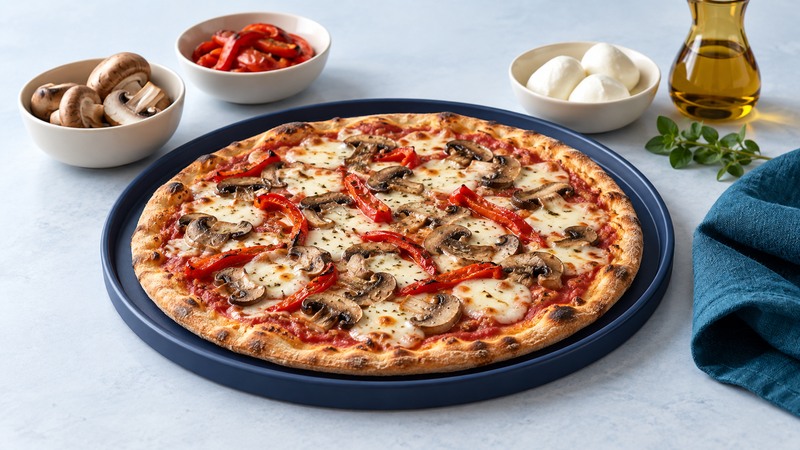
A home pizza bakes more evenly when toppings form a light layer and excess moisture is dealt with first. Start with dough designed for your oven, prepare the toppings while it rests, and keep the center visible between additions.
Start with one defined pizza
These topping quantities suit one 12-inch round pizza made from about 300 g of dough, serving roughly two people with a side. Use purchased dough with written home-oven instructions or a complete dough recipe. Have a metal pizza pan or rimmed baking sheet rated for the instructed temperature, a scale, a skillet and a spatula. Follow the dough maker’s shaping, proofing, preheating and baking instructions; a gluten-free base or a thick pan pizza needs its own method.
For the combinations below, measure 60 g thick tomato sauce and 90 g shredded low-moisture mozzarella per pizza before adding extras. These are suggested starting portions, not universal limits. Fresh mozzarella holds more moisture: drain and pat it dry, tear it small and expect a softer result. King Arthur’s topping preparation guide explains why cooking and draining vegetables before a short pizza bake helps their texture.
Prepare the topping before assembly
Scroll the table sideways. With a keyboard, focus the table and use the arrow keys.
| Ingredient | Before it goes on | When to add |
|---|---|---|
| Mushrooms, onions, peppers | Slice thinly; sauté in a little oil until tender and released liquid evaporates; cool briefly. | Before baking. |
| Spinach or other tender greens | Wilt, cool, squeeze out liquid and chop. | Before baking, tucked among cheese. |
| Fresh tomato or zucchini | Slice thinly, drain or blot; roast very watery pieces first. | Before baking in a single light layer. |
| Olives, jarred peppers, pineapple | Drain well and pat dry; cut into bite-size pieces. | Before baking. |
| Raw sausage or poultry | Cook separately to a safe internal temperature; drain and portion. | Add cooked pieces before baking. |
| Basil, arugula and other delicate fresh leaves | Wash and dry. | After baking, so leaves stay fresh. |
Use ready-to-eat pepperoni or ham as labeled. Cook raw ground beef or pork sausage to 160°F and poultry to 165°F before using it here; use a thermometer and clean utensils. A browned crust alone cannot verify raw meat on top. Federal safe cooking temperatures provides the food-specific checks.
Three measured combinations
Scroll the table sideways. With a keyboard, focus the table and use the arrow keys.
| Combination | Prepared topping amount | Finish |
|---|---|---|
| Mushroom and pepper | 60 g cooked mushrooms + 40 g drained roasted red pepper | A few torn basil leaves. |
| Pepperoni and olive | 30 g ready-to-eat pepperoni + 15 g sliced drained olives | Black pepper if wanted. |
| Spinach and onion | 40 g wilted squeezed spinach + 40 g cooked onion | 1 teaspoon olive oil, optional. |
Weights refer to toppings after cooking and draining. Buy extra raw vegetables to allow for water loss; the exact yield varies. Combining all three rows would overload this base. Pick one row for the first bake, then change one quantity on the next pizza. Yenra has not kitchen-tested these combinations.
Assemble and check the bake
- Prepare the dough and oven exactly as the dough instructions specify. Shape on the pan or transfer surface those instructions call for. If it springs back, cover and let it relax for the specified rest.
- Spread the sauce thinly, leaving an approximately ½-inch rim. Distribute cheese and your measured toppings evenly; avoid a mound in the middle.
- Bake at the dough recipe’s temperature and begin checking at its earliest stated time. Lift an edge with a spatula: the underside should have color and feel set, while the center dough is cooked through and the cheese melted. Continue as needed.
- Add delicate leaves after baking and rest briefly before cutting. Record pan, rack, dough weight, temperature and actual bake time for the next batch.
A pale, damp underside with browned toppings points to a crowded center, wet ingredients or insufficient bottom heat. Next time reduce moisture first and follow the dough recipe’s pan and rack guidance. If the base is dry before the cheese melts, check that the oven and dough thickness match that recipe. Avoid tasting raw dough; FDA explains flour handling.
Refrigerate promptly in shallow covered containers within two hours, or one hour when the surroundings exceed 90°F. Keep at 40°F or below and use within 3–4 days, or freeze. Reheat cooked leftovers to 165°F. USDA’s leftover guidance explains cooling and reheating.