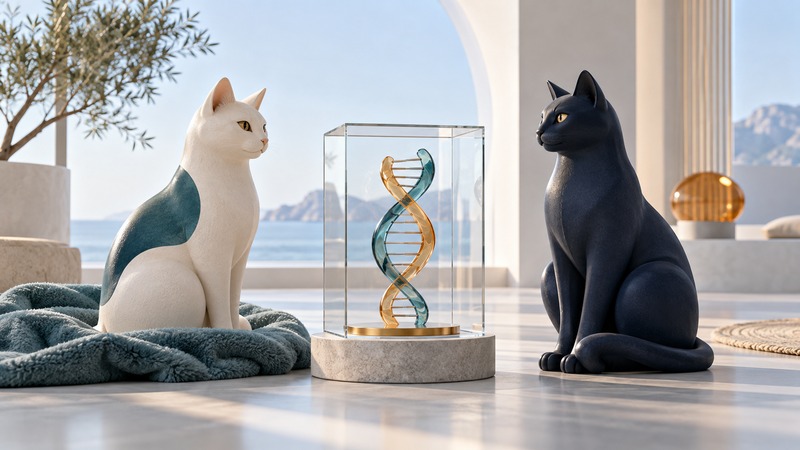
A cloned pet is a new animal with its own development and experiences. Cloning can reproduce much of a donor animal's genetic makeup; your relationship, the animal's memories and learned behavior develop through its individual life. Start by deciding what you hope to preserve and which outcomes would matter to you.
This guide helps owners prepare for a conversation with an independent veterinarian and a service provider. It covers expectations and evidence, with sample collection and animal care left to qualified professionals.
What genetic similarity does and does not settle
Somatic cell nuclear transfer uses the nucleus from a body cell and an egg whose nucleus has been removed. If development succeeds, an embryo is carried by a surrogate. The nuclear DNA largely comes from the donor cell; the egg contributes cellular material, including mitochondria. This overview describes the biological roles, not a collection or laboratory procedure.
Genes influence appearance and behavior, while development, gene expression and environment also matter. FDA's cloning explanation discusses differences in markings and temperament. Its examples concern animals generally and livestock; they are not a provider-specific estimate for a cloned dog or cat.
A genetic identity report can help establish the relationship between donor and offspring. Ask which markers were tested and by whom. Such a report answers a genetic question; temperament, health and welfare require their own evidence.
Separate preservation from producing an animal
Cell preservation and cloning are separate services. For example, ViaGen's own service description says its preservation process cultures and freezes living cells from veterinary-collected tissue. It distinguishes this from the later cloning service. This is a source for that provider's stated process, not an independent endorsement of its outcomes.
A DNA-test result, a sequence file, preserved fur and a viable cell line are different materials. Obtain written confirmation of what the provider accepts, what has actually been stored and whether cell growth or viability was established. Avoid assuming that an ancestry test has preserved material suitable for cloning.
If timing matters after a pet's illness or death, contact your veterinarian and the provider promptly for case-specific instructions. Do not collect a biopsy or attempt a preservation procedure yourself. Preserve space for decisions about your pet's comfort and your own grief.
Ask about every animal involved
The welfare question includes the donor, egg donors, surrogates and offspring. Request species-specific information about procedures, pregnancy outcomes, neonatal care and long-term follow-up. Published livestock findings should stay labeled as livestock findings. FDA's risk-management account discusses increased adverse outcomes in surrogate dams and very young clones, especially cattle and sheep; those observations do not establish a cat or dog service's success rate.
Ask for denominators: a percentage of clients receiving a pet describes a different outcome from live births per embryo transfer or healthy offspring per pregnancy. A provider may eventually fulfill a contract after multiple attempts. Understanding those attempts is part of assessing welfare.
- Who provides veterinary oversight and emergency care?
- How many procedures or pregnancies can an individual animal undergo?
- How are complications, failed pregnancies and newborn losses counted?
- What happens to donors, surrogates and additional offspring afterward?
- Is outcome reporting independently reviewed, and how long are offspring followed?
Compare the full written terms
| Topic | Ask for a written answer |
|---|---|
| Scope | Does the payment cover tissue banking, cell culture, long-term storage, cloning attempts or delivery? |
| Outcome | How is successful completion defined, and what happens after unsuccessful attempts? |
| Costs | What are the initial fee, recurring storage, veterinary, transport and other charges? |
| Control of cells | Who can authorize use, transfer, continued storage or destruction? |
| Animal arrangements | Who owns additional offspring, and what veterinary records accompany delivery? |
| Changes or closure | What happens if you cancel, the provider changes ownership or storage services stop? |
Use the current contract and dated quotation rather than an old price in an article. For an example of the kind of document to request, ViaGen publishes a 2026 cell-storage agreement. Review the agreement that actually applies to your transaction, including local consumer protections and any cross-border requirements.
Make expectations explicit
Consider alternatives alongside cloning: photographs, a memorial, preserving a story or supporting another animal. If you proceed, plan for a new pet's lifelong needs and seek answers to unresolved welfare or contract questions before committing.