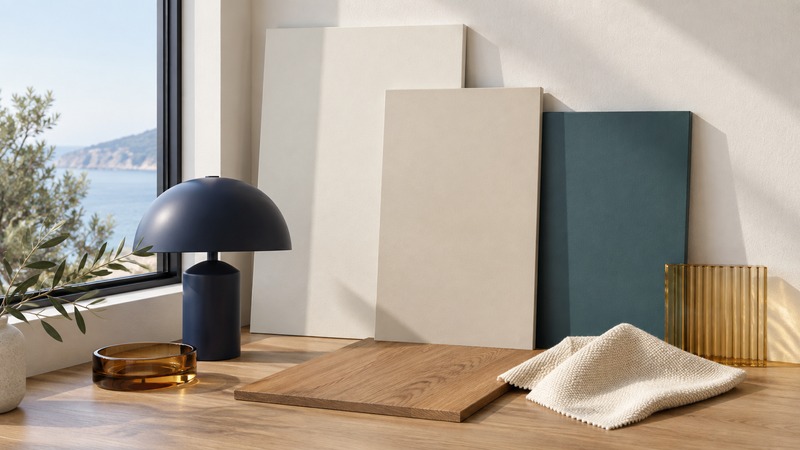
Choose paint color in the room where it will be used. Begin with the surfaces you intend to keep, narrow the options, and compare large dry samples in several locations and lighting conditions. A small chip or screen image is a useful starting point for that test.
Start with the room’s fixed colors
List the flooring, stone, tile, cabinetry, upholstery, and trim that will remain. Bring movable samples together; photograph immovable surfaces as a reminder while shopping, then confirm the choice in person. Choose the desired relationship: quiet continuity, a gentle contrast, or a deliberate accent.
Set a practical brief, such as “a light wall color that works with the warm floor and looks comfortable under evening lamps.” This gives you a way to reject attractive colors that do a different job. Limit the first shortlist to a few candidates so the comparison stays manageable.
Choose lamps and their normal settings before final color approval when those are also changing. Otherwise, the final room may use a different light from the one under which you accepted the sample.
Compare similar colors side by side
An undertone is the subtle color bias you notice when a color is compared with nearby colors. Two whites can look pinkish, greenish, or creamy relative to each other. Sherwin-Williams’ explanation of undertones recommends comparison with other chips and attention to the room’s lighting.
Hold a candidate next to the floor, trim, and another candidate. Then view it alone in its intended position. This separates a useful comparison from a permanent visual competition between several sample patches. Describe what you see in plain language: “gray beside the sofa,” “too yellow at night,” or “works with the oak.” You do not need to agree on a color name to record a preference.
Light changes across the day and with lamp type and placement. Window direction is a clue, but trees, neighboring buildings, reflected surfaces, and your schedule also affect the experience. Test at the times you use the room.
Make a fair sample test
- Label each sample with the manufacturer, color name/code, sample type, and application date.
- Prepare it exactly as its instructions require and let it dry before judging.
- Place it vertically on the intended wall, near fixed materials, then move it to a darker and brighter part of the room.
- Observe morning, afternoon, and evening conditions with the actual lamps in use.
- Compare your notes, keep the strongest candidate, and verify it in the final paint product and sheen.
For example, Benjamin Moore’s sample instructions call for two coats of its liquid color sample and explain using movable boards. Its sample paint is for color evaluation and lacks the same performance features as a final coating. Follow the instructions for the sample you buy rather than assuming all sample products are interchangeable.
| Condition | Record | Useful comparison |
|---|---|---|
| Daylight near the window | Time, weather, sample, and nearby material. | Does the color work with the fixed floor or tile? |
| Darker wall or corner | Same sample and observation position. | Does it become too dull or shift in an unwelcome way? |
| Evening lamps | Which lamps and dimmer setting. | Is it comfortable during the room’s usual activity? |
| Final finish sample | Product, color formula, sheen, and dry result. | Does the actual coating deliver the accepted appearance? |
Choose color and finish together
Sheen changes reflection, so glare and wall texture can become more noticeable in some finishes. Select the product and finish for the surface, expected cleaning, and manufacturer’s recommendations, then judge a dry test in that combination. A matching color name across different products does not replace that test.
Record the exact manufacturer, product line, color code or formula, sheen, and room location. Keep the purchase label and a small approved sample where practical. These details help future touch-ups and maintenance even if the original color card is lost.
Resolve uncertainty before the large purchase
If every option looks wrong, revisit the brief and the materials you plan to keep. A strong existing floor or sofa color may be setting the relationship. If the result changes only at night, investigate the lighting arrangement before buying another stack of samples.
Use the paint color testing sheet to record the shortlist and final specification. For room layout and lighting placement, use the room-planning guide. Once the color is settled, the surface and coating requirements still determine preparation and application.