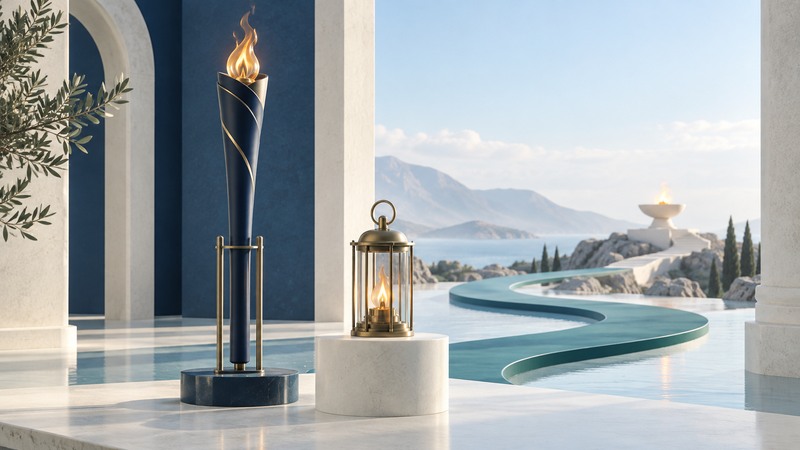
The flame is the symbol; the torch is a portable carrier; the relay is the organized journey; and the cauldron is the ceremonial destination. Keeping those four ideas separate makes the history and the practical details of a relay easier to follow.
Put the flame and relay on the right timeline
A flame burned at the Amsterdam 1928 Olympic Games. The first modern Olympic torch relay followed in 1936, carrying a flame from Olympia to Berlin. The Olympic Studies Centre torch-relay history distinguishes those milestones. The relay is a modern ceremony inspired by antiquity, rather than an uninterrupted practice carried forward from the ancient Olympic festival.
Berlin 1936 also requires its political context. Nazi Germany used the Games and imagery connecting Germany with ancient Greece for propaganda. The United States Holocaust Memorial Museum’s history of the first relay explains both the new ritual and the regime’s presentation of a peaceful image while persecuting Jews and political opponents. That history belongs beside accounts of the relay’s later symbolism.
When reading a caption, check whether “first” refers to the stadium flame, the relay, a Winter Games relay or a particular method of transport. These are distinct historical claims. A torch’s design date can also differ from the date of the journey in which it was used.
Follow the flame through the ceremony
- Lighting: the ceremony at Olympia uses a concave mirror to concentrate sunlight and kindle the flame.
- Handover: the flame passes through organized ceremonies and travel stages toward the host country.
- Relay: torchbearers carry it along selected sections, passing it between torches. Transport between those sections is part of the wider operation.
- Arrival: the final ceremony transfers the flame to the Games’ cauldron.
The Olympic Studies Centre account describes the lighting and the evolution of relay journeys. A torch is one object within that system. Collecting or displaying a torch tells you about a design and its provenance; the symbolic continuity of the flame concerns its transfer and custody.
Enclosed lanterns can preserve flames during transport and provide a source for relighting. A study of the Rio 2016 flame guardians documents that edition’s backup arrangements. Use an edition’s own account for its equipment and procedures: torch fuels, lanterns and modes of travel vary.
When a video shows a brief extinguishing or relighting, look for the organizer’s explanation of the flame’s custody. The visible torch and the preserved flame supply are separate parts of the same operation.
Athens 2004 as a historical example
Athens 2004 expanded the relay into a global journey, including Africa and South America. World Sailing’s contemporary report of the March 25 lighting records its planned international scope. This is a dated account of that Games, useful for understanding how a route can express an organizing committee’s theme.
A separate United Nations notice for June 19, 2004 describes a torch-relay event at UN headquarters in New York. It illustrates the distinction between the whole journey and one local ceremony. For historical research, pair the overall relay record with contemporary local records; a city’s event notice rarely describes every transfer or travel leg.
Read a route before choosing where to watch
- Confirm the Games edition and publication date. Search results can surface a route from an earlier year.
- Check whether the map shows a region, a day’s itinerary, a torchbearer segment or the exact public viewing area.
- Find the local organizer’s time window and access notice. A regional arrival time is broader than the moment the torch reaches your street.
- Recheck shortly before the event for route or timing changes. Use the organizer’s updates to resolve conflicts with an older map.
- For an archive, distinguish a planned route from a report of the route actually completed.
Keep the official route link and the local event notice together. They answer different questions: where the journey goes, and what a spectator can actually attend.