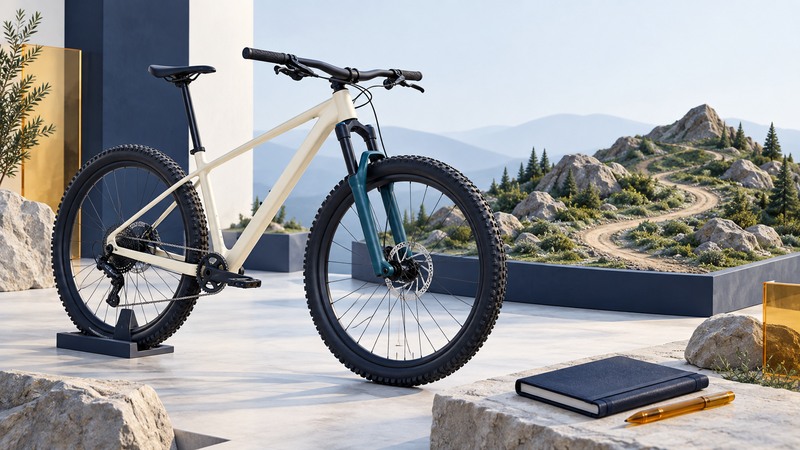
Start with the trails you can ride regularly, a bike that fits, and a budget that includes getting it ready. A useful first mountain bike should suit your present riding while leaving room to learn. Bring a short description of your routes to a bike shop, compare suitable bikes, and leave with a clear setup and first-ride plan.
Describe the riding before choosing the bike
Write down two or three actual routes: surface, hills, roots or rocks, typical ride length, and whether bicycles are permitted. Add how you will transport and store the bike. A local shop or riding group can help interpret the terrain, but the land manager establishes access.
For ordinary trail-bike comparisons, a hardtail has front suspension and a rigid rear frame; full suspension adds rear suspension. Trek's hardtail and full-suspension comparison explains the tradeoff between simplicity and the additional traction and comfort available on rough ground. Rear shocks and suspension pivots also add service tasks. Compare the complete bike, its condition and its intended use.
Swipe this table sideways, or focus it and use the arrow keys.
| Your regular riding | What to compare | Question for the shop |
|---|---|---|
| Smooth paths and easy dirt | A suitable hardtail; a hybrid may also fit mostly paved use | What capability does this route actually require? |
| Rooty or rocky trails | Trail hardtails and full-suspension bikes in your budget | How does each feel on similar terrain, and what service is due? |
| Lift-served descents, jumps or advanced terrain | Bikes explicitly intended for that use, with instruction | Which model and equipment are approved for the planned riding? |
Use this table to organize a conversation. Suspension travel, wheel diameter and the word “mountain” on a listing each describe only part of a bike. Confirm the exact model's use category and limits in its manufacturer documentation.
Make fit a purchase requirement
Ask the shop to assess frame size, reach, saddle position and access to the controls. Try more than one suitable size or model when possible. Record what you feel during an authorized test ride: cramped or stretched posture, difficulty reaching the brake levers, or discomfort that persists after adjustment. A discounted frame that cannot be set up comfortably is a poor starting point.
Trek's April 2026 bicycle owner's manual covers fit on printed page 8 and pre-ride checks on pages 15–20. Use your own bike's manual for its adjustments and fastening systems. Ask the shop to demonstrate wheel attachment, braking, shifting and any suspension or dropper-seatpost controls before taking the bike home.
Compare the cost of a ready-to-ride bike
For a new bike, establish what assembly, fitting and follow-up support the seller includes. For a used bike, request the model year, frame size, serial-number photograph, proof of ownership, service invoices and details of crashes or component changes. Have a qualified mechanic assess condition before purchase when you cannot establish it yourself.
Ask for an itemized estimate covering the frame and fork, wheels and tires, brakes, drivetrain, bearings and suspension where fitted. Separate immediate work from later improvements. Confirm the availability of any essential replacement part. A clean frame and recent chain replacement leave other service questions open.
Make the first outing easy to manage
Wear a properly fitted cycling helmet and follow the equipment guidance for your type of riding. Perform the checks in the applicable owner's manual before every ride. If a check fails, have the problem corrected before riding. Carry water, a route map, a way to seek help and the repair supplies you know how to use; ask the shop to teach the tasks you need.
Choose a short route with a straightforward way back, allow daylight and let someone know your plan. Check the land manager's current closures, direction of travel and bicycle rules. E-bike access needs its own check. IMBA's Ride Vibes guidance explains shared-trail courtesy, preparation and protecting vulnerable trail surfaces. Yield as local rules require, control your speed and walk sections beyond your comfort or ability.
Afterward, note discomfort, mechanical symptoms and which terrain you enjoyed. Take specific observations back to the shop before buying upgrades. If your interest is collecting a classic bicycle, the Sting-Ray identification guide addresses a different purchase goal.
Download the mountain-bike buyer and first-ride record to record evidence, estimates and next actions.
Researched and updated September 20, 2026. Use the linked sources for applicable documents and current service, access or event information.
Explore all motorsports guides.