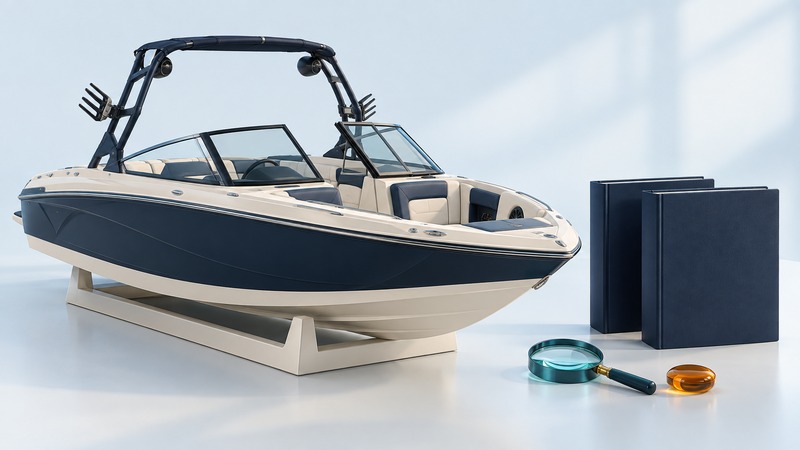
Research the exact MasterCraft in front of you: its year, hull, engine and installed systems. Model names and photographs provide a starting point; the matching manuals and service record turn that starting point into useful ownership information.
For prospective buyers and owners. Operating limits, ballast, towing, warranty and maintenance instructions remain specific to the actual boat and equipment.
Establish identity before comparing features
Record the hull identification number, model designation, model year, engine make and serial number, displayed hours and trailer identification. Photograph the actual labels with the owner’s permission. Ask whether the engine, controls, ballast plumbing, tower or electronics have been replaced or altered.
Build a folder that keeps the original boat specification separate from later additions. A seller’s phrase such as “upgraded surf system” should lead to an installer invoice, part identity and applicable instructions. Ask a dealer to resolve mismatches between paperwork, advertised year and the physical boat before using those details for parts or warranty enquiries.
Find the matching manuals
MasterCraft’s owner resources provide a year-organized manual archive along with warranty and maintenance information. Obtain the boat manual, engine manual and any separate trailer or controls documents that apply. A general webpage can summarize several generations; use the exact manual and current service advice for the installed equipment.
Create a short index: capacities and loading; pre-use checks; engine operation; ballast and watersports systems; towing; maintenance; storage. Save offline copies and record their editions. If a manual link is absent or the engine differs from the original specification, have the relevant manufacturer or dealer identify the correct document.
Start with the activity and the people aboard
Describe the sessions you want: slalom skiing, wakeboarding, wakesurfing or general family outings. Record the participants, experience, usual water, storage and towing constraints. Ask the dealer to explain which exact boat and configuration address that use, and arrange instruction where needed.
Evaluate boarding, seating, equipment storage, visibility and communication with the normal crew. Have a qualified operator demonstrate the relevant systems under suitable conditions and within the manual’s limits. Passenger and ballast choices must follow the boat’s documented loading requirements. Check current local restrictions through the responsible boating authority, including rules affecting towed activities and wakes.
Read the history as a set of inspection questions
Organize invoices by date and engine hours. Identify what was done to the cooling system, drivetrain, steering, electrical system and installed watersports equipment. Ask about winter storage, freezing incidents, saltwater use, groundings and repairs. The response should guide professional inspection, not be reduced to a single “well maintained” label.
On a narrow screen, scroll the table sideways. Keyboard users can focus the table and use the arrow keys.
| Area | Evidence to collect | Who can resolve uncertainty |
|---|---|---|
| Hull and underwater gear | Repair records and observations of damage or vibration | Independent surveyor and appropriate drivetrain technician |
| Engine and cooling | Identity, service invoices, alarms and storage history | Engine-qualified technician using the matching manual |
| Ballast and controls | Installed parts, alterations and complete functional demonstration | Dealer or qualified installer familiar with that generation |
| Tower and trailer | Attachment condition, instructions, ratings and fit | Boat, tower or trailer specialist as applicable |
Use the used-boat buying guide for the wider survey, ownership and closing process. A dealer demonstration and a buyer’s independent assessment serve different purposes; agree the scope of each.
Plan service, storage and support before purchase
Ask a local service provider about support for the exact engine, display and control generation. Obtain estimates for identified work and separate immediately necessary work from optional upgrades. Confirm the actual loaded boat-and-trailer requirements using the trailer matching guide; dry hull weight alone leaves equipment, fluids and trailer mass unresolved.
For a boat advertised with remaining warranty, have the dealer confirm eligibility, inspection requirements, fees and deadlines in writing before closing. MasterCraft and engine warranty processes may be separate. Convert the applicable maintenance and storage instructions into a dated service record with both elapsed time and engine hours, and retain invoices for future reference.