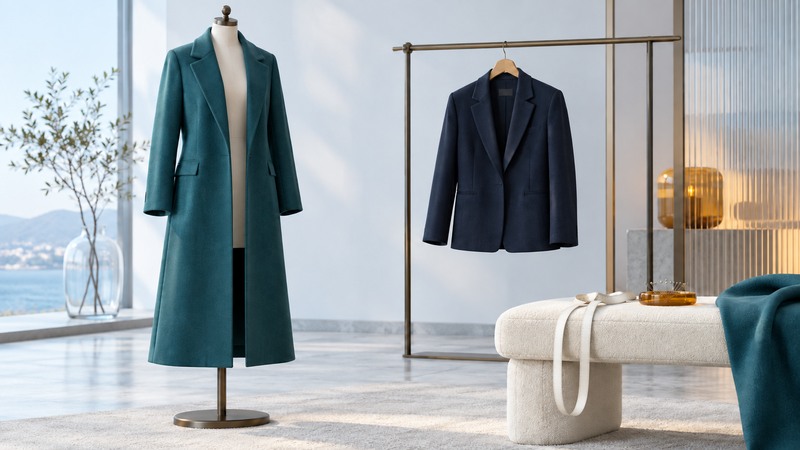
The Long Tall Sally and Karl Lagerfeld Paris capsule is a useful example of a design problem: a tall garment needs its shaping in the right places, as well as enough length. When evaluating one of the collaboration’s pieces secondhand, establish its identity and actual measurements, then check how its shoulders, waist, sleeves and hem relate to your body.
Place the collaboration in its 2017 context
Contemporary FashionUnited reporting from October 12, 2017 describes a limited Karl Lagerfeld Paris collection made for Long Tall Sally’s tall customer. The assortment included tweed jackets, sheath dresses with coordinating coats and sweaters with pearl details. FashionNetwork’s contemporaneous account identifies Karl Lagerfeld Paris as the North American line and distinguishes it from the designer’s Paris-based namesake luxury line.
These are historical collection details. A current Long Tall Sally size chart can help you understand current purchases; the measurements of an older collaboration garment remain the relevant evidence for that item. Likewise, an old launch price says little about its present condition or resale value.
Locate the shaping before judging the hem
Begin with a garment you already like. Lay it flat without stretching and record how you measured it. For a set-in-sleeve jacket, use shoulder seam to cuff for the sleeve; raglan sleeves require a different starting point, such as the center back neck. Compare like methods. Ask a resale seller to show the tape in photographs if the starting point is ambiguous.
On small screens, scroll the table horizontally. Keyboard users can focus the table area and use the arrow keys.
| Area | Look for | Useful next step |
|---|---|---|
| Shoulders and armholes | Comfortable movement with your normal layer underneath. | Try another cut if the upper body binds; extra hem length will not change it. |
| Waist shaping | Dress seam, belt or jacket shaping at the position you want. | Compare shoulder-to-waist distance with a garment that works. |
| Sleeves | Cuff position with arms relaxed and reaching forward. | Check seam allowance and cuff construction with a tailor before expecting lengthening. |
| Coat and dress together | Comfortable arm movement and intentional relative hem lengths. | Try the complete combination with the intended shoes. |
Height is a starting clue. People of the same height can need different torso and leg proportions. Long Tall Sally’s current denim guide separates silhouettes and leg-length choices; apply that habit of checking several dimensions when examining a coat or dress.
Ask for evidence that belongs to the item
Request clear photographs of the brand and size labels, care and composition labels, both sides of the garment, closures, lining and any repairs. Record the full label wording. A listing titled “Karl Lagerfeld” gives less information than images showing the actual label and construction.
For a pearl-trimmed sweater, inspect attachment points and note missing decorations. For textured jackets, examine cuffs, underarms and areas near bag straps for wear. For a matching coat and dress, compare color in the same light and establish whether both pieces are included. A seller may be offering only one item from an originally coordinated look.
Ask about shortening or other alterations. A tall label survives even when a previous owner has changed the sleeve or hem. Condition photographs and actual measurements are more useful than an unsupported claim that an item is unworn.
Make a fit decision before a repair decision
Separate necessary repairs from optional styling changes. Include shipping, returns and a real alteration quote in the cost. If the seller cannot provide a critical measurement and returns are restricted, record that uncertainty as part of the decision.
Download the tall-fit comparison record and use either centimeters or inches throughout. Save photos and measurement methods with the record, so the next comparison starts from something concrete.