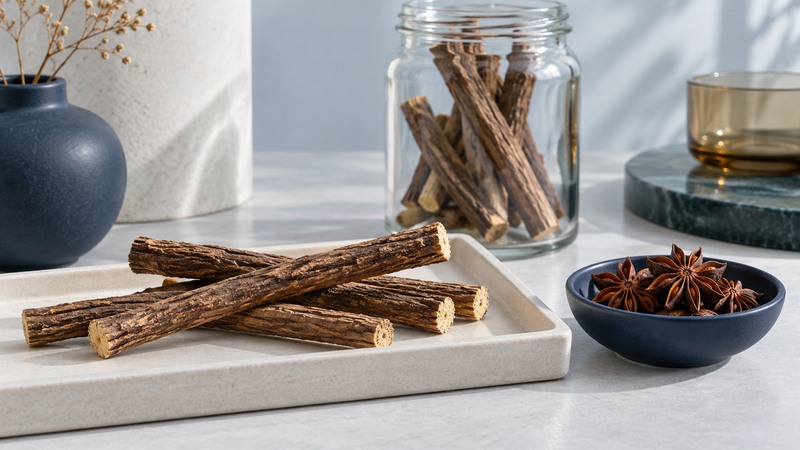
A licorice flavor can come from actual licorice root or from another ingredient, such as anise. Before choosing a candy, tea or supplement, read the ingredient list. That small check answers a more useful question than the product’s name alone: what are you actually consuming?
Start with the ingredient list
Actual licorice comes from plants in the genus Glycyrrhiza. Common label names include licorice, liquorice, sweet root and Glycyrrhiza glabra. NCCIH notes that many U.S. products sold with a licorice flavor instead use anise oil.
On a narrow screen, scroll the table sideways. Keyboard users can focus it and use the arrow keys.
| Label wording | What it tells you | Useful next step |
|---|---|---|
| Licorice root or licorice extract | An actual licorice ingredient is listed. | Check serving size, other ingredients and frequency of use. |
| Anise or star anise | A different flavoring plant is named. | Read the whole list; a blend may also contain licorice. |
| DGL / deglycyrrhizinated licorice | The product is described as having glycyrrhizin removed. | Check the manufacturer’s details and intended use with a pharmacist. |
| “Natural flavors” or an unclear blend | The wording may leave the botanical source uncertain. | Ask the maker if avoiding actual licorice matters to you. |
A photograph of roots, an “organic” claim or an herbal-looking package adds little certainty about the amount in a serving. Use the ingredient and serving information on the actual package you are buying; a retailer’s older image may show a different formulation.
Why repeated use needs attention
Licorice contains glycyrrhizin, which can cause serious effects including irregular heartbeat, especially with large amounts or prolonged use. NCCIH identifies additional concern for people with high blood pressure, heart or kidney conditions, and high salt intake; interactions with corticosteroids have also been reported. Pregnancy and breastfeeding need specific professional guidance. Its safety review also finds insufficient high-quality evidence to support licorice for any health condition.
A cup of licorice tea and a capsule cannot be compared by counting “one serving” of each. Root quantity, extraction, concentration and directions differ. If the glycyrrhizin amount is missing, it remains unknown; a mild taste does not measure it. DGL is a product distinction to investigate, not a blanket assurance about every person or preparation.
A practical label check before a repeat purchase
- Photograph the complete package. Include ingredients, serving directions, warnings and the manufacturer’s contact details.
- Count all sources. A tea, candy and supplement can each contain actual licorice. Write down how often you use each.
- State your purpose. Enjoying a flavor and trying to treat a symptom call for different decisions. A persistent symptom deserves medical assessment.
- Bring the information to a pharmacist or clinician. Include medicines and relevant health conditions. Ask whether the specific product and frequency fit your circumstances.
- Resolve unclear labels with the manufacturer. Request the botanical ingredient and product-specific information; keep the reply with the package details.
Keep the flavoring task clear
For cooking, choose a food-grade ingredient and a recipe developed for that exact form. A root stick, extract and ground powder have different preparation needs. Follow the food manufacturer’s directions; a supplement capsule is a poor basis for improvising a seasoning quantity.
If your aim is an anise-like flavor, select a recipe that specifically uses anise seed or culinary star anise and check its full ingredient list. The switch changes the flavor profile and needs its own quantity. Store each ingredient in its original labeled container so you can distinguish them later.
For a different warm spice, compare cinnamon varieties and culinary uses. The turmeric guide also explains how to separate a kitchen ingredient from claims about concentrated supplements.
Explore all seasoning and ingredient guides · Food, cooking and meal planning