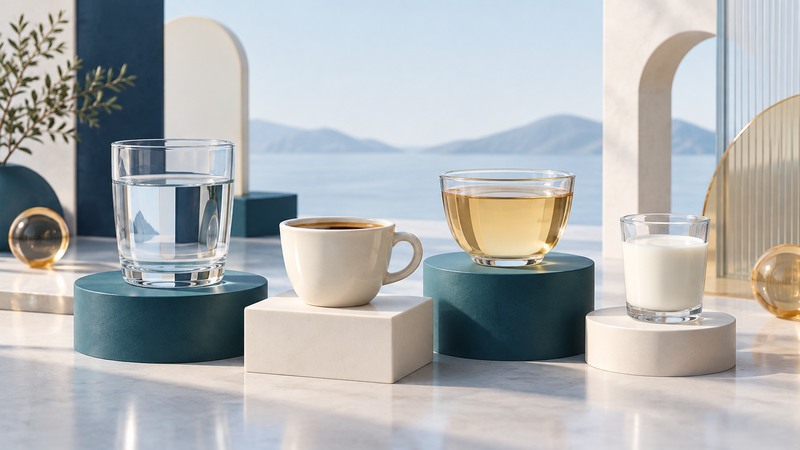
Water, coffee, tea and other drinks can contribute to everyday fluid intake. Choosing between them also involves caffeine, sugars, nutrients, portion size and preference. A drink’s contribution to fluid intake is one part of that decision; its label supplies the rest.
What the early beverage study measured
A 2003 randomized crossover study by Grandjean and colleagues followed 27 healthy, sedentary men during two three-day confinement periods. One diet included plain drinking water and the other supplied beverages without plain water. Under the controlled conditions, the researchers found no significant differences in the hydration measures they studied.
That result concerns a short, controlled comparison in a particular group. It supports including beverages in an account of fluid intake. It leaves questions about other populations, longer periods, strenuous activity and illness to evidence designed for those situations. A headline about “all beverages” travels farther than the experiment itself.
The CDC’s current water guidance likewise describes water intake as coming from plain water, other beverages and foods. It identifies plain water as calorie-free and plain coffee and tea as low-calorie choices. Sweeteners, milk and other additions change the finished drink’s nutritional profile.
Compare drinks for the job you want them to do
Begin with the question: am I choosing a routine drink, a meal accompaniment or something for a specific exercise plan? Then compare products at the amount you expect to consume.
On narrow screens, scroll the table sideways. Keyboard: focus the table and use the arrow keys.
| Choice | Useful starting question | Information to check |
|---|---|---|
| Plain water or unsweetened sparkling water | Do I want a simple everyday fluid source? | Ingredients and any flavor additions |
| Coffee or tea | How much caffeine fits my circumstances? | Preparation, serving volume and added ingredients |
| Milk or a fortified alternative | Which nutrients am I choosing it for? | Protein, calcium, vitamin D, sugars and allergens on the actual label |
| Juice or a sweetened drink | How large is my usual portion? | Calories, total sugars and added sugars at that volume |
| Sports or energy drink | What specific purpose does this formula serve? | Carbohydrate, sodium, caffeine and product directions |
This table is a reading method, not a ranking of every product in a category. Two bottled teas may differ considerably because one is unsweetened and the other is sweetened. Compare the finished drink, including anything you add at home.
Keep caffeine visible in the comparison
The FDA’s caffeine guidance cites 400 mg per day as an amount generally not associated with negative effects for most adults, while emphasizing individual sensitivity. That figure is a reference, not an intake goal. Pregnancy, breastfeeding, medicines and certain conditions call for an individual discussion with a health professional. Children and adolescents need age-appropriate guidance; the FDA advises against energy drinks for them.
Count caffeine across the day and across sources. A large café drink, a bottled tea and an energy drink may each contribute. When a product gives no caffeine quantity, record it as unknown and consult the manufacturer. A fluid total cannot resolve an unknown caffeine total. See the energy-drink label comparison guide for a structured record.
Use portions consistently
Fictional label example: a drink contains 45 mg caffeine per 250 mL. Drinking 400 mL gives a multiplier of 400 ÷ 250 = 1.6, so the caffeine amount is 72 mg. Apply the same multiplier to the calories and sugars stated per 250 mL. Keep each quantity in its own units.
For a simple beverage log, record the drink, measured volume, additions and time. A day containing 250 mL coffee, 300 mL tea, 400 mL water and 200 mL milk totals 1,150 mL of beverages. This invented record is neither an intake recommendation nor a laboratory calculation of total water: food also contributes, and the drinks contain substances besides water.
The value of the log is that it makes habits visible. You might discover that a cup is larger than assumed, that sweetened drinks account for several servings, or that caffeine is concentrated late in your day. Make comparisons from the recorded amounts instead of a vague count of “cups.”
Keep the setting in view
Fluid needs vary with circumstances, including activity and heat. Follow an existing clinical fluid restriction or other individualized care plan. Illness with substantial fluid loss and demanding endurance exercise require guidance suited to those conditions; the short sedentary-adult experiment cannot provide a treatment or fueling plan.
For everyday routines and intake context, continue with planning daily water intake. For a product intended around exercise, use the sports-tablet label guide to evaluate the prepared drink and its purpose.