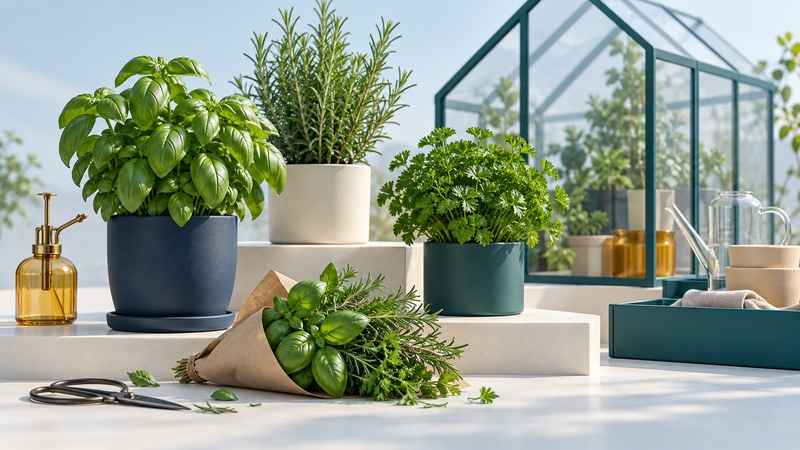
Decide whether you need herbs to cook this week or living plants to harvest later. That single choice changes the grower, the questions and the amount to buy. Start with a small order, then use what you learn about freshness and usable yield to plan the next one.
Find a grower you can actually buy from
The USDA Local Food Directories provide starting points for farmers markets, on-farm markets and community-supported agriculture. Search near your location, then check the grower’s own current information for culinary herbs, opening dates, order deadlines and pickup arrangements.
Send a specific request: “I need cut flat-leaf parsley for Friday, approximately 30 g usable leaves. What pack size is available, and when is pickup?” For plants, name the herb and ask about cultivar, pot size and whether it is being sold for culinary use. A directory listing alone does not establish today’s inventory.
Ask different questions for cuts and plants
Focus the table and use the arrow keys to scroll sideways.
| Question | Cut herbs | Live plants |
|---|---|---|
| Identity | Herb and variety; suitability for the intended dish | Plant name, cultivar and culinary use |
| Quantity | Net weight or bunch size; stems included? | Pot size and number of plants |
| Timing | Harvest or packing date, pickup and handling advice | Planting season and whether the plant needs acclimation |
| Growing practices | Ask about practices important to you; verify certification claims | Ask which products have been applied and applicable harvest directions |
| Condition | Look for fresh leaves without decay | Check leaves, stems, drainage and visible pests |
For plants, match the species to your growing space. University of Minnesota Extension’s herb guide discusses sunlight, drainage and the spreading habit of mint. Its climate context is Minnesota; ask your local extension service or grower about your own planting season and winter conditions.
Estimate the first order
Illustrative parsley order: three planned meals using 8 g leaves each require 24 g usable parsley. If a 40 g bunch leaves 30 g after trimming in your kitchen, one bunch covers the plan with 6 g remaining. The 75% usable yield is an example to measure, not a promise about every bunch.
Choose a use for the remainder before buying a second bunch. Record what you paid, what you used and what you discarded. A larger bundle is good value only when enough reaches the plate. The printable herb-grower comparison sheet keeps two offers and your meal plan together.
Bring the order home and check it
Confirm the variety and quantity at pickup. Keep cut herbs protected during transport and follow the grower’s species-specific storage advice. Before preparing them, wash under running water; FDA’s produce-handling guidance advises against soap or detergent and stresses separation from raw meat and its utensils.
For living plants, keep the identity tag and care instructions. Check drainage before placing a nursery pot inside a decorative container, and arrange the recommended light and watering conditions. Harvest only a correctly identified edible herb grown for food use.
For choosing flavors, cooking and storing the harvested herbs, continue with the culinary herb guide. Keep the grower’s current contact information with your order notes for the next purchase.