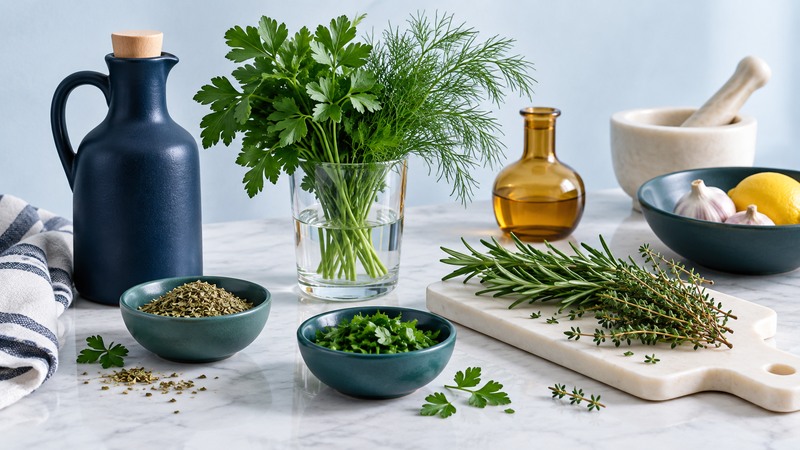
Choose an herb for the flavor you want, then decide when it should enter the dish. Tender leaves usually give their clearest aroma near serving; sturdier herbs can spend longer in a simmering sauce. A small measured addition is easier to adjust than a handful whose strength you discover too late.
Choose a role, then an amount
Scroll the table sideways. With a keyboard, focus the table and use the arrow keys.
| Herb | Flavor and texture | A starting use |
|---|---|---|
| Parsley or chives | Fresh, mild; tender leaves or fine stems. | Finish eggs, potatoes or cooked vegetables. |
| Dill | Distinct grassy, anise-like aroma; delicate fronds. | Fold into yogurt or add to cucumber near serving. |
| Basil or cilantro | Distinct fresh-leaf aromas. | Finish tomatoes, beans or a chopped salsa. |
| Thyme or rosemary | Concentrated, woodier sprigs. | Season a roast or simmered dish; remove woody stems. |
| Dried oregano | Concentrated dry leaves. | Add a measured pinch to tomato sauce or a bean dish. |
These are starting combinations, not fixed rules. Choose one dominant herb for your first attempt. For two servings of cooked vegetables, begin with 1 tablespoon chopped parsley or 1 teaspoon finely chopped rosemary, taste, then decide whether to add more. The flavor intensity of one herb is not interchangeable with another.
Prepare and add at the useful stage
Rinse herbs just before use, shake off water and pat dry. Strip leaves from tough rosemary or thyme stems, then chop finely. Tender parsley and cilantro stems can be chopped with the leaves. Add delicate herbs in the last few minutes or at serving; sturdier herbs can tolerate a longer cooking window. Illinois Extension’s herb guidance explains preparation and timing.
For a short sauté, mix dried oregano into the cooking vegetables so it contacts some moisture. For a finished bowl of soup, scatter chopped parsley immediately before eating. For a long simmer, add thyme late enough to retain its aroma and taste again at the end. Remove whole woody sprigs before serving; count them as they go in so you can find them.
Use the fresh-to-dried ratio as a starting point
For the same herb used as a seasoning, 1 tablespoon chopped fresh ≈ 1 teaspoon dried leaf is a useful starting conversion. A tablespoon contains three teaspoons. Thus a recipe calling for 2 tablespoons fresh thyme suggests starting around 2 teaspoons dried thyme. The ratio is approximate, especially with strongly powdered herbs or old dried leaves.
University of Minnesota Extension recommends one-third as much dried herb as fresh. Taste after the dried herb has had time to moisten. This conversion cannot reproduce the bulk or texture of a large fresh-herb salad or pesto; choose a recipe designed for the form you have.
Worked seasoning example: for 450 g roasted vegetables, use 1 teaspoon dried thyme before roasting, or fold in 1 tablespoon chopped fresh thyme near the finish. Both are starting seasonings for the same batch, rather than additions to use together. Record your preferred amount so the next batch is repeatable.
Store for the way you will use it
Keep perishable fresh herbs refrigerated at 40°F or below; FDA’s produce guidance includes herbs among refrigerated produce. For parsley or dill, a lightly damp paper towel in a covered container helps keep leaves from drying while avoiding standing water on them. Check frequently and discard slimy or moldy herbs. Buy a smaller bunch if you need only a garnish.
For excess sound herbs, wash, dry and chop, then freeze small portions with water in an ice-cube tray. Once solid, transfer cubes to a labeled freezer container. Minnesota Extension’s preservation guidance supports freezing sprigs or herb-and-water cubes and using them within a year. Thawed leaves soften, making them more useful in cooked dishes than as a crisp garnish.
A useful label: “Parsley, 1 tablespoon herb per cube, packed September 9.” Add only enough water to cover the measured herb. Drop a cube into soup or a simmering sauce and account for that extra water. Keep dried herbs tightly closed away from heat and light; buy quantities you can use while aromatic.