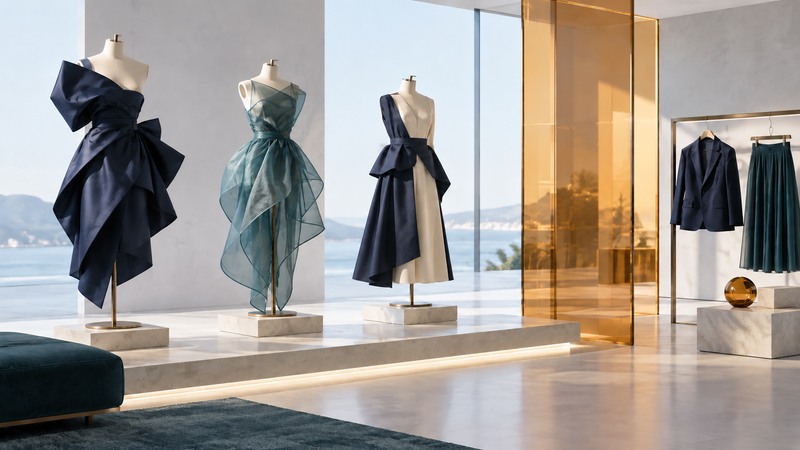
A graduate fashion show brings research and design into public view. A retailer can help that work reach a wider audience through an award, mentoring, display or buying. Those are distinct forms of support, each with a different result. The Harrods and Central Saint Martins connection offers a useful way to understand the distance between a striking runway collection and clothes sold to customers.
Read the institutional history carefully
Central Saint Martins’ account of its practitioners in residence records that Christopher Kane’s MA Womenswear work won the Harrods Design Award. This documents a particular connection between a graduate designer and retailer recognition. It should be read with its publication date, rather than as a current list of roles or sponsorships.
For the course today, use UAL’s official MA Fashion description. Its account emphasizes research, development, critique and making; its final outcomes usually combine a substantial design portfolio with a garment collection, with digital outcomes also possible. That makes the show the visible result of a longer process.
Harrods also publishes stories about Fashion Trust Arabia designers. That is a separate initiative, useful for following retailer interest in emerging fashion. Check each programme’s current terms and named partners; a historic award does not establish an ongoing sponsorship.
Look at a collection in three passes
First, describe what is visible. Note silhouette, repeated shapes, materials, color relationships and how the garments move. Use plain observations such as “wide sleeves recur across several looks” before interpreting what the designer intended.
Second, connect the looks. Ask which idea develops through the sequence. Does a material appear in different structures? Does the proportion change? A collection can be coherent through construction or research even when every outfit is different.
Third, consult the designer’s explanation. Read the official show notes, portfolio or interview. Compare that account with what you observed. Keep the designer’s stated intention separate from your own reading and from a commercial claim about demand.
Record designer, course, year and source alongside the images or notes you consult. Credit the actual maker and photographer when discussing work; a graduate runway is a presentation of specific people’s designs, not a generic source of uncredited fashion imagery.
Follow the steps that turn attention into an offer
Recognition may bring a prize, publicity or an introduction. Establish exactly what the announced award includes. A press image or a store-window display shows visibility; an order requires its own evidence.
Development translates the design into a repeatable garment. Questions include material supply, size development, closures, durability, care and making time. A dramatic show piece may remain an exhibition object while a related garment becomes an everyday product.
Buying asks whether a retailer can offer that product to its customers at an agreed price and delivery date. The designer needs clear information on the garment, sizing, production capacity and terms. An expression of interest starts a conversation; a confirmed order and a delivered product are later milestones.
Customer use tests the final result through fit, wearing and maintenance. A collection’s creativity and a garment’s commercial suitability are related judgments, with different evidence. Neither can be reduced to the applause at the end of a show.
A worked interpretation
For a show review, write one sentence about the design evidence, one about what support was actually announced, and one about the next unanswered question. This keeps interpretation useful without predicting a designer’s career from a single appearance.
To follow current shows, start with the school and London Fashion Week’s Central Saint Martins listing. Confirm the year and event details there. Aspiring designers should use the course’s current admissions requirements and develop a portfolio that shows research and decisions as well as finished photographs.