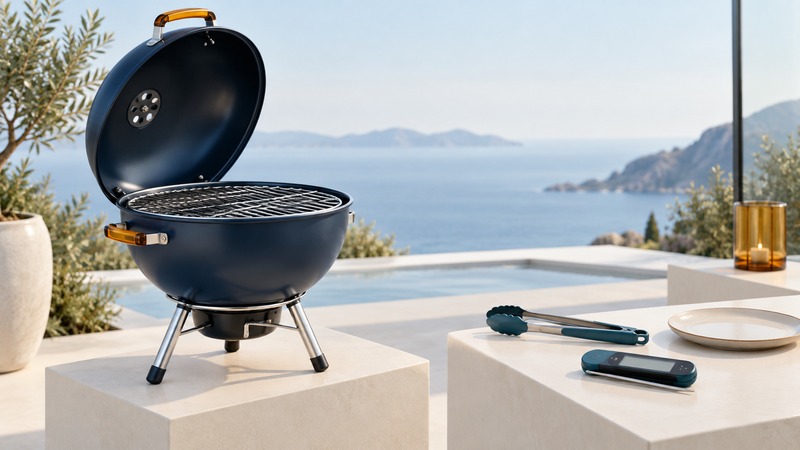
A dependable grilled meal starts with a manageable menu and two ways to control cooking: move food relative to the heat, and measure its internal temperature. Begin with one main dish and one vegetable so you can learn the grill without juggling several finish times.
Set up before you light the grill
Read the ignition, clearance, fuel, and shutdown instructions for your exact grill. Choose a stable outdoor location and arrange a clean serving area away from raw-food preparation. Have long-handled utensils, heat-resistant gloves, a food thermometer, and separate raw and cooked-food plates ready.
NFPA’s grilling guidance calls for propane and charcoal grills to stay outdoors, away from combustible surroundings; keep children and pets at least three feet from the grilling area and attend the grill throughout use. A gas grill’s lid should be open before lighting. Follow its manual if ignition fails. If you smell gas while cooking, move away and call the fire department.
Keep meat refrigerated until preparation. Wash hands and food-contact surfaces, and use separate utensils or wash them thoroughly between raw and cooked food. Make cold sides first and refrigerate them while you cook.
Use the heat zone that matches the job
| Method | What it does | How to use it |
|---|---|---|
| Direct heat | Food sits over the active heat source. | Brown smaller items; watch closely and turn as needed. |
| Indirect heat | Food sits away from the active heat source, with the lid used as instructed. | Give thicker food time to cook through with less intense surface heating. |
| Two-zone arrangement | Provides both areas during the same cook. | Move a browned item to the gentler zone while its center finishes. |
Weber’s guide to direct, indirect, and two-zone cooking explains how the arrangement differs for gas burners and charcoal. On suitable multi-burner gas grills, an unlit-burner area provides indirect cooking; on charcoal grills, the coal layout creates the zones. Confirm that the method suits your grill.
Preheat as directed and begin with a clean grate. Leave working room between foods so you can turn and relocate them. If the outside darkens before the center is ready, reduce the intensity or move to indirect heat. Add sweet sauces toward the end to reduce scorching. A grill-lid gauge describes the cooking environment; use a food probe to check the food.
Measure the food before serving
The USDA grilling temperature guidance gives these minimum internal temperatures. Check each piece; appearance and elapsed time alone cannot establish readiness.
| Food | Minimum temperature | Rest requirement |
|---|---|---|
| Chicken, turkey, and ground poultry | 165°F / 74°C | No additional rest specified for safety. |
| Ground beef, pork, lamb, or veal | 160°F / 71°C | No additional rest specified for safety. |
| Whole beef, pork, lamb, or veal steaks, chops, and roasts | 145°F / 63°C | At least three minutes before carving or eating. |
| Fish | 145°F / 63°C | No additional rest specified for safety. |
Use the probe’s instructions to place its sensing area in the center of the thickest part, avoiding bone. For thin burgers or chops, insertion from the side can help reach the center. USDA’s thermometer guide explains placement and thermometer types. Clean the probe between checks as directed by its maker.
A first-meal sequence you can repeat
Write down the food thickness, zone changes, and results after the meal. The next attempt then begins with useful observations. USDA advises refrigerating perishable food within two hours, or one hour when conditions are 90°F or hotter; use shallow containers for leftovers. See its summer grilling guidance.
Finish the session as carefully as you started
Use the model’s shutdown procedure, including fuel shutoff for gas and the specified controls for charcoal. Keep others clear while surfaces cool. NFPA advises letting coals cool completely before disposal in a metal container. Clean grease trays and grates with the tools and timing approved by the grill manufacturer.
Before the next meal, check for grease buildup, damaged parts, and a usable thermometer. Persistent uneven heating or ignition trouble belongs with the manufacturer’s troubleshooting instructions or a qualified service provider.