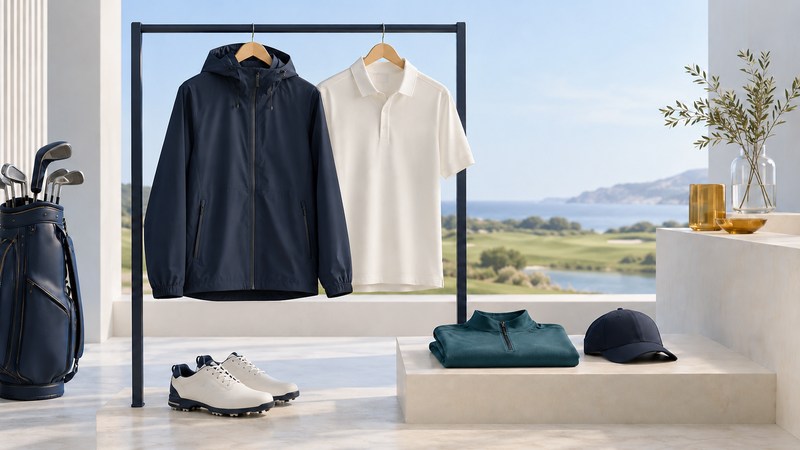
Good golf clothing supports walking, bending and swinging in the conditions you expect. Start with comfortable footwear, then build layers that move together. Check the course’s own dress requirements before buying or packing; the accepted outfit can differ between the practice range, course and dining room.
Check the facility before the wardrobe
Read the visitor information or ask the golf shop about shirts, shorts, footwear and any separate clubhouse rules. Save the answer with your booking. If an item is unclear, describe it or ask about that specific style.
For example, Pinehurst’s golf dress guidance recommends collared shirts and well-kept pants or shorts, and excludes denim and open-toe shoes on the course and range. That is one facility’s policy. Confirm the rules where you will actually play.
Start with usable clothing you already own that meets those requirements. Spend first on a genuine fit or weather gap. A coordinated outfit is easy to build from a few compatible pieces once you know which items are comfortable through a full round.
Test movement before buying
- Wear the layers together and make a slow practice swing with room around you. Check the shoulders, elbows and waistband.
- Bend to pick up a ball and sit as you would in a cart. Check that hems and waistbands remain comfortable.
- Reach into pockets with a glove on. Keep hard or bulky items away from places where they interfere with movement.
- Check jacket cuffs, collar and closures. A layer that repeatedly catches your hands or bunches during a swing needs a different fit.
Use the manufacturer’s size chart, then judge the actual garment. Fit can vary between ranges and cuts. Try the outfit with the base layer you expect to wear, especially when choosing an outer shell for cooler weather.
Give footwear a walking test
Try both shoes with your playing socks. Walk, turn and hold a balanced golf stance on the store’s permitted test surface. Look for secure heel contact, comfortable toe space and even support without pressure points. Check the retailer’s return conditions before wearing them outside.
Swipe the table, or focus it and use the arrow keys to see every column.
| Need | What to inspect | Decision cue |
|---|---|---|
| Walking comfort | Fit of both shoes, socks and closure adjustment | Choose the pair that remains comfortable while moving |
| Traction | Outsole condition and facility footwear rules | Match the surface and expected wetness |
| Rain protection | Exact model’s weather specification and care label | Check closures, seams and coverage as well as the fabric |
| Changing temperature | Layer bulk and freedom of movement | Use pieces you can remove and stow easily |
For waterproof claims, read the exact product description and regional warranty, including care and proof-of-purchase requirements. Keep the receipt and model details. Consider the conditions you regularly play in when deciding whether weather protection is worth the added cost.
Pack for the whole round
Check the forecast close to departure, including temperature changes, wind and showers. Lay out the full outfit, then add the layer you would need if conditions changed. A spare pair of socks and a dry storage pouch can be useful on wet days. Keep frequently used layers accessible in the bag.
For a trip, allow time for clothing and shoes to dry between rounds. Test new shoes on a shorter outing before relying on them for several consecutive walking rounds. For mixed golf and non-golf days, check each activity’s clothing needs so every item has a clear use.
Clean and dry according to the material
Follow each garment’s care label, particularly for waterproof fabrics and finishes. For its leather and synthetic golf shoes, FootJoy’s care instructions advise removing dirt with suitable cleaner or mild soap and water, then air-drying at room temperature. The company also warns against storage in a hot car trunk and external heat for drying.
Check soles, closures and any replaceable cleats between rounds. Use the manufacturer’s instructions for the exact shoe. Store the next round’s kit dry and ready, with worn items identified before they become a problem at the course.