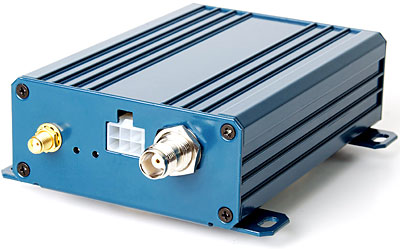
Location messaging turns position data into useful action. A device reports where a vehicle, worker, trailer, container, tool, phone, or shipment is; a platform compares that location with business rules; and the system sends messages when something important happens. Those messages may be dispatch updates, arrival notices, geofence alerts, route deviations, emergency notifications, maintenance events, school-bus passenger checks, or proof-of-service records.
The 2005 idea of a smart GPS location and messaging unit for mobile resource management has become a broader telematics and IoT category. Modern systems combine GNSS receivers, cellular networks, Bluetooth tags, Wi-Fi positioning, vehicle diagnostics, accelerometers, cameras, temperature sensors, driver apps, cloud APIs, and dashboards. The value is no longer just seeing a dot on a map. The value is knowing what the location means and who needs to act.
What Location Messaging Does
A basic tracking system answers "where is it?" A location messaging system answers "what should happen because it is there?" The difference is rules, context, and delivery. A bus entering a school zone, a technician arriving at a job, a trailer leaving a yard after hours, or a refrigerated load warming above threshold are all location-linked events that need a message.
These messages can go to dispatchers, drivers, parents, customers, maintenance teams, public safety personnel, or external software. The best systems avoid flooding users with raw pings. They summarize movement into exceptions: late, early, stopped too long, moving without authorization, nearing destination, outside route, inside geofence, or sensor threshold exceeded.
From GPS To Multi-Source Location
GPS is still the familiar term, but most current devices use multi-constellation GNSS, drawing from systems such as GPS, Galileo, GLONASS, and BeiDou when hardware and region support them. In open sky, GNSS can be accurate and efficient. In urban canyons, warehouses, garages, tunnels, and dense indoor environments, other signals may matter more.
Cellular positioning, Wi-Fi location, Bluetooth beacons, inertial sensors, RFID, ultra-wideband, and device SDK data can all supplement satellite location. The right method depends on the asset, power budget, accuracy need, cost, and environment. A shipping container crossing oceans has different needs from a delivery van, hospital cart, school bus, lone worker, or rental scooter.
Fleet Telematics
Fleet systems are the clearest example of location messaging at scale. A vehicle device or app can report location, ignition state, speed, harsh braking, idling, diagnostic trouble codes, fuel use, battery status, seatbelt events, and camera-based safety events. The platform can then notify dispatchers, coach drivers, schedule maintenance, confirm service windows, or document regulatory compliance.
Geofencing is one of the most important fleet tools. A virtual boundary around a depot, customer site, route corridor, school, construction zone, or restricted area lets the system send an alert when a vehicle enters, exits, dwells, or moves unexpectedly. Used well, geofencing reduces manual check calls and gives operations teams a shared timeline of work.
Asset Tracking
Asset tracking extends location messaging beyond powered vehicles. Battery-powered trackers can monitor trailers, generators, containers, pallets, tools, medical equipment, livestock, and high-value shipments. For some assets, frequent real-time updates are unnecessary. A few messages per day, plus motion-triggered alerts, may be enough and can extend battery life.
Network choice matters. Cellular trackers work well when coverage and power are available. LTE-M and NB-IoT can support lower-power IoT tracking in many regions. Satellite messaging can cover remote routes, ocean cargo, and disaster areas where terrestrial networks are unreliable. Bluetooth and RFID can identify assets locally when a phone, gateway, or reader is nearby.
Passenger And Workforce Messaging
Location messaging is also about people, which raises both operational benefits and privacy obligations. School transportation systems can combine bus location with RFID or app-based rider identification to confirm boarding and drop-off. Field-service systems can estimate arrival times and prove that a technician reached a site. Lone-worker systems can report check-ins, panic alerts, or missed movement.
Because people are involved, consent, policy, and data minimization are essential. A system that tracks a vehicle during work hours may be appropriate; one that keeps unnecessary after-hours employee history may create risk. Clear retention rules, role-based access, audit trails, and opt-in processes are not administrative extras. They are part of the product design.
Emergency Location
Emergency location is a separate but related use case. Wireless 911 location accuracy rules, dispatchable location, z-axis information, and text-to-911 all reflect the same core problem: responders need actionable location, not just a phone number or vague area. Public safety groups continue to emphasize dispatchable location: a street address plus useful in-building detail such as apartment, floor, suite, or room.
Commercial location messaging should not be confused with emergency call routing, but the lesson carries over. Coordinates alone may be insufficient. A useful message should include the place name, entrance, floor, asset ID, direction of travel, timestamp, confidence, and contact path when those details are available.
Message Design
A location alert should be short, specific, and actionable. "Truck 214 left North Yard at 2:14 AM without dispatch" is better than "Geofence exit." "Cooler trailer 7 is 45 F for 12 minutes near Exit 42" is better than "Temperature alert." The message should identify the asset, event, location, time, threshold, and next action.
Escalation rules are just as important. Some events belong in a dashboard. Some should become SMS, push notifications, email, radio dispatch, webhook calls, or tickets. Critical alerts need acknowledgments and fallback routing. Low-value alerts need suppression, grouping, or rate limits so users do not learn to ignore the system.
Implementation Notes
- Define the event first: Start with the decision the message should support, then choose the tracking interval, geofence, sensor, and recipient.
- Watch the power budget: Always-on location drains batteries. Motion detection, adaptive reporting, and sleep modes matter for portable and asset trackers.
- Design for bad coverage: Devices should buffer messages when offline and send useful timestamps when the network returns.
- Use confidence and freshness: A location that is 10 seconds old and high confidence is different from one that is 30 minutes old and approximate.
- Integrate through APIs: Location messages are more useful when they flow into dispatch, ERP, maintenance, customer notification, and incident systems.
- Protect the data: Location history is sensitive. Limit access, encrypt transport, define retention, and log administrative use.
Privacy And Trust
Location data can reveal work patterns, home addresses, customer routes, medical visits, school routines, and valuable asset movements. That makes privacy and security central. Systems should collect only what is needed, retain it only as long as needed, and make access auditable. Enterprise use cases still need clear notices, contracts, and controls.
Trust also affects data quality. Drivers and workers are more likely to accept location systems when the purpose is concrete: safety, dispatch efficiency, customer communication, theft recovery, maintenance, or compliance. Vague surveillance produces resistance and may create legal or labor issues.
Quick Recommendation
Build location messaging around events, not maps. Decide which location changes matter, who needs to know, how quickly they need to know, and what they should do next. Use GNSS where it works, supplement it indoors or in dense environments, design messages that are actionable, and treat location history as sensitive operational data.
References
Current context was checked against FCC wireless E911 location accuracy information, APCO recommendations on 911 location accuracy, Verizon Connect fleet technology trends, Geotab asset tracking information, GSMA 5G and satellite asset tracking guidance, and LocationSmart location services information.