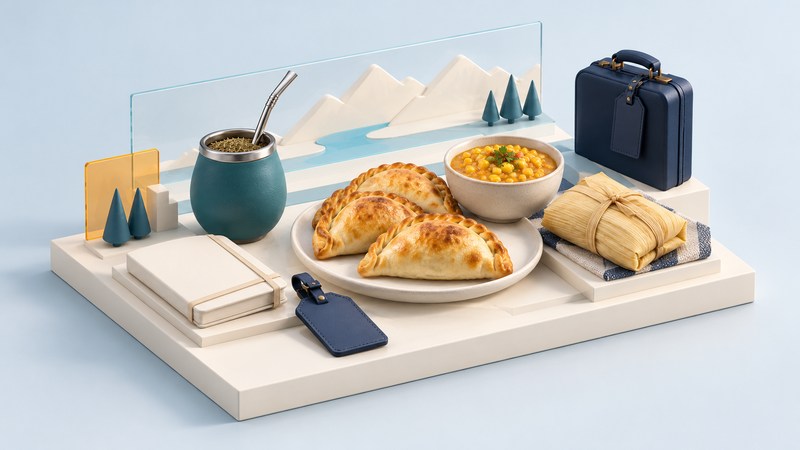
Choose a small number of places and give their food time: a market visit, a meal with regional dishes and a cooking experience can reveal more than a rushed list of famous restaurants. Start with Buenos Aires and one additional region, then arrange the transport around the meals you most want to understand.
Choose the food before the route
Argentina’s cuisines reflect different landscapes, communities and cooking traditions. A dish name may cover several fillings or methods. Treat regional labels as a starting point for a conversation with the cook, and record what you actually tasted.
On a narrow screen, scroll this table sideways. Keyboard users can focus it and use the arrow keys.
| Base or region | Food direction | A manageable first step |
|---|---|---|
| Buenos Aires | Compare regional empanadas and contemporary interpretations. | Choose two places in one neighborhood or nearby neighborhoods. |
| Northwest: Salta or Jujuy | Empanadas, tamales, humitas and locro. | Use one city base, with one deliberate excursion beyond it. |
| Misiones | Chipá, river fish and dishes shaped by Guaraní and neighboring food traditions. | Choose a base around your wider visit and add regional meals nearby. |
The national tourism board’s Buenos Aires empanada route, northern food guide and Misiones overview provide leads. Confirm opening days, menus and booking arrangements with each venue. Published prices are a snapshot; ask for the current menu and currency when you reserve.
Leave room between tastes
For a first trip, allocate one major food commitment per day. Put a cooking class on a settled day, when you can arrive on time and enjoy the meal it includes. Keep arrival evenings flexible and allow a buffer before the international flight home.
Illustrative eight-night outline: three nights in Buenos Aires, four nights based in Salta, then one final night in Buenos Aires before departure. Use the first city stay for neighborhood meals, Salta for regional cooking and one excursion, and the last night as a transport buffer. Check actual flights, airport changes and excursion times before buying; this is a pacing example, not a confirmed itinerary.
For a short stay entirely in Buenos Aires, compare a traditional regional empanada with a contemporary version instead of adding a distant flight. On a longer trip, choose between northern Argentina and Misiones according to the landscapes and other activities you want, rather than collecting both as quick food stops.
Order with a little vocabulary
Al horno means baked; frita means fried. Carne cortada a cuchillo identifies knife-cut meat. Choclo is corn, and mandioca is cassava. A humita en chala is a corn preparation wrapped in husks; a tamal commonly uses corn dough with a filling. Locro is a hearty stew whose ingredients vary.
Ask what is inside each item before ordering a mixed plate. For a vegetarian meal, ask about the dough, cooking fat, stock and filling. For an allergy, name the ingredient clearly and discuss preparation and shared equipment with the restaurant. A familiar dish name or corn-based dough alone cannot establish that a meal meets your requirements.
At a market, ask permission before close-up photographs of people or their work. Buy something if you want a lengthy explanation, and choose a quiet moment. In a cooking class, check the language, hands-on time, group size, menu and whether you receive a recipe you can use at home.
Bring a recipe home
Save the cook’s recipe with the region, serving yield and ingredient names. Record substitutions separately so you can distinguish the version you learned from your later adaptation.
For recipes you can read freely, Argentina’s national government publishes humita en olla for four portions, while Cocineros Argentinos provides empanadas salteñas doradas, a fried version with knife-cut meat and potato. Both are in Spanish. Read the ingredient list and full method at the source before shopping, and check the stated yield against the amount you want to make. Free access does not automatically grant permission to republish recipe text or photographs.
Find pictures with clear reuse terms
Two useful starting images on Wikimedia Commons are knife-cut meat empanadas and Argentine locro, both credited to Horacio Cambeiro and listed under CC BY-SA 4.0. Open the individual file page to download the original and retain its attribution and license information.


When reusing those photographs, credit the creator, link the source and license, identify changes, and follow the share-alike terms for adaptations. Keep that information with the image file. The illustration at the top of this guide is an original conceptual image, separate from those documentary photographs.
Related travel resources
- Compare the cost of a package with separate bookings
- Plan a separate coastal stay in Punta del Este
- Browse all travel guides
Researched and updated October 3, 2026. Check the linked official information for your dates, party and booking terms.