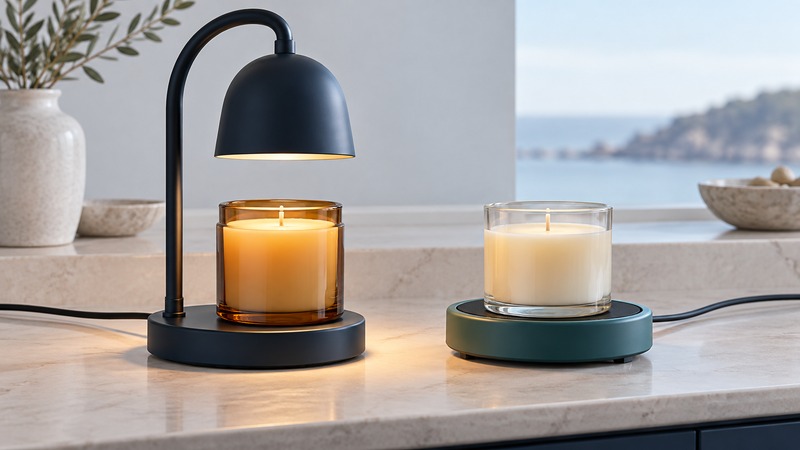
Choose a scented candle in two steps: find a fragrance and intensity you enjoy, then choose how you want to release it. A flame consumes wax as fuel. An electric candle warmer supplies heat without lighting the wick, while a wax-melt warmer uses scented pieces in a separate dish. The right choice depends on the candle’s container, the equipment, and how you use the room.
Choose the scent for the room and its people
Begin with a few descriptive preferences: citrus or herbal, floral, woody, spicy, or sweet. Use the maker’s scent notes to narrow the field, then smell a sample where possible. Names such as “linen” or “amber” describe a fragrance idea; read the product information for ingredients or other details you need.
Decide how noticeable you want the fragrance to be. A subtle scent near a reading chair and a stronger presence in an open living area are different goals. Ask the other people who share the space what they enjoy. If fragrance is unwelcome, an unscented candle or a battery-operated light can provide atmosphere without adding an intentional scent.
Candle makers call an unlit candle’s fragrance cold throw and its fragrance during burning hot throw. CandleScience’s explanation also discusses the influence of the room and the person smelling it. The scent at the jar helps you choose a character; actual use tells you how it behaves in your space.
Start with one candle before buying several of the same scent. Record the product, room, method, and your impression after use within the product’s instructions. Compare on separate occasions so that several fragrances are not competing at once. Judge comfort and preference, rather than treating maximum intensity as the goal.
How wax, wick, and fragrance work together
When a candle burns, heat melts the wax around the wick. The wick draws liquid wax upward through its fibers by capillary action. Near the flame, wax vaporizes, and that vapor reacts with oxygen to sustain combustion. Heat from the flame melts more wax and continues the cycle. The American Chemical Society’s candle explanation describes this progression from solid wax to liquid fuel to vapor.
The fragrance is a separate part of the formulation. As the candle warms, volatile fragrance molecules enter the air from the wax. This is why a candle can release scent under a warmer with its wick unlit. The wax supplies a reservoir for the fragrance; it does not need to be burned to release every aroma molecule.
With ordinary electric warming, wax melts and later solidifies again while the fragrance gradually weakens. Burning also consumes wax as fuel. Candle Warmers’ FAQ explains this difference for its products. A jar that still looks full can therefore have much less scent left than it did initially.
Read the whole candle, not just the wax label
Candles may use paraffin, soy, beeswax, other waxes, or blends. The National Candle Association’s wax overview describes this range. For a buyer, a wax name is one piece of the specification. Compare the finished candle’s scent, format, instructions, and suitability for your chosen use.
Wick size and construction affect fuel delivery. A multiwick candle is designed as a system with its wax and container; wick count alone is a poor basis for comparing quality or fragrance. Follow that candle’s directions for trimming, lighting, session length, and the point at which to stop using it.
Check the jar’s dimensions, condition, and intended use. A warmer’s permitted jar shape and size matter as much as the candle’s listed wax weight. A tall jar may not fit below a lamp; an uneven base may be unsuitable for a heating plate. Ask the candle maker about warmer compatibility when its directions do not address it. A decorative container is not automatically approved for external heating.
Compare burning and electric warming
The main electric choices heat from different directions. Candle Warmers describes its lamps as warming from above and its traditional plate warmers as warming from below. Wax melts belong in a device’s designated dish. Check each model’s instructions because the permitted containers and controls vary.
Scroll horizontally to read every column.
| Method | How it works | What to check | Ongoing care |
|---|---|---|---|
| Burn the candle | The flame melts wax and burns wax vapor supplied through the wick. | Candle instructions, stable placement, clearance, and someone present to attend it. | Wick care, session limits, and the specified remaining-wax stopping point. |
| Top-down lamp | A purpose-built lamp heats the upper surface of a compatible jar candle. | Jar height and width, specified bulb, clearance, and available controls. | Approved bulb replacement and the maker’s method for handling fragrance-depleted wax. |
| Bottom-up plate | A heated base warms a compatible jar from below. | Permitted jar base, footprint, candle size, and surface requirements. | Allow the jar and wax to cool before handling; follow cleaning instructions. |
| Wax-melt warmer | A designated dish holds scented wax pieces as they melt. | Approved wax format, dish capacity, heat source, and loading instructions. | Replace spent wax and clean the dish as the manufacturer directs. |
A combined “2-in-1” appliance may support a jar on its plate and wax melts in a removable dish. That is a feature of the particular design. Loose wax should only go into the holder or dish intended for it.
Choose a warmer around the candles you will use
Before ordering, write down the jar’s height, widest diameter, and base diameter. Compare them with the device’s allowed dimensions and clearance. Check the supply voltage and plug for your location, the cord route, and the space needed around the appliance. Use its specified heating element or replacement bulb; a regular decorative lamp is a different product.
Compare controls you will actually use. A timer can limit a session, while an adjustable lamp or heat control may offer choices within the manufacturer’s approved range. Confirm what each control changes and what happens when its timer ends. These features do not replace the device’s supervision requirements.
Use the chosen method with its care routine
For a flame, the US Fire Administration’s candle guidance calls for stable holders, at least 12 inches of separation from things that can burn, and extinguishing candles when leaving the room or going to bed. It advises against lit candles in bedrooms, bathrooms, and sleeping areas. Follow the candle’s own instructions as well.
Electric warmers remove the open flame during warming, but their bulbs, surfaces, containers, and melted wax can be hot. The Candle Warmers Arched Lamp manual says to keep the wick unlit during use, attend the appliance, and allow it to cool before cleaning. Its instructions also advise against subsequently burning a candle that has been melted by that warmer. Check the manual for your exact device before alternating methods.
When scent fades, check the approved setup and the candle’s history rather than raising heat beyond the device’s limits. Some top-down lamp instructions describe removing depleted surface wax to expose fresh wax below; follow the exact procedure and handling precautions for the product. Choose a simpler replacement routine if you would rather avoid handling melted wax. Keep removed wax out of drains.
Treat hot containers and liquid wax as things to leave in place until the instructions permit handling. Keep children and pets away from the equipment and route cords where they cannot be pulled. If a container is damaged or equipment behaves abnormally, stop using it and consult the manufacturer.
Before buying a replacement, review what worked: fragrance character, comfortable intensity, jar fit, controls, and cleanup. Those observations are more useful than a promise of a universal burn time or a fixed number of fragrant warming sessions.