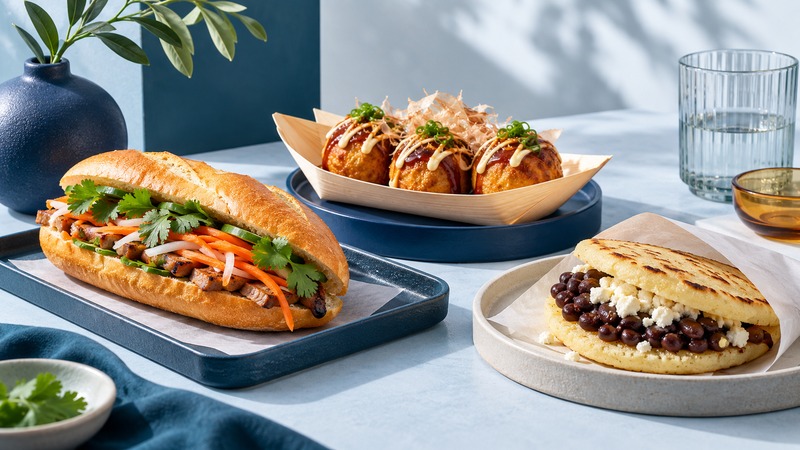
Use this guide to recognize ten dishes and ask a better first question when ordering. The examples describe familiar versions, while the cook’s actual ingredients and method determine what arrives. Regional food traditions cross borders, and a country label cannot describe every version.
Start with bread, corn dough or a tortilla
Tacos al pastor — Mexico
Look for seasoned pork cooked on a vertical spit and served in small tortillas, often with onion, coriander and pineapple. Mexico City’s street-food guide distinguishes al pastor from tacos de guisado and grilled fillings. Ask how many tacos make an order and which garnishes or salsas are already added.
Bánh mì — Vietnam
The bread can accompany a dish or become a filled sandwich. Vietnam Tourism’s regional examples include roast pork, egg and beef preparations. Ask about the complete filling, including pâté, mayonnaise and pickled vegetables. A meat-free main filling alone does not identify every sauce or spread.
Arepas — Colombia and Venezuela
These often corn-based cakes can be plain, topped or filled; size and preparation vary. Colombia’s Caribbean food guide describes arepas de huevo as cornmeal dough filled with egg and fried. Ask whether the arepa is griddled or fried, what is mixed into the dough and whether the filling is included in the price.
Bunny chow — Durban, South Africa
A hollowed piece of bread holds curry, with the removed bread available for scooping. South African Tourism describes bean and meat versions. Ask which curry is available and whether the portion is a quarter or a larger section of loaf; its name gives little indication of the serving size.
Recognize the savory combinations
Takoyaki — Osaka, Japan
Round batter balls contain octopus and are commonly finished with sauces and toppings. Japan National Tourism Organization places takoyaki among Osaka’s characteristic foods. Ask about the sauce, mayonnaise and fish-based toppings as well as the batter. Let a freshly cooked piece cool before biting into its hot center.
Poutine — Québec, Canada
Fries, cheese curds and gravy are the foundation. Bonjour Québec’s poutine description also recognizes the many variations. Ask what the gravy contains and how large the portion is. A version with no visible meat may still use meat stock.
Currywurst — Berlin, Germany
Sliced sausage with curry-seasoned sauce is served with accompaniments such as fries or bread. VisitBerlin’s guide explains the local specialty. Ask which sausage is used and whether the side comes with the order. Heat and sauce recipes vary.
Falafel and taameya — regional Middle Eastern and Egyptian traditions
Legume fritters appear in several forms. Egypt’s tourism guide distinguishes fava-bean taameya from chickpea versions in the Levant. Ask whether you are ordering pieces, a sandwich or a plate, and identify the sauce: tahini adds sesame, while other dressings can contain dairy or egg.
Understand the salad and sweet choices
Som tam — Thailand
Green-papaya salad combines crisp shredded fruit with a pounded dressing. The Tourism Authority of Thailand’s food guide describes a version with crab and fermented fish sauce. Ask about the specific style, seafood ingredients and whether chili can be adjusted before preparation. A vegetable-based dish can still contain fish or shellfish ingredients.
Churros — Spain and Latin American variations
Fried dough may be dusted with sugar, served with chocolate or filled, depending on the vendor and region. Spain’s official recipe gives a flour-and-water dough. Ask whether chocolate is a drink or dipping portion and whether fillings contain milk or other ingredients you avoid.
Ask three questions before paying
- What is in this version? Include dough, stock, sauces, garnishes and cooking oil. State an allergy clearly; a generic dish description cannot establish safety.
- What is one order? Confirm piece count, sides, portion size and price before choosing several dishes.
- How is it prepared and served? A food name or busy queue cannot verify handling, water quality or allergen cross-contact.
For international travel, consult the destination guidance and the CDC’s food and drink advice. CDC advises avoiding street vendors; if you choose to eat street food, it recommends food cooked and served steaming hot and avoiding raw vegetables. The same source explains water and ice precautions. This cultural guide is not a safety endorsement of a vendor or of raw salad while traveling.
At home, explore the baguette guide and cheese choices for ingredient context without assuming they reproduce a regional vendor’s recipe.