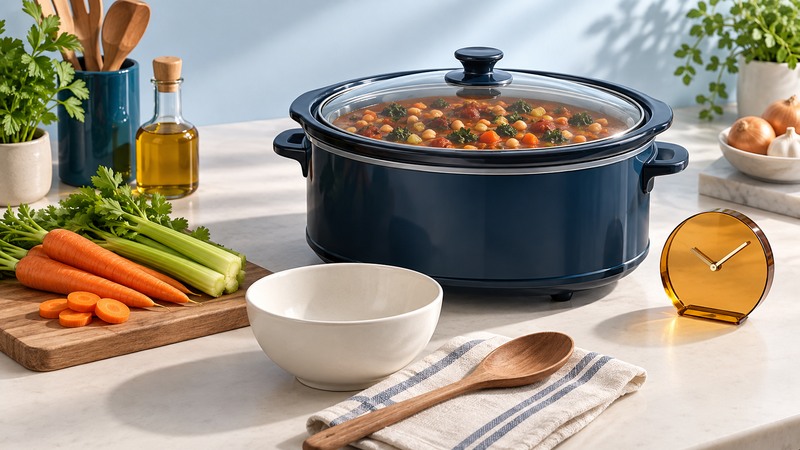
Choose the recipe by the time you can check it and by your cooker’s usable capacity. These two measured meals give you a vegetarian pot and a chicken filling, with the checks that matter at the finish. All cup and spoon measures below are US measures.
Match the pot to the recipe
Have a slow cooker with its lid and manual, measuring tools, a knife and board, and a food thermometer for the chicken. Check the assembled ingredient volume against your appliance’s fill guidance before starting. For example, this Crock-Pot model’s manual (PDF) specifies one-half to three-quarters full; other appliances and recipes can differ. A finished yield is a serving estimate, not the starting fill level. A multicooker’s slow-cook mode may need its own recipe guidance.
Use thawed chicken and canned or fully cooked beans in these recipes. Keep prepared perishables refrigerated until you start; switch directly to LOW or HIGH with the lid on. Do not use a delayed-start timer with perishable ingredients or WARM to cook them. USDA’s slow-cooker guidance explains why refrigeration, thawing and a covered pot matter.
Black bean, sweet potato and quinoa chili
Yield: about 12 cups. Cook: LOW 5–6 hours or HIGH 2–3 hours, plus the pepper finish. Allow about 20 minutes to prepare. Source proportions and cooking range: Oregon State University Food Hero chili.
Ingredients: 1 medium sweet potato, peeled and diced (about 1½ cups); two 15-ounce cans black beans, rinsed and drained; ½ cup dry quinoa, rinsed; 2½ cups water or broth; two 14½-ounce cans diced tomatoes; 1 chopped onion; 1 minced, seeded jalapeño; 4 minced garlic cloves; 1 tablespoon cumin; 1–3 tablespoons chili powder; 1 tablespoon unsweetened cocoa; ½ teaspoon cinnamon; ¼ teaspoon salt; 1 chopped bell pepper.
- Combine everything except the bell pepper in a suitably sized cooker. Cover and use the cooking range above.
- Check that the sweet potato is soft and the quinoa tender. Stir in the bell pepper; cook another 10–15 minutes.
- Serve in bowls. Start with the smaller chili-powder quantity if you prefer mild food; products vary in heat.
Salsa chicken for bowls or tortillas
Yield: about 6 cups. Cook: HIGH about 4 hours or LOW 6–8 hours. Ingredients: 2 pounds thawed boneless, skinless chicken and 2 cups salsa. These proportions and timing come from Food Hero’s salsa chicken.
- Put the chicken and salsa in a cooker that meets its fill instructions; cover and start cooking.
- At the early end of the time range, check several thick pieces with a thermometer. Chicken must reach 165°F; continue cooking if needed. Shred with clean utensils once it is cooked and tender.
- Stir the shredded chicken into the sauce. Serve over cooked rice or inside warmed tortillas, with toppings prepared separately.
The clock helps you plan; the thermometer determines whether the chicken is cooked. USDA’s cooking-temperature guidance specifies 165°F for poultry. The recipe quantities and source methods were checked against the published recipes; Yenra has not kitchen-tested these adaptations.
Work backward from dinner
Planning example: for chili at 6 p.m., prepare around 11 a.m. and start LOW at 11:30 a.m. Begin checking around 4:30 p.m.; add the pepper when the potato and quinoa are ready. If the meal finishes early, verify hot holding at 140°F or above. Appliance performance can shift this schedule, so try a new recipe on a day you can check it.
Keep the lid closed between checks. If vegetables remain firm, continue cooking and check again; next time use more consistent pieces. If finished chili is thinner than you want, mash some beans into it. If chicken is dry, mix it with its sauce and check earlier on the next batch. Record your cooker, fill level and actual finish time instead of assuming every model cooks alike.
Plan the last step before the first
Refrigerate leftovers promptly in shallow containers, within two hours of leaving temperature control, or one hour above 90°F. Use refrigerated leftovers within 3–4 days or freeze them. Reheat to 165°F using a stove, microwave or oven; a preheated slow cooker can then hold the hot food at 140°F or above. See USDA’s leftover handling instructions. If power fails while you are away during cooking, discard the food; USDA gives separate instructions for an outage you witness.