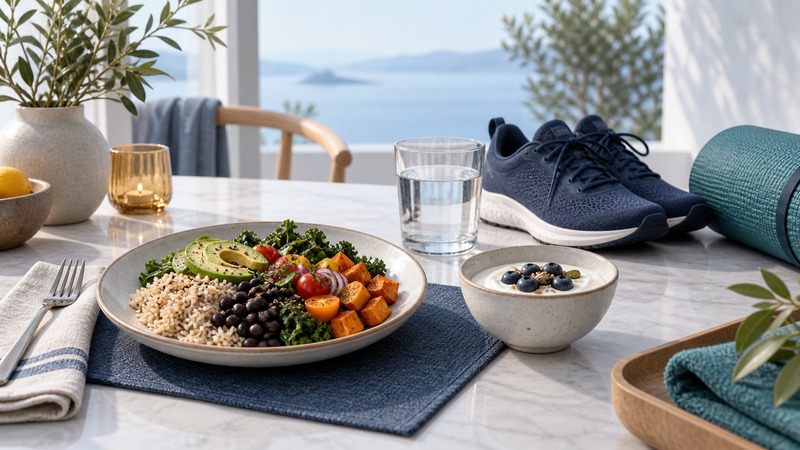
After 50, a useful food-and-fitness plan starts with the week you actually live: meals you can prepare, movement you enjoy and time to recover. Build around strength and everyday function as well as any weight-related goals.
Choose a useful starting question
Write down what you want to make easier: carrying groceries, returning to walking, preparing regular lunches or enjoying a hobby. Then name the obstacle—time, appetite, cost, fatigue, pain or access. This makes your plan specific enough to test.
Adults over 50 have very different abilities and nutritional needs. Age alone cannot select a protein target, fluid intake or exercise difficulty. Discuss unintended weight loss, persistent poor appetite, swallowing difficulty or a substantial decline in function with a clinician. Individual advice matters when a medical condition or medication changes what you can eat or how you can exercise.
Build meals from familiar foods
The National Institute on Aging’s meal-planning guidance emphasizes varied foods and protein sources throughout the day. Choose several meals, check what is already available and list what is missing. Include preparation time and cost in the decision.
| Component | Possible choices | Planning question |
|---|---|---|
| Protein-containing food | Beans, lentils, tofu, eggs, yogurt, fish or poultry | Which options do I enjoy and prepare reliably? |
| Produce | Fresh, frozen or suitable canned vegetables and fruit | Would chopped or frozen choices help? |
| Grain or starchy food | Oats, whole-grain bread, rice or potatoes | What fits this meal and my appetite? |
| Drink and additions | Water and appropriate oils, nuts or other ingredients | What quantities fit my needs and clinical restrictions? |
This is an assembly aid, not a prescribed portion distribution. An original example is lentils with rice and frozen vegetables for dinner, using remaining ingredients for another meal. Another is an egg with whole-grain toast and fruit. Adapt choices for allergies, culture and preference. A backup meal that is easy to prepare can help when the planned dinner becomes impractical.
Review vitamin and mineral needs as you age, including B12, calcium and vitamin D. Discuss suspected gaps with a clinician or registered dietitian before selecting supplements. Bring labels from products you already use so the review includes overlapping ingredients.
Connect meals with activity and recovery
For adults aged 50–64, CDC adult guidance recommends at least 150 minutes of moderate aerobic activity weekly, or the vigorous equivalent, and muscle-strengthening activity on two days. Start with an amount you can manage and build gradually. Short bouts contribute.
For adults 65 and older, CDC guidance adds balance activities. If falls or difficulty standing affect you, seek an appropriate supported program. Choose activity for your ability and symptoms. Use the beginner resistance-training guide to organize strength work.
Protect recovery time when scheduling. The NHLBI recommends 7–9 hours of sleep for adults. Persistent poor sleep or fatigue deserves attention rather than continually increasing exercise to compensate.
Make a small plan and review it
- Choose two meals and two activity appointments to prepare for first.
- Write a backup meal and shorter activity option beside the busiest days.
- At week’s end, record what worked and the obstacle behind anything missed.
- Change one practical detail: the walk’s timing, food preparation or instruction for an unfamiliar movement.
A useful review asks whether eating is regular, activity is manageable and daily tasks feel easier. Weight can be one relevant measure within a broader health plan. Use the weekly fitness planner to connect habits and goals; see the fat-loss guide when weight management is appropriate.
Explore the fitness library
Browse fitness guides for planning, equipment, food and movement. Source links appear alongside the guidance they support.