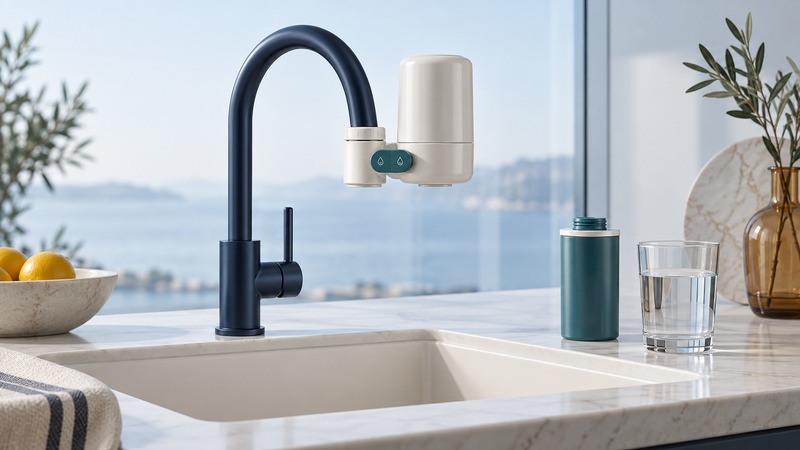
A faucet-mounted filter is useful when it fits the tap, addresses an identified water concern, and can be maintained within its instructions. Check those three conditions before comparing appearance or price. Start with the broader water-filter guide if you have yet to identify the problem you want to solve.
Check the tap before selecting a system
Identify the faucet model, spout type, removable aerator, and thread arrangement. Photograph the end of the spout and record the clearance above the sink. The filter needs room for its housing, selector, cartridge removal, and ordinary washing tasks.
PUR’s faucet-system support says its systems fit most standard faucets and excludes pull-out and handheld faucets. That is a manufacturer-specific compatibility statement, not proof that every fixed faucet will fit. Ask about the exact faucet and supplied adapter if the match is uncertain.
Check whether installation is permitted in a rented property and retain the original aerator and washer. Follow the installation manual for the right adapter and tightening method. Stop if threads resist, the spout is damaged, or the unit will not seat squarely. An improvised adapter stack adds uncertainty to both sealing and support.
Match one water concern to one certified claim
Use the utility’s water report or appropriate testing to identify the concern. Then search the exact filter system and replacement cartridge in the certifier’s listing. NSF’s standards explanation distinguishes aesthetic claims under NSF/ANSI 42 from health-effect claims under NSF/ANSI 53. The standard number does not mean that every contaminant covered by that standard is reduced by every listed product.
In the NSF drinking-water treatment listing, match manufacturer, model, cartridge, and the named reduction claim. Read the performance data sheet for capacity and operating limits. If a product uses another accredited certifier, check that organization’s listing as well.
| Question | Evidence to save | Decision |
|---|---|---|
| Will it fit? | Faucet model, compatible system, and adapter instructions. | Resolve compatibility before purchase. |
| Will it address the concern? | Exact system/cartridge listing and named contaminant claim. | Choose on the needed claim, not a large marketing count. |
| Can it operate here? | Pressure, temperature, water-quality, and use restrictions. | Check the conditions against your supply. |
| Can you maintain it? | Cartridge identifier, replacement trigger, price, and availability. | Plan recurring service as part of ownership. |
Follow public-health instructions during a boil-water or other water advisory. An ordinary carbon faucet filter does not establish microbiological safety. Its selected claims must match the actual use.
Start the cartridge and track its service life
Install, flush, and reset indicators using the exact model instructions. PUR’s replacement-filter guidance specifies cold-water use and, for its faucet systems, a replacement interval of 100 gallons or three months. Other systems can differ. Apply the applicable capacity, calendar, and indicator triggers without extending use on taste alone.
Record installation date, cartridge identifier, first-use flushing, and expected replacement date. Explain the filtered and bypass positions to everyone using the tap. Keep hot water out of the filter path according to the manual. Treat an indicator as a service reminder; contaminant reduction is established by the certified system used within its limits.
Use symptoms to narrow the next check
| Observation | First check | Escalate when |
|---|---|---|
| Leak at the faucet connection | Turn water off; check the specified washer, adapter, and seating using the manual. | Threads are damaged or the leak remains after the approved check. |
| Reduced filtered flow | Confirm the selector position and cartridge service history; compare with normal unfiltered flow. | The cause is uncertain, or approved maintenance fails. |
| Reminder stays red or goes dark | Follow the model’s reset instructions and retain a separate date/usage record. | The indicator prevents reliable service tracking or the maker recommends replacement. |
| Taste changes | Check cartridge age and recent utility information. | An advisory, sudden supply change, or unresolved concern needs water-provider or testing guidance. |
Avoid opening a sealed cartridge or trying to extend its life with improvised chemical treatment. Keep replacement packaging long enough to verify the correct part. After servicing, check the connection for leaks and confirm the selected mode.
Compare ongoing cost in the same units
Compare the system purchase, approved adapters, and expected replacement cartridges over the same period. Separate current quoted prices from assumptions about water use. Confirm cartridge availability before committing to an uncommon fitting or product.
If the faucet will not accept a supported mount, the next decision is the treatment format: a suitable pitcher, countertop, or installed system may better fit the home. Use the broader comparison below to return to the water problem and installation constraints.