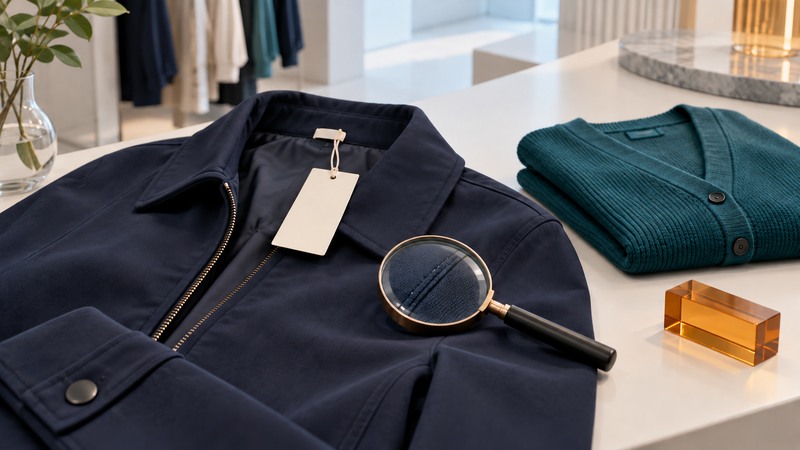
A clothing bargain is a garment that meets a real need at a total cost you are comfortable paying. Start with fit, condition and likely use, then examine the discount. The playful “Fashion Police” idea of catching someone overpaying works as a shopping prompt: investigate the price claim, but also investigate the clothes.
Understand the comparison on the tag
Marshalls explains in its comparison-pricing policy that reference prices can relate to the same item or a similar item at full-price department or specialty retailers. That makes the comparison a useful starting point, while leaving you to establish the price and suitability of the actual garment in front of you.
For an exact-item comparison, match brand, style number, material, color, size and condition. Check the other seller’s final price, shipping and return terms. A sold-out page can document a product, but it is a weaker comparison for a purchase you could make today. For a similar-item comparison, write down the differences instead of treating the products as interchangeable.
The percentage printed on a tag describes a relationship between two prices. Your decision also includes whether you wanted the garment before seeing the markdown, whether you can wear it now, and whether it duplicates something you already own.
Use a two-minute garment inspection
On small screens, scroll the table horizontally. Keyboard users can focus the table area and use the arrow keys.
| Check | Action | Decision it supports |
|---|---|---|
| Fit | Sit, reach and walk in the clothes you intend to combine. | Keep the shape that works through movement. |
| Condition | Inspect seams, fasteners, cuffs, underarms and lining. | Distinguish acceptable wear from a repair you would have to fund. |
| Completeness | Look for a matching belt, detachable liner or other advertised parts. | Ask what is included rather than assuming it is somewhere in the store. |
| Care | Read the actual label and consider your routine. | Include required professional care or special handling in the decision. |
| Returns | Read the policy for the selling channel and item. | Know the deadline, condition requirements and refund method before paying. |
Choose an area with ordinary light to check color and opacity. If a defect matters, ask staff about that specific item and record the answer on the receipt where possible. A low price does not reveal whether the item is final sale or whether a missing part can be replaced.
Compare the amount needed to make it wearable
Include only costs that actually differ when comparing two options. If both need the same cleaning, record it consistently. Ask a tailor to assess the real garment; decorative cuffs, lining and seam allowance can change whether an alteration is feasible. Do not budget a guessed cheap repair for a purchase whose usefulness depends on that repair.
Future cost per wear is a scenario, because the number of wears is uncertain. You can use it to test your assumptions: would you still buy the jacket if you wore it half as often? Avoid turning an optimistic wear count into a promise of savings.
Leave with a decision you can explain
Before paying, complete one sentence: “I will wear this for ___, with ___, and the total initial cost is ___.” If you cannot fill in the first two blanks, put the item aside and reassess. If the last blank depends on an unverified repair, obtain the quote first.
Download the off-price comparison worksheet for two candidates, including the fictional jacket calculation above. It has separate fields for actual price, preparation costs, fit, defects and return conditions.
Keep the receipt, tags and packaging until you have done a clean indoor outfit check within the seller’s rules. Use the current Marshalls return information for a Marshalls purchase and the actual seller’s policy for other stores. A satisfying bargain earns a place in your wardrobe through use.