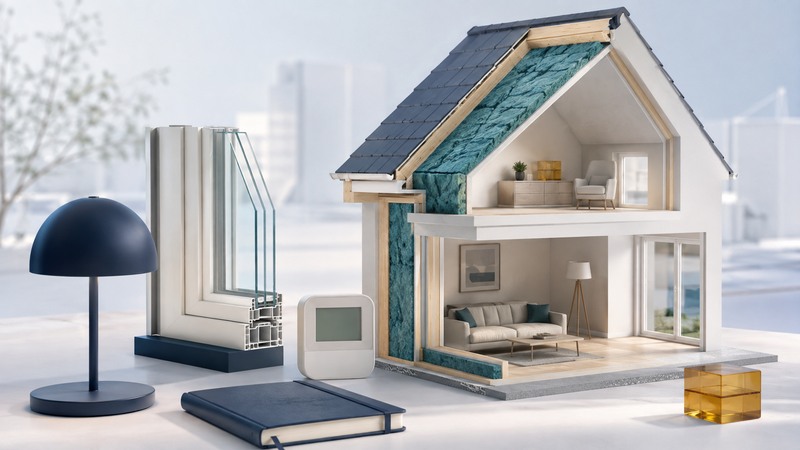
A useful energy plan starts with the energy your home uses, the changes you control and the conditions you need to maintain. Choose a few actions with clear reasons and check their results before taking on larger work.
Collect a year of electricity and heating-fuel bills, note the number of billing days, and identify your heating, cooling and hot-water equipment. Renters can start with operating habits and report building defects to the owner. Homeowners can use the same observations to prepare for an assessment.
Separate consumption from the amount due
Record electricity in kWh and each heating fuel in its billed units. A lower dollar bill can reflect a rate change; a colder month can increase heating consumption even after an improvement. Compare similar seasons, occupancy and billing lengths. Daily average use helps when one bill covers 28 days and another 35.
Use interval data, where available, to locate persistent overnight loads or unusual daily patterns. It indicates when energy is used, while equipment observation helps identify why. Smart electric meters includes a worked interval example.
Choose actions by control and likely use
On a narrow screen, scroll the table sideways. Keyboard users can focus the table region and use the arrow keys.
| Observation | Action to consider | How to check |
|---|---|---|
| Lights run for many hours | Use suitable LED replacements with the required brightness, fitting and dimmer compatibility | Record old/new input watts and hours of use. |
| Heating or cooling runs while rooms are unused | Review schedules and comfortable settings for the installed equipment | Track comfort and energy across comparable weather. |
| Draughts or uncomfortable rooms | Document leaks; obtain owner permission or an assessment before building work | Check the intended repair and ventilation provisions. |
| Unused electronics remain active | Enable sleep settings or switch off suitable nonessential equipment | Measure before/after consumption over a representative period. |
| High hot-water use | Repair leaks and consider efficient fixtures compatible with the system | Observe water use and comfort; follow equipment requirements. |
Start where usage is frequent. Replacing a rarely used light saves less energy than making the same watt reduction in a fixture used every evening. For calculation methods, see EIA’s explanation of measuring electricity. Meter only loads within the meter’s rating; leave hardwired systems to qualified assessment.
Match the action to the equipment
Heating controls deserve particular care. A heat pump with electric resistance backup can respond to a large temperature increase by using auxiliary heat. Ask the installer about the appropriate schedule and compatible controls. DOE’s heat-pump purchasing guidance explains the importance of controls that avoid unnecessary resistance heating.
Follow the filter type, inspection interval and replacement guidance for the actual heating or cooling system. Restricted airflow and an unsuitable filter can affect operation. Refrigerant, combustion and electrical service belong with trained technicians. Maintain safe temperatures for occupants, pets and the building; a universal thermostat number cannot account for those needs.
For hot water, begin with leaks and unnecessary use. Changes to tank temperature, tank insulation, mixing valves or recirculation need the manufacturer’s instructions and the household’s health requirements. Avoid wrapping equipment or covering vents, controls or labels based on a generic tip. EPA WaterSense showerhead guidance explains how suitable efficient fixtures reduce both water use and the energy needed to heat it.
Use an assessment before substantial work
A whole-home assessment can connect comfort complaints, insulation, air leakage, ventilation and equipment sizing. Ask what measurements support each proposed improvement and which work must happen together. The DOE home assessment guide (PDF) explains the distinction between an initial household review and a professional assessment.
Air sealing around ordinary building gaps differs from treating a hot flue or changing combustion-air openings. Have a qualified professional evaluate combustion safety, moisture and ventilation before substantial sealing or insulation work. Repair active roof or plumbing leaks before enclosing affected materials.
Compare upgrade proposals using installed cost, expected energy savings and the condition of the existing equipment. Replacing functioning windows solely for energy savings may produce a different result from replacement needed for leaks, damage or comfort. Document the reason for the project as well as the predicted savings.
Keep a short action log
For each action, record the date, cost, expected effect, measurement and any comfort change. Change one measurable operating habit at a time when practical. Keep the change only if it meets the household’s needs; use several comparable periods before attributing a bill difference to it.
When a larger investment remains attractive, request written assumptions and check current program eligibility with the administering organization. If you are also considering solar, use the revised consumption baseline in your solar quote comparison.
Home energy baseline and action log
Home energy baseline and action log — plain-text download. Save a copy and fill it in with your own information. The file includes instructions, assumptions and references so it can be used independently.