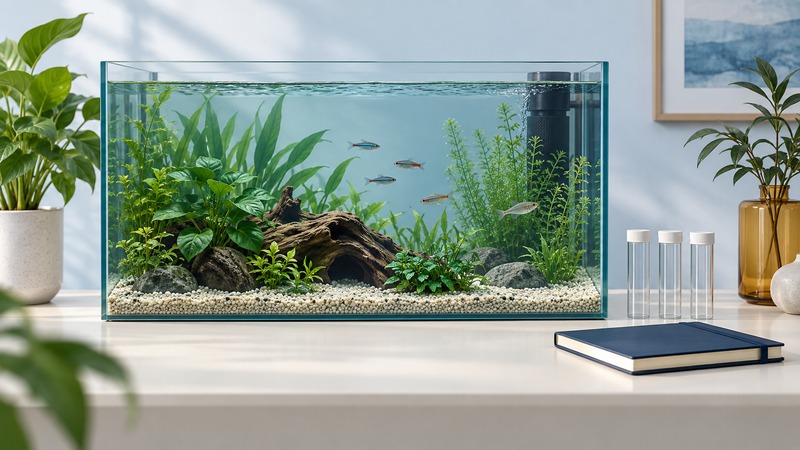
Start an aquarium with a species plan and a water-quality plan. Find out how large each candidate grows, whether it needs companions, which water conditions it requires, and how you will maintain those conditions. Then choose the tank and equipment. Juvenile size and clear-looking water leave much of that decision unanswered.
Build a short species reference
Record scientific names where possible so similar shop names do not blur different animals. For each candidate, collect adult size, group needs, preferred temperature and water chemistry, swimming space, hiding places, diet, and compatibility evidence. The RSPCA’s fish-care overview explains that different species have different needs, including shoaling behavior and the substantial adult size some goldfish reach: certain goldfish can exceed 30 cm and live for decades. Adult needs belong in the initial plan.
On a small screen, focus this table and use the arrow keys, or swipe, to read all columns.
| Check | Why it changes the choice | Resolve before buying |
|---|---|---|
| Adult dimensions and activity | A small juvenile can become a large or active adult. | Verify tank dimensions and long-term space for the actual species. |
| Social needs | A group-living fish needs a suitable group and room for it. | Plan the whole group, including adult waste load. |
| Water requirements | Tankmates share the same temperature and chemistry. | Find compatible ranges using named-species references. |
| Feeding and behavior | A fish may be outcompeted, harassed, or eaten. | Check diet, feeding position, temperament, and adult interactions. |
Worked planning comparison: one option is a goldfish setup; another is a community of named tropical species. Compare each complete option against available floor space, temperature control, and maintenance capacity. Select one coherent plan, then verify its individual species requirements. Combining the shopping lists would require a new compatibility assessment.
Prepare the system before the animals arrive
Provide a suitable tank and support, cover where needed, filtration, water treatment, testing equipment, and temperature control for the selected inhabitants. Merck’s guidance on providing a home for fish explains filtration and recommends an independent thermometer to check actual water temperature. Make the filter and routine cleaning points accessible.
Biological filtration develops a community that processes fish waste. Establish the system before stocking, using a fishless-cycling method with knowledgeable guidance and regular tests. Merck’s aquarium-management chapter describes fishless cycling and new-tank syndrome. A calendar alone cannot confirm readiness; record the nitrogen-compound test results and review them before adding animals.
Read water tests as a connected record
Microbial processes convert ammonia to nitrite and then nitrate. Ammonia’s toxicity changes with pH and temperature; many tests report total ammonia nitrogen, which includes ammonia and ammonium. Merck’s water-quality explanation shows why the result needs that context.
Log date, temperature, pH, ammonia, nitrite, nitrate, and any hardness or alkalinity measurements relevant to the species and system. Copy the test’s units and whether it reports the ion or nitrogen form. Follow sampling, timing, and expiration instructions. An unexpected reading deserves confirmation and investigation of the filter, stocking, feeding, and source water.
Reading example: “ammonia: 0.5” lacks units, test type, pH, and temperature. A useful record includes all four, the time, recent changes, and the fish’s behavior. That allows an aquatic veterinarian or experienced adviser to interpret the same observation you made.
Maintain water quality and observe the fish
Plan partial water changes using source water prepared for the aquarium’s requirements. Replacing evaporated water leaves accumulated substances in the tank; it serves a different purpose from removing and replacing water. Clean equipment according to its instructions while preserving the biological filter. Adjust the maintenance schedule using measured conditions and the inhabitants’ needs.
Choose food and feeding methods for the species. The RSPCA’s feeding guidance explains how diets and feeding positions differ. Record appetite, breathing, movement, and interactions along with the test results. If fish gasp, become markedly lethargic, or stop feeding, seek prompt aquatic veterinary advice and report water measurements; avoid guessing a medication from appearance alone.
Before adding more fish, revisit adult space, compatibility, and filter capacity. Arrange holiday care using measured portions and a written observation routine, and identify an adviser before a problem arises.
Save a working record
Freshwater aquarium plan and water log (plain text). Save a copy and fill it in with a text editor. Keep completed records private when they include personal information.