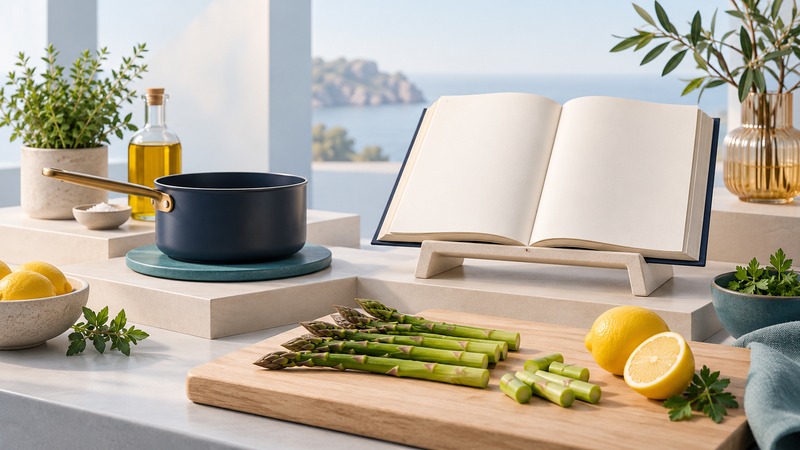
Jacques Pépin’s Kitchen: Encore with Claudine is useful for watching an experienced cook explain decisions to another cook. Begin with one technique and one dish, then build toward a complete menu as the steps become familiar.
Find the right book and broadcast
The 1998 KQED Books & Tapes edition of Encore with Claudine is cataloged at 280 pages with ISBN 9780912333861. It follows the separate 1996 Cooking with Claudine volume. Match the full subtitle and ISBN when borrowing or buying; the titles are easy to confuse.
Broadcast listings may group the programs under Jacques Pépin: Cooking with Claudine. For example, Special Celebration, season 2 episode 2, identifies Encore with Claudine in its opening. A recent streaming date on an archive page describes its online release, not the original production year.
Watch with a specific question
For a first session, use the pepper soup in Special Celebration to study how preparation supports the finished texture. Watch once without cooking. On the second viewing, pause at the transitions and write down what the cook is checking. Keep the book open for precise quantities and the full method.
| Watch for | Record | Use it while cooking |
|---|---|---|
| Preparation | How the vegetables are cut and which components stay separate | Prepare the ingredients before starting the heat. |
| Texture | What the soup looks like before and after blending | Compare with the demonstrated result; follow your blender’s hot-liquid instructions. |
| Garnish | When the asparagus enters the sequence | Keep a distinct garnish from disappearing into the base. |
| Service | What is ready before the last dish finishes | Choose a serving order your burners and counter can support. |
Claudine’s questions provide useful stopping points. If a movement is unclear, replay it at a slower speed; then practice on a small quantity. Write down the cue you need, such as “vegetables evenly cut,” rather than attempting to memorize every gesture.
Check the session and keep a useful record
Before starting, confirm ingredient quantities, serving count, equipment and recipe-specific doneness and handling instructions. A short television program compresses preparation through editing; its running time is a viewing commitment, not a reliable dinner deadline.
After cooking, note one result to keep and one change to try next time. Record what happened before the problem: uneven pieces, insufficient preparation time or a rushed finish. Repeating one dish with a single deliberate change teaches more than replacing the entire menu after one attempt.
Use the sauté guide for additional pan-cooking practice and the Nigella cookbook comparison when choosing a different style of home-cooking instruction.