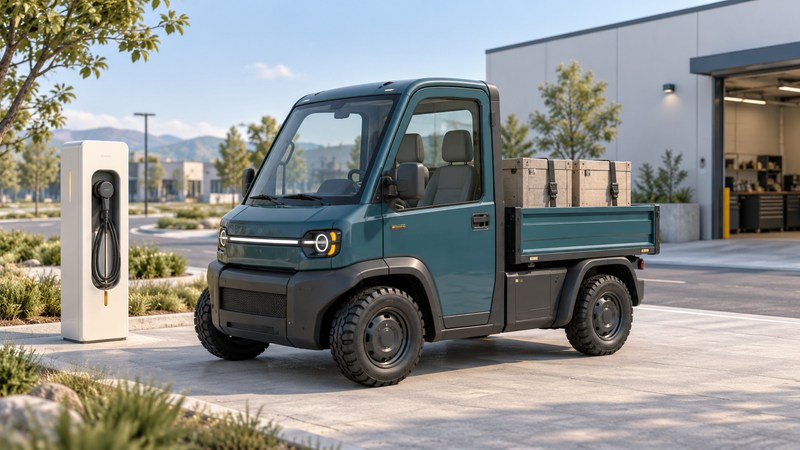
Choose an electric utility truck by the work it must finish between charging opportunities. Record the route, people, cargo, powered equipment and shift timing first. Then test a candidate with a representative load and a charging arrangement the site can actually support.
This guide concerns compact work vehicles for campuses, parks, facilities and similar fleets. Vehicle classifications vary: confirm whether the exact configuration is permitted on every public-road segment with the relevant authority. A site-only utility vehicle and a road-approved truck can have very different operating limits. For passenger-focused neighborhood vehicles, see the low-speed electric-vehicle route guide.
Describe a demanding real shift
DOE's fleet-rightsizing guidance starts with how vehicles are used and whether their size and capability fit the task. Build a work record from actual trips, including demanding days and seasonal work. A daily mileage average can conceal a long route, heavy collection round or second shift.
- Route: distance with units, stop count, surfaces, grades, speed limits, narrow access and public-road crossings.
- Work: people, tools, cargo, collection growth during the route, towing if required and powered equipment use.
- Time: departure, return, loading time, breaks, shift overlap and periods when plugging in is genuinely possible.
- Conditions: outdoor temperature, heating or cooling use, rain, storage location and seasonal variation.
Give the supplier the demanding work case and ask it to identify which requirements its quoted configuration satisfies. Record assumptions alongside the answer. If the truck will be shared, include both teams' routes and the person responsible for returning it ready for the next shift.
Account for the fitted vehicle and its cargo
Request the exact vehicle's limits and load definitions from its manufacturer: vehicle and axle ratings where applicable, cargo-bed and attachment limits, approved towing equipment, and any slope or operating restrictions. Establish whether a stated payload includes occupants, a fitted body, batteries or accessories before subtracting anything. Compare actual loaded weights with every applicable limit.
On a narrow screen, scroll the table sideways. Keyboard users can focus the table region and use the arrow keys.
| Requirement | Evidence | Pilot observation |
|---|---|---|
| Carry the work | Quoted body and equipment, defined load limits, measured operating load. | Actual crew, tools and maximum accumulated cargo fit within the limits. |
| Complete the route | Manufacturer's range-test conditions and applicable operating limits. | Distance, conditions, equipment use and end-of-shift battery state. |
| Be ready again | Compatible charger, vehicle charging limit and available site power. | Energy delivered and readiness by the next departure. |
| Stay supportable | Local service capability, diagnostic access, battery terms and parts support. | Fault-reporting process and recovery time when an issue occurs. |
A dump body, lift or enclosed box changes the work vehicle. Obtain the completed configuration's documentation and a supplier demonstration appropriate to the site. Have the supplier explain load placement, securement and operator training; use the fleet worksheet to record the requirements and the supplier instructions to guide operation.
Connect energy demand to a real charging window
DOE's electric-fleet guidance recommends evaluating vehicle duties, charging, organizational needs and total costs together. Record energy used on the route and energy bought at the charger separately. Metered charging energy includes losses and is useful for cost calculations; battery-side energy describes what was replenished in the vehicle.
Before ordering, have a qualified electrical provider assess the site and involve the utility where needed. DOE's charging-infrastructure planning guidance covers site assessment, permitting, installation and utility coordination. Specify parking access, cable management, weather exposure, network needs, power sharing, and the effect of several trucks charging at once. Have a fallback for an unavailable bay or charger.
Write the acceptance criteria before the trial
Agree on the candidate configuration, trial routes, operators, loads and weather conditions to record. Choose thresholds with the fleet and supplier before seeing results: completion of the required work, an agreed energy reserve, readiness at the next departure, acceptable loading access and a workable service response.
- Establish a baseline using the present vehicle and the same tasks.
- Run the candidate through ordinary and demanding duties within its rated limits. Log omitted tasks and extra trips as well as completed ones.
- Record start/end battery state, route distance, cargo, auxiliary use, charging start/end times and metered electricity.
- Investigate missed targets. Identify whether the cause is the truck, charger, route, scheduling or an incorrect assumption.
- Retest an agreed change before treating the requirement as satisfied. Keep untested seasonal conditions explicitly open.
Operator feedback matters: access, visibility, cargo handling, controls and comfort affect whether a capable vehicle works in daily service. Pair those observations with measurements and the supplier's operating instructions.
Compare the cost of the same completed work
Request current quotations for vehicle, body, charger, site works, training and service. Add electricity under the site's tariff, any applicable demand charges, maintenance, downtime provision and financing assumptions. Record battery coverage terms and end-of-life arrangements. Include incentives only after confirming eligibility and availability.
Compare equal service: a cheaper truck needing an extra trip or a second vehicle changes the result. Present a range for uncertain costs and keep capital, recurring and exceptional expenses separate. The useful purchase decision combines completed work, measured charging readiness and support you can actually obtain.
Download the requirements and pilot record for supplier discussions and trial logging. For household EV decisions, use the electric-car ownership guide.
Explore Autos: vehicle guides, technology and design · Cars: buying, maintenance and ownership