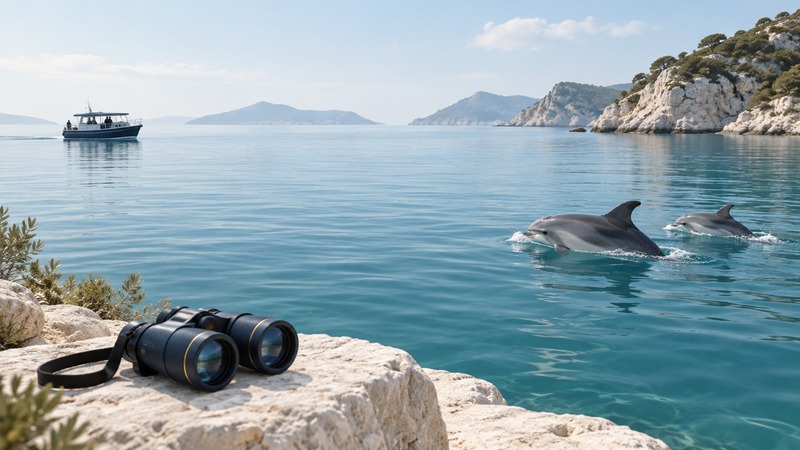
Choose a dolphin-watching trip by the operator’s behavior around wildlife and its ability to explain the rules for that location. Ask how it handles resting animals, crowded sightings, weather changes, and trips with no sightings. Wildlife watching works best when observing animals at a respectful distance is the experience you are booking.
Find the rule for the place and species
Start with the marine-wildlife authority for the destination, then check any protected-area restrictions. Record whether a distance is a legal minimum or recommended practice, which species it covers, and whether vessel, swimmer, or shore-based activities have separate conditions. NOAA’s marine-life viewing guidance links U.S. regional information and explains that disturbing protected marine mammals can violate federal law. Feeding wild dolphins is harmful and illegal in the United States.
A specific U.S. example: NOAA’s Hawaiian spinner-dolphin rule prohibits swimming with, approaching, or remaining within 50 yards (45.7 metres) of spinner dolphins. It covers waters within two nautical miles of the main Hawaiian Islands and designated waters bounded by Lāna‘i, Maui, and Kahoʻolawe. Read the rule’s questions and answers for exceptions. Its instructions for an animal approaching a vessel depend on the vessel’s circumstances. Use the actual rule when planning; the number alone is incomplete guidance.
Ask questions that reveal the operating plan
On a small screen, focus this table and use the arrow keys, or swipe, to read all columns.
| Ask | Look for | Follow up if unclear |
|---|---|---|
| Which rules apply here? | A current authority link and a species-specific explanation. | Request the source and date checked. |
| What ends a sighting? | A plan for resting animals, changed behavior, and other boats. | Ask what the captain does when passengers request a closer view. |
| What is being sold? | Observation with realistic expectations and no promise of contact. | Clarify advertising that implies touching, feeding, or swimming. |
| What happens in poor conditions? | Weather decisions, cancellation terms, and passenger arrangements. | Confirm refund or rescheduling terms in writing. |
Ask about boarding steps, toilets, shade, trip duration, mobility access, child requirements, and the vessel’s passenger-safety briefing. Those practical details determine whether the outing fits your group. Save the provider’s answers with the booking so a change of vessel or itinerary can be checked against the original needs.
Understand why behavior matters
Hawaiian spinner dolphins commonly use nearshore areas for daytime rest. Repeated close approaches can disrupt that pattern; NOAA’s spinner-dolphin species account explains the animals and the conservation measures. A spectacular leap is only one moment in an animal’s day. The operator should be prepared to leave animals undisturbed even when passengers would prefer to stay.
View the minimum distance as one condition within a larger rule and behavior plan. An operator should explain how it avoids intercepting travel, crowding animals with other boats, or repeatedly repositioning to prolong contact. Follow the crew’s wildlife instructions and use binoculars or a longer lens for detail.
Compare the whole experience
Booking example: one advertisement promises an intimate encounter but gives no wildlife policy. Another describes distant observation, a naturalist’s commentary, cancellation terms, and a route that may end without dolphins. The second description gives you concrete conditions to assess. Confirm those conditions and passenger access before paying.
Consider an established shore viewpoint where local guidance permits observation. Check access, tides, weather, and any seasonal restrictions before visiting. A shore option may suit someone who dislikes boats, but dolphins can still be absent. Plan an enjoyable coastal visit that can stand on its own.
Keep the day flexible
Recheck the departure message and conditions, bring the advised clothing and viewing equipment, and arrive for the briefing. Ask the crew to explain what it sees: species identification, travel direction, resting patterns, and why it changes position or leaves. Afterward, record the location, date, species confidence, and observed behavior. That creates a useful wildlife memory without turning proximity into the measure of a successful trip.