Updated
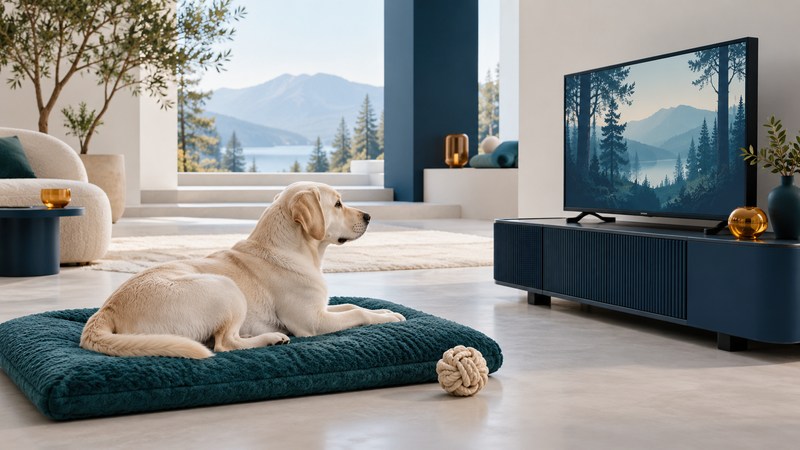
Some dogs look at screens, follow moving animals or react to sounds; others largely ignore them. Treat a dog video as an optional activity to assess with your own dog. The useful question is whether the experience fits comfortably into the dog's day, with freedom to leave and other needs met.
What screen studies can tell us
A 2024 owner survey of screen interaction examined reported viewing behaviour and content interest. Owners described varied responses, and animal content attracted particular interest. Because people volunteered observations, the findings describe that survey sample and the owners' perceptions. They cannot establish how every dog experiences television.
A 2025 study of television-viewing habits also used owner reports and examined differences related to temperament and reactions to stimuli. Its analysed sample focused on dogs reported to watch television. A result about those viewers should be read with that selection in mind.
Looking at a screen, barking at it and resting comfortably beside it are different outcomes. Neither survey is a controlled clinical trial showing that television treats separation anxiety. When evaluating a claim, look for the actual measured outcome, comparison group and study population.
Try a brief observation while you are home
- Choose a familiar room where the dog can move away and rest elsewhere. Secure the screen and keep cables out of reach.
- First note the dog's ordinary behaviour in the quiet room. This gives you a useful comparison.
- Start a short piece of content at a quiet volume while remaining present. Observe the whole dog, including posture, movement and what happens after a sound or image changes.
- Stop if the dog becomes tense, repeatedly startles, rushes the screen or struggles to disengage. Allow space and a quieter setting.
- Record what happened, including the return to ordinary activity after the screen is off.
This is a simple observation routine, not a validated welfare test. One relaxed session says little about a different programme, louder sound or a period home alone. A dog that ignores the video may simply prefer another activity. There is no need to train interest in television.
Separate attention from a useful activity
| Observation | Useful next step |
|---|---|
| Brief glance, then settles or walks away | Keep the choice to disengage; the screen may have little importance. |
| Watches, with loose posture and easy disengagement | Keep sessions optional and observe over time. |
| Repeated barking, pacing or lunging toward the screen | Stop the content and let the dog settle; seek advice for persistent concerns. |
| Distress around departures or during absence | Arrange veterinary assessment and bring a description or recording of the pattern. |
Scroll the table horizontally on a small screen.
A fictional dog may rush toward every on-screen squirrel yet lie comfortably with the television off. Calling the first response “entertainment” misses the practical question: which condition allows this individual to rest and disengage? Use observed sequences, rather than viewing time alone, to guide the next step.
Address difficulties with being alone directly
Repeated vocalising, destructive behaviour, toileting changes or attempts to escape during absences deserve investigation. A veterinarian can consider medical causes and the timing and context of behaviour, then help arrange appropriate behaviour support. Cornell's guidance on anxious behaviour explains the role of gradual behaviour work and professional help.
Record what occurs before departure, when it starts during the absence and how the dog recovers. Share existing recordings with the clinician when available. Avoid creating a prolonged distress episode merely to collect footage. Care arrangements, such as a suitable caregiver, may be part of the plan while the problem is assessed.
A television subscription or DVD provides content. A treatment plan requires assessment, individual goals and follow-up. Keep those decisions separate when reading product claims.
Fit videos into a fuller day
Protect time for sleep, appropriate exercise, sniffing, social contact and suitable play. Choose activities with your dog's age, health and preferences in mind. Use the video observation log for a few clear notes; stop logging when it no longer helps a decision. For alternative care during absences, see the daycare and boarding comparison guide.