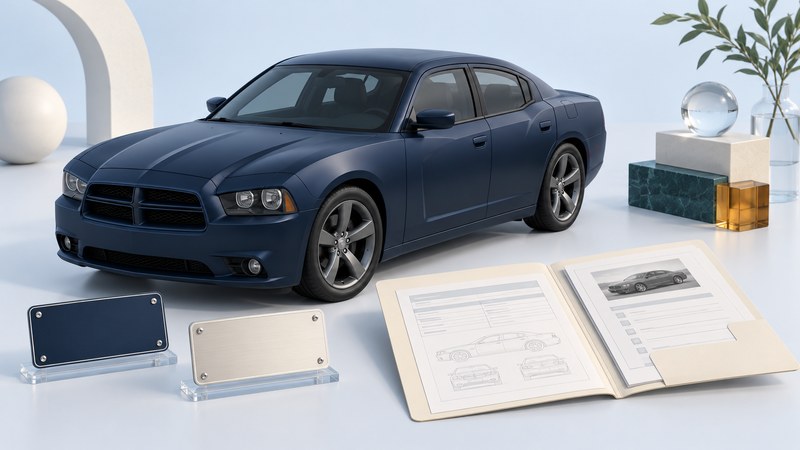
A stripe kit can suggest a special Charger without establishing what the car left the factory with. For a 2006 Daytona R/T or a 2007 SRT8 Super Bee, make two records: the documented original configuration and the equipment installed today. Then assess condition as a separate question.
Keep the model year and edition together
This guide covers the early US four-door Charger. The 2006 Daytona R/T used a 5.7-liter V8 rated at 350 hp; the 2006 SRT8 used a 6.1-liter V8 rated at 425 hp. Dodge listed 18-inch wheels for the Daytona and 20-inch forged wheels plus Brembo brakes for the SRT8. These distinctions appear in the 2006 Dodge Charger brochure, especially its model-comparison pages.
The archived Chrysler announcement for the 2007 SRT8 Super Bee describes a 6.1-liter, 425-hp SRT8 with yellow paint, black graphics and distinctive interior stitching. A Daytona R/T and an SRT8 Super Bee therefore do not represent the same mechanical package. Do not transfer 5.7-liter engine features or service instructions to a 6.1-liter car.
On a narrow screen, scroll the table sideways. Keyboard users can focus the table region and use the arrow keys.
| Configuration or claim | What to establish | Useful evidence |
|---|---|---|
| 2006 R/T | Establish the factory package, not just the R/T badge. | VIN-linked build information and the matching model-year brochure. |
| 2006 Daytona R/T | Check the 5.7-liter package, wheels, suspension and interior against the original specification. | Build record, original sales paperwork and inspection of current components. |
| 2006 SRT8 | Establish the 6.1-liter engine and SRT-specific running gear. | Factory record, component identification and SRT documentation. |
| 2007 SRT8 Super Bee | Verify the special edition claim separately from its cosmetic appearance. | Original package documentation tied to this VIN; compare with the period announcement. |
Build a record that survives an attractive photograph
Begin with the VIN on the car and its ownership documents. Ask for a factory equipment record or other manufacturer-linked build evidence, then compare it with the seller's description. An interior plaque, stitched seat or decal is a useful detail to photograph, but none should carry the entire authenticity argument.
List the engine, brakes, suspension, wheels, seats and exterior trim in separate rows. For each, record the claimed factory specification, what is fitted, and the document supporting the claim. Original paperwork can establish an edition even when wear items have been replaced; replacement parts can also make a car look like a different edition. Resolve both situations explicitly.
Ask the seller to identify any engine replacement, calibration change, intake or exhaust work, suspension conversion and wheel change. Record the installer, date and mileage, and whether original components accompany the car. A box of retained parts does not establish their origin or the quality of the current installation.
Separate identity from readiness to drive
Give the configuration record to a Charger-familiar independent inspector. Request assessment of the installed brake and suspension components, tire fit and wear, visible repairs, fluid leaks and evidence of modifications. Have the report separate observed faults, suspected causes and further diagnostic work. A correct edition can still require substantial work; a tidy dashboard does not settle that question.
Use the matching owner's manual and service information for the actual engine and model year. The 2006 Charger SRT8 owner's manual is an example of why an SRT car needs its own documentation. Ask for dated maintenance invoices rather than accepting a generic “fully serviced” description. Obtain estimates against identified work before comparing total cost.
Example: a Super Bee appearance claim
Fictional listing: a yellow 2007 Charger has black graphics and a Super Bee badge, but the seller supplies only recent paint and wheel invoices. The photographs establish its appearance. They do not yet establish the original edition or current powertrain. Request VIN-linked build evidence and a component assessment before treating the car as a documented Super Bee.
If the evidence instead establishes a customized Charger, describe and compare it on that basis. Do not invent a collector premium or a penalty from an unresolved badge claim. Record the asking price, confirmed work and remaining uncertainty separately.
Bring the edition evidence to the inspection
Download the Charger edition evidence worksheet. Pair it with the vehicle inspection guide and, for extensive changes, the custom-car project record. Check NHTSA recalls by VIN and ask Dodge about older or completed campaigns that the online result may not show.
Explore Autos: vehicle guides, technology and design · Cars: buying, maintenance and ownership