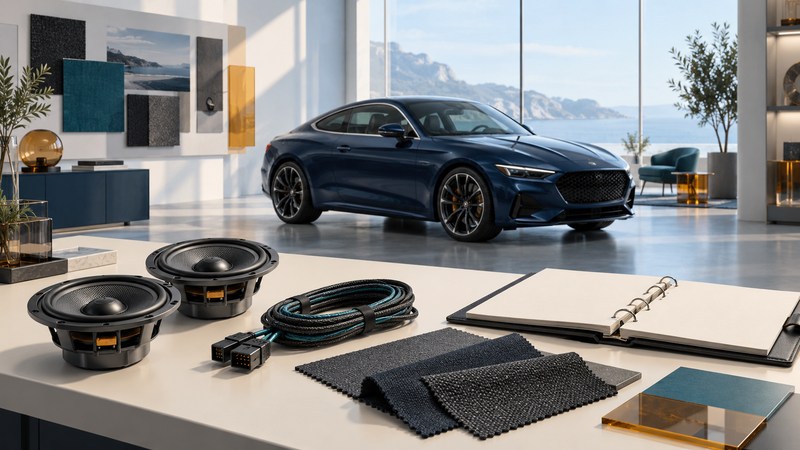
A successful custom-car project starts with a clear description of what the finished vehicle should do. Give every shop the same brief, ask how the proposed parts work with the equipment already fitted, and agree on the checks that will demonstrate completion.
This guide helps an owner commission accessories, cabin upgrades or a coordinated build. Use a qualified installer for the technical design and installation. The owner's useful role is to define priorities, approve a documented scope and keep the resulting vehicle understandable to its next service provider.
Describe the result in everyday terms
Record the year, model, market, VIN, trim and existing modifications. Photograph the starting condition and list current faults. Then describe the activities the upgrade must support: clearer phone calls, rear-seat entertainment, a quieter cabin, easier cargo organization or a particular appearance.
- Must keep: list the existing controls, displays, cameras, seating functions and cargo access you rely on.
- Must improve: name an observable outcome, such as a clear parked phone-call demonstration using your phone.
- Limits: record the total budget ceiling, usable cargo space, downtime and any requirement to return the vehicle to its original configuration.
- Dependencies: identify work that should happen first, including diagnosis of existing electrical faults or repair of worn mounting points.
A photograph can communicate style; a written acceptance list communicates function. Use both. Keep optional cosmetic work separately priced so it can be postponed without leaving the essential installation incomplete.
Ask for a complete system proposal
For each major component, request its exact part number, vehicle application, required adapters and applicable installation instructions. Ask the installer to identify affected factory systems and explain how they will verify their operation after the work.
For a documented example, Crutchfield's account of a 2020 Crosstrek stereo installation describes using an interface to retain vehicle settings, steering-wheel controls and the backup camera. That result depended on the vehicle, interface and compatible receiver. Use it as a model for the questions to ask; obtain current compatibility evidence for your own combination.
Route proposed changes involving seats, restraints, steering, brakes, suspension or driver-assistance equipment to a provider qualified for those systems. Ask which manufacturer procedures and any calibration or inspection requirements apply. For engine or exhaust work in the United States, require the shop to explain compliance with applicable emissions rules; EPA's tampering policy addresses emissions-control tampering and aftermarket defeat devices. Check road-use requirements with the relevant state authority and coverage questions with your insurer before committing.
Compare what each written price includes
The FTC's repair guidance recommends written estimates and authorization before work exceeds an agreed amount. Apply that discipline to customization: attach the brief and ask each shop to identify exclusions.
On a narrow screen, scroll the table sideways. Keyboard users can focus the table region and use the arrow keys.
| Quote item | What to request | Why it matters |
|---|---|---|
| Parts and integration | Named components, adapters, mounting hardware, software setup and retained features. | A receiver-only price leaves the rest of the system unresolved. |
| Labor and finish | Installation, trim work, testing, diagnosis allowances and any subcontracted work. | Finish quality and diagnostic effort need an agreed scope. |
| Payment and changes | Deposit, payment stages, cancellation terms and written approval for substitutions. | You can see when money and decisions are due. |
| Support | Parts and workmanship terms, the contact for faults, and charges for later adjustments. | The next repair has an identified owner. |
Under FTC guidance on U.S. warranties, an aftermarket part by itself does not cancel the vehicle warranty. Coverage can be denied for damage caused by the part or its installation, with the manufacturer or dealer required to show that cause. Read the actual warranty or service contract and keep the installation records.
Approve changes before they become hidden costs
Use milestones that reveal the right evidence: component confirmation before ordering, an agreed fit-and-finish sample before permanent trim work, and a function check before final handover. Ask the shop to retain removed parts when agreed and document concealed wiring or mounting work for future service.
Collect a working vehicle and a usable record
Walk through the agreed list with the installer. For the audio example, check each requested source, microphone, steering control and camera function while parked, then ask the installer to demonstrate any vehicle-specific release checks. Record new warning lights, damaged trim or missing functions and agree who will resolve them and when.
Collect the final itemized invoice, part and serial numbers, configuration details, warranties, user instructions, photographs of concealed work where available, and the support contact. Identify any required follow-up visit. Keep personal account passwords private and remove installer access that is no longer needed.
Download the custom-car project brief and acceptance record. For the component-level decisions, use the infotainment compatibility guide, the headrest-screen guide or the car-audio signal-path guide.
Explore Autos: vehicle guides, technology and design · Cars: buying, maintenance and ownership